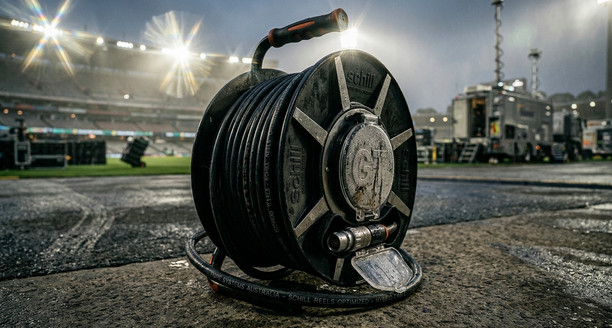
Schill Reels supplied and customized by Fibre Systems represent the essential backbone for managing, transporting, and protecting high value fibre optic lines across demanding commercial, industrial, and defense operations. In outdoor field deployments, delicate optical glass cables face continuous physical hazards including ground friction, improper coiling torsion, sudden vehicular crushing, and severe environmental exposure. Engineering leaders and field operations managers recognize that even the highest grade optical cabling becomes vulnerable to catastrophic failure if stored or spooled using substandard equipment.
Understanding the critical role of specialized cable management units helps technical teams safeguard expensive infrastructure investments long before field crews arrive on site. A professional Schill Reels system incorporates high impact drum materials, smooth rotational bearings, integrated connector protective housings, and ergonomic winding mechanisms specifically engineered to preserve cable integrity. When technicians drag cables loosely across abrasive terrain or wrap lines around narrow non compliant spools, internal microbends and jacket tears develop rapidly. Preventing avoidable cable damage requires replacing basic storage hardware with industrial grade spooling solutions built explicitly for rapid deployment and repeated field retrieval.
Why Professional Field Deployments Demand Schill Reels Engineering
Industrial job sites, mining operations, outside broadcast setups, and military field installations subject cabling systems to extreme physical strain every single day. Teams routinely deploy hundreds of metres of specialized fibre assemblies across sharp rocks, muddy access tracks, high foot traffic zones, and temporary equipment staging areas. Storing high value lines on fragile commercial plastic spools or loosely hand coiling cables invites structural damage that leads directly to unexpected signal degradation.
When an unreinforced cable spool cracks, jams, or collapses in the middle of a high stakes operation, troubleshooting creates immediate delays for the entire project crew. Technicians must halt active operations to untangle twisted lines, locate internal optical fractures caused by sharp bends, and manually re-spool damaged sections onto backup hardware. By choosing heavy duty drum construction for every deployment kit, site managers guarantee continuous operational uptime, protecting both expensive camera or data lines and the company bottom line. Integrating ruggedized Schill Reels into daily field procedures shields sensitive optical assemblies from microbends and structural fatigue during rapid unspooling.
Furthermore, temporary field setups create continuous mechanical forces that unrated storage systems cannot endure over time. Rapid spooling generates significant rotational tension that can twist internal conductors if the drum lacks balanced axial support. Advanced Schill Reels models utilize heavy duty structural frames and precision axle assemblies designed to absorb mechanical torque, ensuring that delicate optical glass never bears physical stress during high speed retrieval routines. Without these essential design features, field crews encounter frequent signal loss, outer jacket abrasion, and high cable replacement expenses across their operational lifecycles.
Key Benefits of Utilizing Industrial Cable Reels
Upgrading to enterprise grade spooling infrastructure transforms mobile field management by delivering structural longevity and continuous deployment efficiency under harsh working conditions. Incorporating certified drum assemblies into your equipment fleet provides distinct operational and financial advantages.
- Total Optical Core Preservation: Controlled drum diameters prevent tight bending, eliminating signal scattering caused by internal glass microbends.
- Rapid Deployment and Retrieval Speed: Smooth rotational bearings allow technicians to unspool and recoil long cable runs efficiently, reducing site setup times.
- Heavy Duty Mechanical Protection: Impact resistant drum materials and protective frame geometry shield stored cabling from crush hazards and heavy impacts.
- Integrated Connector Security: Specialized landing docks and auxiliary drum spaces keep expensive connector end faces safe from airborne dirt and physical strikes.
- Weather and Chemical Shielding: Corrosion resistant frames and UV stable drum construction withstand harsh weather exposure, salt spray, and ground contaminants.
The Real Cost of Improper Cable Storage in the Field
Failing to prioritize proper cable management is never just a minor logistics issue or a temporary inconvenience for ground crews. It represents a major operational vulnerability that carries immediate, costly consequences for defense contractors, media networks, and industrial site managers alike. Using inferior spools to manage high value assemblies leads directly to subtle glass fractures, shorted copper conductors, and premature line replacement.
- Unexpected system blackouts and deployment delays that push project timelines far over allocated budgets.
- Irreparable optical ferrule damage and end face contamination resulting from loose, unanchored connector placement during transport.
- Severe financial loss stemming from frequent replacement cycles for high value hybrid or multi core optical lines.
- Costly labor hours spent by technical teams manually diagnosing hidden glass microbends and internal jacket tears.
Investing in high quality spooling hardware guarantees that every line maintains structural integrity under intense handling, completely eliminating avoidable field disasters and keeping data lines running smoothly. Every high speed data link relies on uncompressed physical glass paths, making the overall quality of your chosen Schill Reels fleet the true cornerstone of your field reliability. When operational leadership standardizes equipment kits with heavy duty cable management hardware, they protect their assets against sudden equipment dropouts.
Beyond catastrophic line failures, chronic storage issues create ongoing productivity drains that sap team morale across long deployments. Tangles, kinks, and bird-nesting on poor quality spools force field engineers to spend hours untangling lines instead of focusing on critical system configuration. A reliable Schill Reels setup eliminates this operational frustration by providing smooth, consistent winding dynamics on every job. This predictable performance allows field teams to establish fast, standardized deployment routines across every location without fearing unexpected cable jams right before critical project deadlines.
Technical Specifications: Standard Commercial Spools versus Heavy Duty Schill Reels Solutions
Selecting appropriate cable management hardware requires evaluating how different drum designs perform against environmental hazards, heavy vibration, and physical stress in the field. Deploying a heavy duty Schill Reels assembly provides field operators with total confidence that stored optical lines remain safe despite rough handling. The detailed comparison below highlights clear structural differences between basic commercial spools and heavy duty industrial drum units.
| Specification Feature | Standard Commercial Cable Spool | Heavy Duty Schill Reels Assembly |
| Drum Material | Basic low density plastic prone to cracking | High impact synthetic rubber or break resistant specialized polymers |
| Frame Construction | Lightweight wire frame vulnerable to bending | Heavy duty tubular steel or reinforced aluminium alloy frame |
| Braking Mechanism | Simple friction latch or no braking control | Adjustable drag brake mechanism to prevent overspooling and backlash |
| Connector Protection | No dedicated storage or exposed outer wrap | Integrated auxiliary drum or recessed housing for connector safety |
| Environmental Resilience | Degrades under UV exposure and cold temperatures | UV stabilized, chemical resistant, and rated for extreme thermal shifts |
Evaluating these technical specifications demonstrates why basic spools regularly collapse when subjected to demanding job site conditions. Commercial spools lack the structural integrity required to absorb heavy mechanical shocks during transport, whereas an industrial Schill Reels configuration is built explicitly to withstand severe physical punishment while keeping delicate internal optical fibres completely secure.
Key Causes of Hardware Failure in Cable Management Systems
Preventing line degradation requires understanding precisely how storage hardware damages optical cabling over time. The combination of heavy cable mass, rapid rotational force, and harsh environments makes unrated storage systems uniquely harmful to high performance optical assemblies. Identifying how poor spooling impacts line health enables site directors to establish strict handling guidelines for their operational crews.
1. Excessive Bending Radius Violations
Optical glass fibres inside high value cables require strict adherence to minimum bend radius parameters during deployment, coiling, and long term storage. When field crews force lines onto narrow drum hubs or wrap them tightly around unrated frames, the internal glass experiences severe microbending stress. Over time, these tiny internal fractures scatter optical light signals, leading to high insertion loss, signal degradation, or total link disconnection.
2. Connector Contamination and Physical Impact Damage
Airborne dust, sand, and moisture represent constant threats to optical performance during outdoor deployments. On unrated spools, cable connectors frequently hang loose or bounce against the ground during transit. Plugging a contaminated or damaged connector into sensitive terminal equipment grinds hard grit directly into the glass end face, creating permanent physical scratches that require expensive lab re-polishing or total termination replacement. Using a Schill Reels model equipped with dedicated connector landing docks completely eliminates this hazard.
3. Torsional Cable Twist and Kinking
Improper winding techniques and unguided drum rotation introduce severe torsional twist into the cable body over repeated deployment cycles. As physical torsion builds inside the outer jacket, the cable forms tight loops and kinks that crush internal optical cores and strain protective strength members. Training field technicians on controlled winding routines using a balanced Schill Reels drum preserves original cable geometry, ensuring effortless unspooling during future field setups.
4. Overspooling and Mechanical Backlash
Uncontrolled drum rotation during rapid cable deployment often causes overspooling, where the drum continues spinning faster than the line is being pulled. This backlash creates loose loops of cable that spill over the drum flange, getting wedged between the frame and the spinning reel. A heavy duty Schill Reels unit features integrated adjustable friction brakes that control drum rotation, preventing line jams and outer jacket gouging during high speed deployment operations.
Step by Step Guide: How to Properly Deploy and Maintain a Schill Reels Assembly
Adhering to standardized operational protocols extends the working lifespan of valuable cabling inventory while maintaining perfect signal performance on every project. Integrating these straightforward steps into your field workflow ensures that every Schill Reels unit in your fleet operates at peak efficiency year after year.
- Inspect the Drum and Rotational Axle Pre Deployment
Before spooling or unspooling cable lines, inspect the drum flange, frame weldments, and axle bearings for visible damage or debris. Ensure the rotational path turns smoothly without grinding or sticking. - Set the Adjustable Friction Brake
Adjust the integrated drag brake on your Schill Reels unit to provide slight resistance during unspooling. Proper tension prevents drum overrun and eliminates loose cable backlash during fast manual pulls. - Anchor Connectors in Dedicated Landing Docks
Always secure the inner and outer cable connectors inside the specialized auxiliary drum or protective housing before transport. Never allow loose connector ends to dangle freely near spinning drum components. - Maintain Minimum Bend Radius During Winding
Guide the line evenly across the drum face during retrieval without introducing sharp angles or cross-layering. Ensure the cable lays flat across the drum core to avoid pinching lower layers under tension. - Conduct Post Event Cleaning and Inspection
Wipe down the outer frame, drum body, and locking latches with a clean cloth after working in wet or muddy conditions. Inspect the cable outer jacket for abrasions before locking the Schill Reels unit into storage.
How Field Ready Schill Reels Architecture Eliminates Operational Downtime
To maintain reliable connectivity during fast paced field maneuvers, outdoor broadcasts, and industrial operations, leading technical teams choose purpose built cable drums designed for maximum endurance. Deploying enterprise grade Schill Reels inventory gives site managers full confidence that critical data, power, and signal lines remain protected throughout long, strenuous project schedules.
Modern industrial drum designs utilize advanced synthetic rubber compounds and high strength polymer resins to resist structural impacts, heavy gouges, and extreme weather degradation. Deep within the frame assembly, heavy duty steel axles and sealed bearing units absorb physical vibrations, guaranteeing that rotational forces do not transfer strain onto stored optical glass cores. These sophisticated design elements ensure that every Schill Reels assembly provides outstanding cable protection even in chaotic, high pressure field environments.
In addition to superior structural materials, modern industrial drums feature ergonomic carrying handles, balanced center of gravity design, and heavy duty frame locks that secure the reel during transport. When field technicians transport equipment cases across rough terrain, a ruggedized Schill Reels frame absorbs kinetic energy without transferring mechanical force to the inner cable termination points. This structural protection keeps stored assemblies ready for immediate deployment without requiring length diagnostic testing prior to use.
Furthermore, integrating custom color coding, length tags, and asset management labels onto each drum unit streamlines fleet organization. When managing large inventory reserves with varied cable lengths and multi-core configurations, clear visual markers allow technicians to select the precise Schill Reels setup needed for a specific run, avoiding excess slack accumulation that creates site hazards and unnecessary optical attenuation.
Compliance and Telecommunications Safety Standards
All mobile communications setups, temporary field wiring, and permanent commercial infrastructure must conform strictly to national regulatory guidelines to ensure electrical safety, structural integrity, and network reliability. Compliance frameworks monitored by the Australian Communications and Media Authority dictate clear rules for customer cabling, grounding protocols, and physical equipment installations across commercial and industrial environments.
Adhering strictly to official regulatory guidelines guarantees that site cabling setups meet essential safety benchmarks while preventing hazardous physical interference with nearby utility systems. Professional field operators always specify fully certified hardware to pass site compliance audits and maintain complete long term operational safety. When deploying temporary or semi permanent lines on industrial job sites, choosing a compliant Schill Reels setup protects site managers from regulatory liability and guarantees uninterrupted project authorization.
Long Term Operational Benefits of Deploying Certified Schill Reels Infrastructures
Upgrading to industrial grade cable management hardware offers massive long term operational advantages and direct cost savings for defense agencies, broadcast production units, mining enterprises, and commercial installation contractors. Superior hardware reduces emergency line repairs and protects high value field gear.
- Exceptional Asset Protection: Controlled winding dynamics and impact resistant drum designs extend the working life of high value optical assemblies.
- Reduced Capital Expenditure: Eliminating cable damage caused by improper storage directly lowers annual cable replacement and re-termination budgets.
- Rapid Field Setup Efficiency: Balanced drum rotation and smooth payout allow field crews to deploy hundreds of metres of line within minutes.
- Superior Transport Convenience: Ergonomic frame designs and integrated locking systems enable safe, secure vehicle loading and off-road transport.
By standardizing on robust Schill Reels options across every field kit, project directors build a resilient equipment foundation capable of supporting demanding deployment schedules. The sheer durability of an industrial drum unit ensures that technical teams can reuse their cable management inventory across hundreds of active projects without experiencing frame warping or mechanical failure.
Investing in elite cable spooling hardware also enhances operational productivity across entire ground crews. When field engineers know that every Schill Reels unit in their equipment truck is fully functional and easy to operate, setup times drop significantly. Crews spend less time clearing cable tangles or repairing crushed line ends, enabling technical teams to focus their full energy on achieving project milestones for their clients.
Summary of Essential Best Practices for Cable Drum Maintenance
Preserving cable drum performance across years of active field use requires disciplined handling, routine inspection, and proper maintenance habits. The checklist below highlights core practices every technical crew should follow to maximize hardware longevity.
- Always adjust the drum drag brake to match deployment speed and cable mass.
- Secure inner and outer cable connectors in designated protective housings before transport.
- Inspect frame weldments, rubber drum flanges, and locking pins after every major project.
- Clean ground dirt, mud, and chemical residues from drum surfaces prior to long term storage.
- Store loaded cable reels upright in climate controlled environments away from direct sunlight.
Frequently Asked Questions
What makes a Schill Reels unit superior to standard plastic spools?
A Schill Reels unit features high impact break resistant synthetic rubber or specialized polymers, reinforced tubular frames, adjustable braking systems, and ergonomic handling features engineered specifically to withstand heavy industrial and field punishment without cracking.
How does proper drum sizing protect my optical fibre lines?
Proper drum hub sizing ensures the cable never exceeds its minimum bend radius during storage, preventing internal glass microbends, signal loss, and structural fatigue across the optical cores.
Can a Schill Reels assembly be used in extreme weather conditions?
Yes, industrial drum models are constructed using UV stabilized materials, corrosion resistant metals, and temperature resistant polymers designed to operate reliably in high heat, sub zero cold, and wet environments.
Why is an adjustable friction brake necessary on a cable reel?
An adjustable friction brake controls drum rotational speed during deployment, preventing overspooling, cable backlash, and dangerous tangles that occur when the drum spins faster than the cable is pulled.
How do auxiliary drums on Schill Reels protect connectors?
Auxiliary drums provide a separate, protected winding space for the inner cable end and delicate connectors, keeping them isolated from the main cable bundle and safe from physical impacts or ground contamination.
Protecting Your Field Assets with Superior Cable Management Solutions
Eliminating costly signal dropouts and unexpected cable failures requires relying on professional cable management infrastructure engineered for severe field conditions. Integrating high quality Schill Reels solutions guarantees smooth deployment, complete asset protection, and outstanding long term ROI for every critical project.
For custom project quote requests, technical specifications, and expert guidance on industrial cable drum configurations, feel free to get in touch through our contact us page. Explore our full range of optical management hardware directly on our products page today.