Cleaning Kits provided and distributed by Fibre Systems represent the single most important line of defense for maintaining pristine optical clarity across data centres, industrial communications networks, and outside broadcast environments. In high speed optical transmission lines, microscopic dust particles, skin oils, and airborne debris create immediate physical barriers on optical ferrules. Engineering leads and network technicians know that even the most expensive single mode or hybrid fiber setup will suffer from severe signal reflection and link degradation if connection end faces are not cleaned systematically prior to mating.
Understanding the critical role of dedicated maintenance protocols enables technical teams to protect high value optical interfaces long before permanent hardware destruction takes place. A professional Cleaning Kits setup includes precision lint free swabs, specialized optical cleaning solvents, dry reel tape cassette cleaners, and ergonomic inspection microscopes specifically designed to purge contaminants from sensitive optical glass. When field operators plug dirty connectors into expensive camera base stations, optical transceivers, or patch panels, microscopic grit grinds directly into the polished glass end face. Preventing avoidable hardware replacement requires adopting standardized optical hygiene procedures using specialized maintenance tool sets built for daily field use.
Why Professional Fibre Networks Demand Cleaning Kits Infrastructure
Modern optical communications operate on exceptionally tight optical power budgets, where even a tiny fraction of a decibel in signal attenuation can trigger network dropouts or frame errors. Industrial environments, data centres, outside broadcast trucks, and military communication lines subject exposed optical interfaces to continuous ambient dust, moisture, vehicle exhaust, and skin oil contamination. Connecting uncleaned optical interfaces introduces abrasive grit directly into the narrow contact zone where optical light travels across glass cores measuring only a few microns wide.
When an unmaintained optical link fails during active data transmission or a live event broadcast, diagnosing the underlying cause wastes valuable engineering hours. Technicians must trace signal loss across extensive patch runs, verify power levels at multiple junction points, and inspect every connection point for physical contamination. By implementing standardized daily maintenance routines with high quality Cleaning Kits, network administrators protect expensive transceivers and maintain continuous operational uptime. Integrating dedicated Cleaning Kits into standard deployment workflows completely eliminates preventable signal dropouts while extending the physical lifespan of optical hardware.
Furthermore, outdoor deployment environments expose optical connection points to intense physical pollution that simple dry wiping cannot resolve. Dust particles embedded on a ferrule face act like sandpaper under the extreme spring tension of mated connector housings, creating permanent pitting and scratches across the optical core. Utilizing high performance Cleaning Kits ensures that technicians utilize proper wet to dry cleaning techniques, dissolving stubborn residue while trapping loose particles safely away from the optical path. Without these specialized cleaning tools, field crews face frequent component failures, rising repair bills, and premature replacement of installed cabling infrastructure.
Key Benefits of Utilizing Certified Optical Maintenance Gear
Adopting systematic optical maintenance practices transforms system reliability by ensuring consistent light transmission and preventing physical ferrule destruction under heavy usage. Equipping field crews with professional Cleaning Kits yields clear operational and financial benefits across every project phase.
- Uncompromised Transmission Clarity: Eliminating microscopic debris preserves low insertion loss metrics, maintaining pristine 4K, 8K, and high speed data transmission.
- Prevention of Permanent Ferrule Scratches: Specialized lint free cleaning materials remove abrasive dust safely without pitting or scratching delicate optical glass end faces.
- Extended Active Hardware Lifespan: Regular cleaning protects expensive SFP modules, camera base stations, and test equipment interfaces from contamination transfers.
- Reduced Operational Downtime: Consistent cleaning routines eliminate unexpected signal dropouts, minimizing emergency field troubleshooting hours.
- Comprehensive Multi Connector Support: Complete maintenance sets include specialized tools designed for standard LC, SC, ST, FC, and complex multi fibre MTP or MPO terminations.
The Real Cost of Neglecting Optical Hygiene in Active Networks
Failing to prioritize regular optical maintenance is never just a minor housekeeping oversight or a secondary task for technical staff. It represents a major operational risk that carries immediate financial penalties for network operators, broadcasting facilities, and industrial automation plants. Connecting dirty optical ferrules leads directly to high back reflection, signal scattering, permanent interface damage, and costly emergency component replacements.
- Catastrophic transceiver damage caused by heat accumulation when intense optical laser power encounters dense surface dirt.
- Irreparable ferrule end face scarring requiring complete connector re-termination or total cable replacement.
- High insertion loss and erratic back reflection that triggers continuous data packet dropouts across enterprise networks.
- Wasted technical labor spent manually diagnosing signal degradation across complex patch panels.
Investing in top tier Cleaning Kits ensures that every single connection delivers maximum light throughput under demanding operational conditions. Every optical data link relies on a perfectly smooth glass to glass contact area, making the overall hygiene protocols of your team the true foundation of network performance. When technical leadership mandates the use of professional Cleaning Kits across all field teams, they safeguard critical infrastructure against avoidable optical failures.
Beyond immediate transmission dropouts, chronic contamination introduces subtle network anomalies that drain team resources over time. Intermittent optical power fluctuations force system administrators to spend valuable time adjusting transceivers instead of focusing on network expansion. Reliable Cleaning Kits eliminate this guesswork by establishing pristine baseline performance at every connection point, allowing technical teams to deploy complex optical topologies with complete confidence.
Technical Specifications: Standard Generic Cleaners versus Professional Cleaning Kits Solutions
Choosing appropriate optical maintenance tools requires evaluating how different cleaning methods handle persistent contaminants, oil films, and microscopic grit in the field. Deploying professional Cleaning Kits gives field engineers peace of mind knowing that optical surfaces remain free of residue without risking physical abrasion. The detailed comparison below highlights the primary differences between basic improvised cleaning attempts and professional optical maintenance tool sets.
| Maintenance Feature | Standard Generic Cleaning Attempts | Professional Cleaning Kits Toolset |
| Cleaning Medium | Standard isopropyl alcohol or basic cotton swabs | Ultra pure optical grade solvent and non linting density woven textiles |
| Contaminant Removal | Spreads oil residue evenly across the glass face | Traps microscopic dirt and dissolves stubborn skin oils completely |
| Static Dissipation | Generates static charges that attract ambient dust | Anti static tape and fluid properties that prevent post cleaning dust buildup |
| Ferrule Safety | Leaves loose fibers and abrasive scratches | Engineered to clean delicate glass without applying excessive lateral pressure |
| Inspection Capability | Visual inspection limited to naked eye | Includes high resolution optical inspection scopes for verification |
Evaluating these technical specifications shows why basic cotton swabs and unrated solvents fail to protect optical connections. Generic materials leave loose fibers and residue behind, whereas engineered Cleaning Kits are designed specifically to eliminate contamination while protecting microscopic glass surfaces.
Primary Contaminants That Destroy Optical Performance
Maintaining high speed optical links requires understanding the specific contaminants that threaten ferrule end faces during everyday field operations. Optical cores are exceptionally small, meaning even invisible particles block significant portions of the light path. Educating field teams on the physical traits of common contaminants highlights the necessity of deploying comprehensive Cleaning Kits across all operational teams.
1. Airborne Dust and Mineral Particles
Fine dust, dirt, and microscopic mineral particles settle rapidly on exposed connector end faces whenever protective dust caps are removed. When technicians mate dirty connectors, the physical spring pressure embeds hard dust directly into the glass core, producing permanent scratches that scatter optical light and degrade system performance.
2. Human Skin Oils and Fingerprints
Accidentally touching a ferrule end face transfers natural skin oils and moisture directly onto the polished glass surface. Skin oil forms a thick, uneven liquid film that distorts the light beam, causing high optical reflection and significant insertion loss across the connection point.
3. Solvents and Fluid Residues
Using unrated, low purity isopropyl alcohol leaves a thin film of water and chemical impurities on the glass after drying. Professional Cleaning Kits utilize ultra pure optical solvents that evaporate rapidly without leaving sticky films behind to trap airborne dust.
4. Lint and Textile Fiber Shedding
Cleaning optical connectors with standard paper wipes or cotton swabs leaves tiny textile fibers directly across the optical core. These stray fibers block light transmission completely, creating high insertion loss that triggers immediate transmission link failures.
Step by Step Guide: How to Execute Proper Wet to Dry Optical Cleaning
Adhering to standardized cleaning procedures ensures that optical interfaces remain completely spotless without risking physical ferrule abrasion. Integrating these core steps into daily technical workflows guarantees peak optical performance across every installation.
- Inspect the Optical Ferrule Prior to Cleaning
Examine the connector end face using a specialized optical inspection scope to identify specific contamination types such as dry dust particles, oil films, or physical scratches. - Apply Precision Optical Solvent to Cleaning Medium
Dampen a non linting optical wipe or specialized swab tip with a small drop of high purity optical solvent from your Cleaning Kits assembly. Never apply solvent directly onto the connector housing itself. - Execute Controlled Wet Cleaning Pass
Swipe the ferrule face smoothly across the damp section of the cleaning wipe, applying gentle, even pressure to dissolve oily residues and dislodge embedded surface dust. - Follow Immediately with a Dry Wipe Pass
Transition the ferrule face onto a dry section of the lint free optical textile to lift remaining solvent and trapped particles, preventing liquid streak marks from forming across the core. - Inspect the End Face to Confirm Complete Cleanliness
Re-examine the cleaned ferrule under your optical inspection microscope to confirm that all contamination has been removed before mating the connector into active equipment.
How Professional Cleaning Kits Architecture Eliminates Network Failure
To maintain uninterrupted data flow across high density optical patch frames, outdoor broadcast units, and industrial automation networks, leading technical teams rely on dedicated tool sets engineered for absolute optical purity. Deploying enterprise grade Cleaning Kits inventory gives network managers complete confidence that insertion loss and back reflection metrics stay well within strict design thresholds.
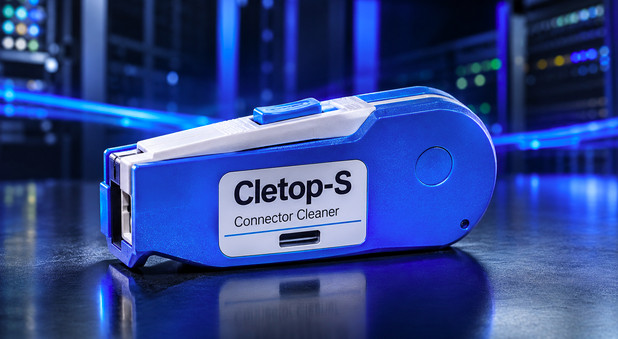
Modern maintenance kits feature ergonomic cassette cleaners equipped with anti static dry tape that advances automatically with each swipe, ensuring that fresh, uncontaminated cleaning material contacts every ferrule. Inside the kit, precision cleaning sticks designed for internal adapter sleeves allow technicians to reach deep inside transceivers and bulkheads without disassembling panel hardware. These engineered features ensure that every Cleaning Kits setup provides comprehensive cleaning capability for both male connectors and female equipment ports.
In addition to advanced cleaning media, professional maintenance sets include specialized high magnification inspection scopes equipped with safe illumination filters. These scopes enable field technicians to visually verify ferrule cleanliness before mating cables into active laser ports, completely eliminating guesswork from the maintenance workflow.
Furthermore, packing complete maintenance sets into durable, weather resistant carry cases simplifies field asset management. When managing large engineering teams across multiple job sites, supplying uniform Cleaning Kits ensures that every technician follows the exact same optical hygiene standards, maintaining uniform installation quality across the entire enterprise network.
Compliance and Telecommunications Safety Standards
All commercial fiber installations, data centre wiring, and field communications networks must conform strictly to international telecommunications standards to guarantee optical performance and system safety. Standardized guidelines established by the Australian Communications and Media Authority dictate clear rules for customer cabling, equipment maintenance, and grounding safety across commercial sites.
Adhering strictly to official regulatory guidelines guarantees that installed cabling setups satisfy mandatory performance benchmarks while preventing optical signal degradation caused by improper maintenance habits. Professional network installers always specify certified Cleaning Kits tools to pass site audits and maintain long term operational compliance. When maintaining temporary or permanent optical lines, following approved cleaning standards protects site operators from regulatory liability and guarantees uninterrupted service authorization.
Long Term Operational Benefits of Deploying Certified Cleaning Kits Tool Sets
Upgrading to professional optical cleaning hardware provides significant long term operational benefits and direct cost savings for network operators, broadcasting facilities, data centres, and industrial sites. Superior maintenance practices lower hardware failure rates and preserve network performance.
- Maximum System Reliability: Pristine connection end faces eliminate signal reflection and insertion loss, preserving transmission speed across high bandwidth optical links.
- Reduced Capital Expenditure: Proper cleaning prevents permanent ferrule damage, directly lowering annual transceiver replacement and cable re-termination expenses.
- Faster Installation Workflows: Complete maintenance kits allow technicians to clean and verify connections rapidly, keeping installation projects strictly on schedule.
- Protection for High Value Test Gear: Clean field connectors prevent contamination from transferring onto expensive optical power meters, OTDRs, and reference leads.
Standardizing on comprehensive Cleaning Kits options across every field technician kit establishes a strong operational foundation capable of supporting dense optical networks. The reliability of specialized cleaning tools ensures that technical teams can maintain thousands of optical interfaces efficiently without risking component damage.
Investing in top tier maintenance hardware also enhances productivity across technical teams. When field engineers have access to reliable Cleaning Kits, diagnostic troubleshooting times drop significantly. Crews spend less time investigating false network alerts caused by dirty connections, allowing engineers to dedicate their energy toward expanding network capabilities for their organization.
Summary of Essential Best Practices for Optical Hygiene
Preserving optical network performance across years of continuous operation requires disciplined handling, systematic inspection, and proper cleaning habits. The checklist below outlines core maintenance steps every technical crew should execute to maximize network reliability.
- Inspect every optical end face with a specialized microscope before making a connection.
- Always use optical grade solvent combined with nonlinting dry wipes for effective cleaning.
- Clean internal bulkhead adapter sleeves using precision size matched cleaning sticks.
- Replace protective dust caps immediately on all uncoupled optical connectors.
- Never touch ferrule end faces with bare fingers or use unapproved cleaning materials.
Frequently Asked Questions
Why is standard isopropyl alcohol unsuitable for cleaning optical connectors?
Standard isopropyl alcohol contains water impurities and leaves a thin chemical residue on the glass face upon drying, which traps dust and causes light reflection across the optical core.
How often should optical connectors be cleaned?
Connectors must be inspected and cleaned every single time they are uncoupled, prior to re-mating, even if protective dust caps were applied while disconnected.
Can a dirty connector cause permanent physical damage to equipment?
Yes, mating a dirty connector forces hard dust particles into the polished glass surface under high spring pressure, creating permanent scratches that require complete ferrule re-termination or transceiver replacement.
What is the difference between dry cleaning and wet to dry cleaning?
Dry cleaning uses specialized anti static tape to remove loose dust, while wet to dry cleaning combines a mild optical solvent with dry wiping to dissolve stubborn oils and remove sticky contaminants safely.
Why are dust caps alone insufficient to keep optical connectors clean?
Dust caps themselves often contain plasticizers and microscopic manufacturing dust that transfer directly onto ferrule end faces during storage, making cleaning necessary prior to mating.
Safeguarding Your Network Assets with Superior Cleaning Solutions
Eliminating preventable signal dropouts and costly hardware failures requires using specialized optical maintenance tools engineered for demanding field conditions. Integrating high quality Cleaning Kits solutions guarantees pristine transmission, complete interface protection, and outstanding long term ROI for every optical network setup.
For custom quote requests, product specifications, and expert advice on professional maintenance tool sets, feel free to get in touch through our contact us page. Explore our complete line of optical tools directly on our products page today.