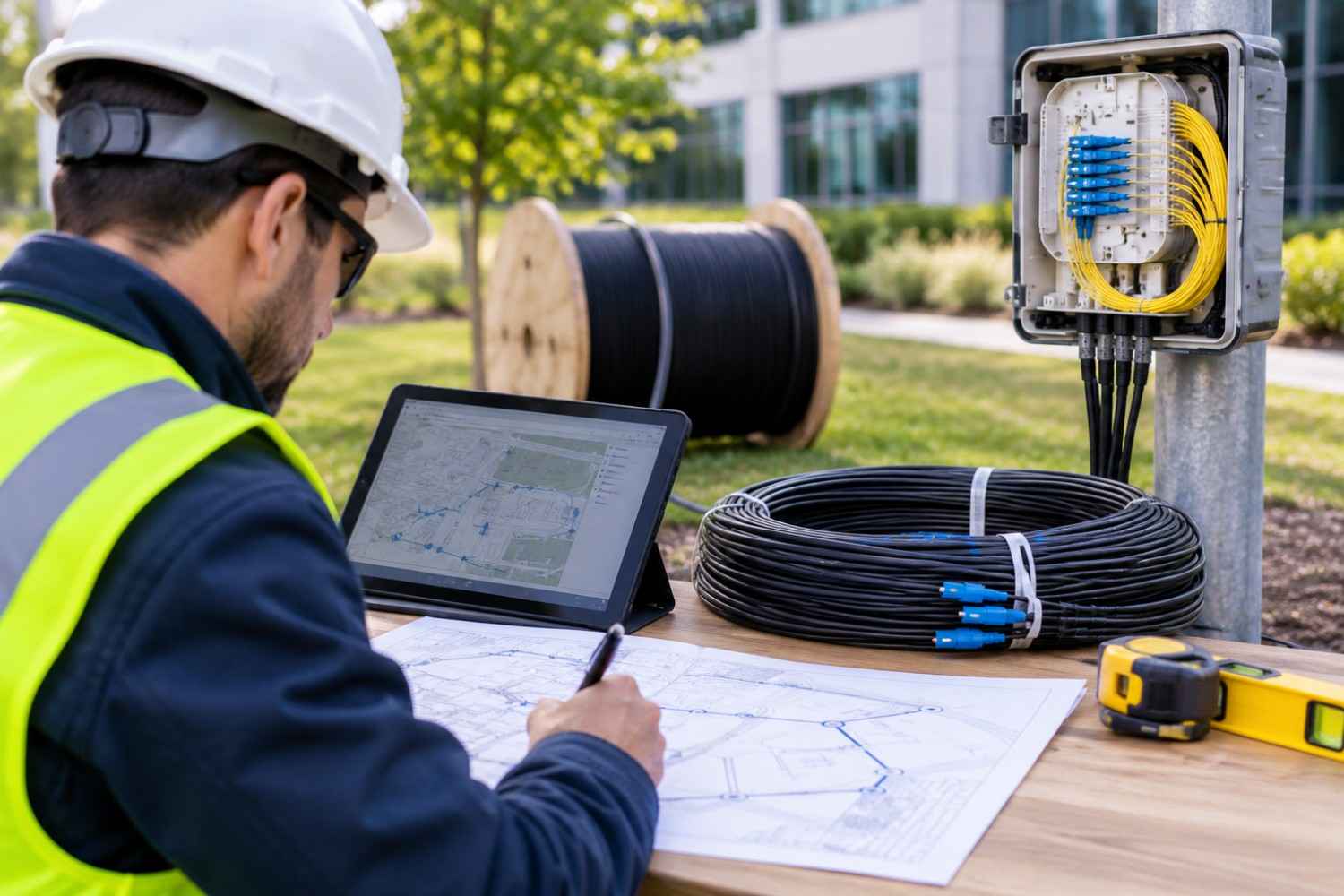
Outdoor fibre networks play an important role in connecting buildings, communication equipment, industrial facilities, campuses and other infrastructure. As network requirements continue to grow, businesses need installation methods that support reliable connectivity while managing project time, cable handling and installation complexity. Pre-terminated fibre solutions can help simplify parts of this process by providing cables with connectors already fitted during manufacturing.
However, successful pre terminated fibre installation requires careful planning before cables are delivered to the site. Network teams must understand the route, cable length, connector requirements, environmental conditions, access points and testing procedures. Without proper preparation, even a correctly manufactured cable assembly may not meet the installation requirements.
This guide explains how to plan outdoor pre-terminated fibre installations, select suitable cables, prepare installation routes, manage environmental considerations and verify network performance.
Understanding pre-terminated fibre installation
Pre-terminated fibre installation involves using fibre-optic cable assemblies that have connectors fitted and tested before they arrive at the installation site. Instead of terminating every fibre connection in the field, installers can connect prepared cable assemblies to compatible equipment or distribution points.
This approach can reduce the amount of on-site termination work and help make installation planning more predictable. It is particularly useful where multiple fibre connections are required, installation schedules are restricted or maintaining consistent connector quality is important.
Understanding the role of cables, connectors, adapters and other network components is also important when evaluating fibre optic connectivity solutions for modern data networks.
Pre-terminated assemblies are available in different fibre counts, cable constructions, connector types and lengths. Their suitability depends on the network architecture and physical conditions of the installation environment. Outdoor projects require additional attention because cables may be exposed to moisture, temperature changes, mechanical stress and other environmental conditions.
Understanding these requirements early helps network planners choose an assembly that matches the intended application rather than selecting a cable based only on connector type or price.
Why businesses use pre-terminated outdoor fibre solutions
Businesses consider pre-terminated outdoor fibre because it can simplify installation work and reduce the need for certain specialist termination activities on site. Since connectors are fitted in a controlled manufacturing environment, installers can focus more on cable placement, routing, protection and connection procedures.
Another advantage is installation consistency. Factory-prepared assemblies can help reduce variations that may occur when multiple connectors are terminated manually in different site conditions. This can be valuable for projects involving several buildings, equipment cabinets or distributed network locations.
Pre-terminated solutions may also support shorter installation schedules when cable lengths, connector interfaces and access routes have been planned accurately. However, the actual time savings depend on project size, site accessibility, cable handling requirements and the amount of preparation completed before installation.
For outdoor networks, the main objective is not simply to install cables quickly. The installation must also protect fibre connections, maintain suitable bend radii and provide reliable performance throughout the expected service life.
Assessing outdoor network requirements before installation
Every outdoor fibre project should begin with a clear understanding of the network’s purpose and physical layout. Planners need to identify where the fibre connection starts, where it terminates, which equipment will be connected and how the cable will travel between these locations.
The required fibre count should be determined from current network needs and any planned expansion. A connection between two equipment points may require fewer fibres than a campus network connecting several buildings or distribution cabinets. Planning capacity in advance can help avoid unnecessary replacement work later.
Distance is another important consideration. Measure the complete cable route rather than relying only on the straight-line distance between endpoints. Changes in direction, vertical sections, entry points, service loops and equipment connections can increase the required cable length.
Network planners should also confirm the required fibre type, connector interfaces, optical performance expectations and compatibility with existing infrastructure. These details form the basis for selecting the correct pre-terminated assembly.
Selecting the right pre-terminated fibre cables
Choosing suitable pre terminated fibre cables is one of the most important parts of outdoor installation planning. Cable construction, fibre type, connector configuration, fibre count and environmental rating should all match the intended network application.
Outdoor cables are designed for conditions that differ from typical indoor environments. Depending on the installation method, the cable may need protection against moisture, ultraviolet exposure, temperature variation and mechanical forces. The required construction should reflect whether the cable will be installed underground, in ducts, on external structures or through other approved routes.
The following table outlines the main considerations when selecting a pre-terminated fibre assembly for an outdoor project.
| Cable consideration | What to check | Why it matters |
| Fibre type | Single-mode or multimode | Determines transmission requirements and network distance |
| Fibre count | Number of fibres required | Supports current connections and future expansion |
| Cable jacket | Outdoor-rated construction | Helps protect against environmental exposure |
| Connector type | Compatible connector interfaces | Ensures reliable equipment connections |
| Cable length | Accurate route measurements | Helps avoid excess cable or insufficient reach |
Choosing the appropriate fibre type and fibre count
Single-mode fibre is commonly used for outdoor telecommunications and longer-distance network connections because it supports transmission over extended distances with suitable optical equipment. Multimode fibre may be appropriate for certain shorter-distance applications, depending on the network design and equipment requirements.
The fibre count should account for the number of active connections, spare fibres and potential future requirements. Choosing a suitable capacity during the planning stage can provide flexibility without requiring additional cable installation for every network expansion.
Matching cable construction to the installation environment
Different outdoor installations require different cable constructions. Direct-buried cables, duct-installed cables and aerial cables may have different mechanical and environmental protection requirements. A cable designed for one installation method should not automatically be assumed suitable for another.
Review the manufacturer’s technical documentation to confirm the cable’s intended application, pulling limitations, minimum bend radius, crush resistance, temperature range and water-protection features. This helps ensure the selected assembly is appropriate for the actual site conditions.
For installations involving demanding industrial conditions, reviewing industrial fibre cable systems for heavy-duty use can provide additional insight into cable protection, environmental resistance and installation requirements.
Planning cable routes and installation access points
Cable route planning helps determine how a pre-terminated assembly will move from its starting point to the destination. The route should account for existing infrastructure, building entrances, underground pathways, ducts, poles, chambers and equipment locations.
A site survey is useful for identifying obstacles and installation restrictions before ordering cable assemblies. Planners should inspect access points, duct availability, pathway capacity and any sections where the cable may need additional protection. Existing utilities and site-specific requirements should also be considered before excavation or other intrusive work begins.
Cable length must be calculated using the actual route and connection requirements. Ordering a cable that is too short can create installation problems, while excessive spare length may complicate storage and cable management. Service loops should be included where required by the network design and maintenance plan.
Access points should also be positioned so that installers can handle connectors safely. Pre-terminated connectors may be larger or more delicate than the cable itself, making pathway dimensions and pulling arrangements especially important.
Key Points to Check Before Installation
- Measure the complete cable route before ordering the assembly.
- Identify bends, obstacles and changes in elevation.
- Check duct capacity and available entry points.
- Confirm the required cable protection for the installation environment.
- Plan suitable access points for installation and future maintenance.
- Keep connector ends protected during handling and installation.
Preparing for cable handling and installation
Proper handling is essential when installing pre-terminated fibre assemblies. Although the connectors are prepared before delivery, they can still be damaged by impact, contamination, excessive pulling force or incorrect handling during transportation and installation.
Before work begins, confirm that the cable assembly matches the project specifications. Check its length, connector types, fibre count, labelling and packaging condition. Any visible damage or mismatch should be addressed before the cable is installed.
Installers should follow the manufacturer’s instructions for pulling tension and minimum bend radius. Fibre-optic cables can experience performance problems if they are bent too tightly, crushed, twisted or subjected to forces beyond their rated limits.
The installation team should also agree on a handling method for the connector ends. Protective caps should remain in place until connections are ready to be made. Where connectors must pass through ducts or other restricted spaces, suitable pulling protection should be used to prevent damage.
Protecting pre-terminated outdoor fibre from environmental conditions
Outdoor fibre networks must be designed to withstand the conditions present along the installation route. Moisture, temperature changes, sunlight, dust and mechanical exposure can affect cable performance and the long-term reliability of connections.
The correct cable jacket and construction should be selected according to the installation environment. For example, an underground installation may require suitable water-blocking and mechanical protection, while an exposed external route may require a cable with an appropriate ultraviolet-resistant outer jacket.
Cable entry points need particular attention because they can allow moisture, dust or other contaminants to reach equipment areas. Suitable sealing systems and protective enclosures should be used where required by the installation design. Connectors should be kept clean and protected throughout the installation process.
For specialised applications involving high vibration, mechanical shock or harsh operating conditions, understanding fibre optic terminus assemblies can help explain how ruggedised optical connection components protect critical fibre interfaces.
Temperature conditions should also be considered. Outdoor cables and connector assemblies have specified operating and installation temperature ranges. Reviewing these specifications helps avoid selecting products that are unsuitable for the expected site environment.
Connecting pre-terminated fibre cables to network equipment
Once the cable has been positioned, installers can prepare the connection points. Before connecting the assembly, verify that the connector type, polish, fibre type and equipment interface are compatible. Common connector formats include LC, SC and other types depending on the network design.
Connector cleanliness is essential for reliable optical performance. Dust or contamination on a fibre end face can increase insertion loss or cause connection problems. Installers should follow approved inspection and cleaning procedures before mating connectors, using suitable fibre inspection and cleaning tools.
Cable identification is equally important when several connections are installed in the same location. Clear labelling helps technicians identify the correct fibre, destination and equipment port during installation and future maintenance.
The connection process should follow the network design and manufacturer’s instructions. Avoid forcing incompatible connectors together or allowing cable weight to place unnecessary stress on the connection point. Proper cable management helps maintain organised pathways and reduces the risk of accidental disconnection.
Testing and verifying the completed fibre installation
Testing is an essential part of completing any outdoor fibre installation. Even when cables are factory-terminated and tested, the full installed link should be checked because handling, routing and connection activities can introduce problems after delivery.
Visual inspection should be performed before connectors are joined. Inspect connector end faces using suitable equipment and clean them where necessary. Once connected, the link should be tested according to the project’s acceptance criteria and applicable technical standards.
Optical loss testing can help verify whether the installed link performs within the required limits. Depending on the project, testing may involve an optical loss test set, light source and power meter or other suitable equipment. An optical time-domain reflectometer (OTDR) may also be used to assess fibre events, locate faults and investigate unexpected losses.
Testing requirements should be established during project planning rather than decided only after installation. Record the test results, cable identification, connection details and any corrective work. This documentation provides a useful reference for commissioning, troubleshooting and future network maintenance.
Choosing a reliable pre-terminated fibre supplier
Selecting a suitable supplier is important because pre-terminated assemblies must match the technical and environmental requirements of the project. Businesses should review product specifications, manufacturing information, connector options, cable constructions and available testing documentation before placing an order.
A supplier should be able to provide information about fibre type, fibre count, cable length, connector configuration and intended installation environment. These details help project teams confirm that the assembly is compatible with the network design.
It is also useful to discuss custom cable lengths, connector combinations, lead times, packaging and labelling requirements. For larger projects, consistent specifications across multiple assemblies can make installation and maintenance easier.
Businesses should avoid selecting products based only on a general description of pre-terminated outdoor fibre. The actual cable datasheet and project requirements should be reviewed together. Confirming these details before purchase helps reduce the risk of receiving assemblies that cannot be installed as planned.
Conclusion
Planning a successful pre-terminated fibre installation involves more than choosing a cable and connecting it to network equipment. Businesses must assess network requirements, survey installation routes, calculate cable lengths, select suitable outdoor constructions and confirm connector compatibility. Proper handling, environmental protection, testing and documentation are also essential for reliable results.
By addressing these considerations before installation begins, project teams can reduce avoidable delays and improve installation consistency. Whether connecting buildings, outdoor equipment or wider communications infrastructure, selecting appropriate pre-terminated fibre cables and following a structured installation plan can support dependable network connectivity.
For guidance on selecting suitable fibre assemblies for your project, or to discuss your outdoor network requirements, contact us to speak with the team about the available options and technical specifications.
FAQs
What is pre-terminated fibre installation?
Pre-terminated fibre installation uses cable assemblies with factory-fitted connectors, allowing installers to connect prepared cables without performing every termination task on site.
Why use pre-terminated outdoor fibre?
Pre-terminated outdoor fibre can simplify field connections, reduce on-site termination work and support consistent installation when cable specifications and routes are planned correctly.
How do I choose pre-terminated fibre cables?
Consider fibre type, fibre count, cable length, connector compatibility, environmental protection, installation method and manufacturer specifications before selecting suitable cable assemblies.
Does pre-terminated fibre require testing after installation?
Yes. Installed links should undergo appropriate inspection and optical testing to verify connector condition, signal loss, continuity and compliance with project acceptance requirements.
Can pre-terminated fibre cables be used underground?
Some pre-terminated fibre cables are suitable for underground installation when their construction, water protection, mechanical rating and installation method meet project requirements.