Reliable connectivity is essential in professional broadcasting, where cameras, control units and production equipment need to exchange high-quality video and audio signals. Fibre-optic technology supports these requirements by transmitting large amounts of data over extended distances. In broadcast environments, SMPTE fibre connectors provide a specialised connection solution designed for camera systems and other production equipment.
A SMPTE fibre connector is commonly used for hybrid broadcast camera connections. These connectors combine optical fibre contacts with electrical contacts, allowing a compatible camera cable to carry video, audio, control signals and power through a single connection. This arrangement can simplify equipment connections and support practical workflows in studios and outside broadcast environments.
Understanding SMPTE broadcast connectivity involves more than identifying a connector shape. Broadcast professionals must consider the relevant standards, cable construction, connector configuration, equipment compatibility, and installation requirements. This guide explores the main features of SMPTE fibre connectors, their compatibility considerations and their applications across professional broadcast environments.
Understanding SMPTE fibre connectors
SMPTE fibre connectors are specialised connectors used in television broadcasting and video production equipment. They are designed to support hybrid connections that combine optical fibre and electrical contacts within one connector assembly. This allows compatible broadcast equipment to exchange optical signals while also supporting electrical functions such as power and control.
The connector is commonly used between a system camera and its camera control unit (CCU). Rather than requiring separate connections for optical transmission and electrical functions, a compatible hybrid cable can provide these connections through one assembly.
The SMPTE ST 304 standard describes the hybrid electrical and fibre-optic connector used primarily in television broadcasting and video equipment. It specifies connector dimensions and electrical interface requirements, while optical performance also depends on correct fibre preparation and termination.
Understanding the purpose of the connector helps production teams distinguish a genuine SMPTE hybrid connection from standard fibre-optic connectors that only carry optical signals.
How SMPTE broadcast connectivity works
SMPTE broadcast connectivity typically uses a hybrid cable to connect a broadcast camera with a camera control unit or compatible production infrastructure. The optical fibres carry high-bandwidth signals, while electrical conductors support power and communication functions required by the camera system.
This arrangement is useful in professional environments where cameras may be positioned at a considerable distance from control equipment. A single hybrid cable can reduce the need to manage multiple separate connections along the production route.
The optical transmission path supports video and audio signal transport, while the electrical components provide the required connections for compatible equipment. The exact capabilities depend on the camera system, cable assembly and connected equipment. For a closer look at the construction and role of these hybrid systems, read about SMPTE 311M hybrid fibre cables.
For this reason, production teams should review the equipment documentation and cable requirements before choosing a connector. A connector that looks physically similar may not necessarily provide the same electrical arrangement or compatibility.
SMPTE 304 and SMPTE 311 standards explained
Two standards are particularly important when discussing SMPTE hybrid camera connections. SMPTE ST 304 defines the hybrid electrical and fibre-optic connector, while SMPTE ST 311 covers the hybrid electrical and fibre-optic camera cable. They are related, but they describe different parts of the connection system.
SMPTE ST 304 specifies the connector interface, including dimensional requirements and electrical contact arrangements. SMPTE ST 311 describes the cable construction and its combination of optical fibres and electrical conductors.
Older product descriptions may still refer to SMPTE 304M and SMPTE 311M. These earlier designations remain common in product catalogues and technical discussions. However, project specifications should identify the applicable standard edition rather than relying only on older naming conventions.
When sourcing components, confirm that the connector and cable are designed to work together and meet the requirements of the intended broadcast equipment.
Common SMPTE fibre connector types
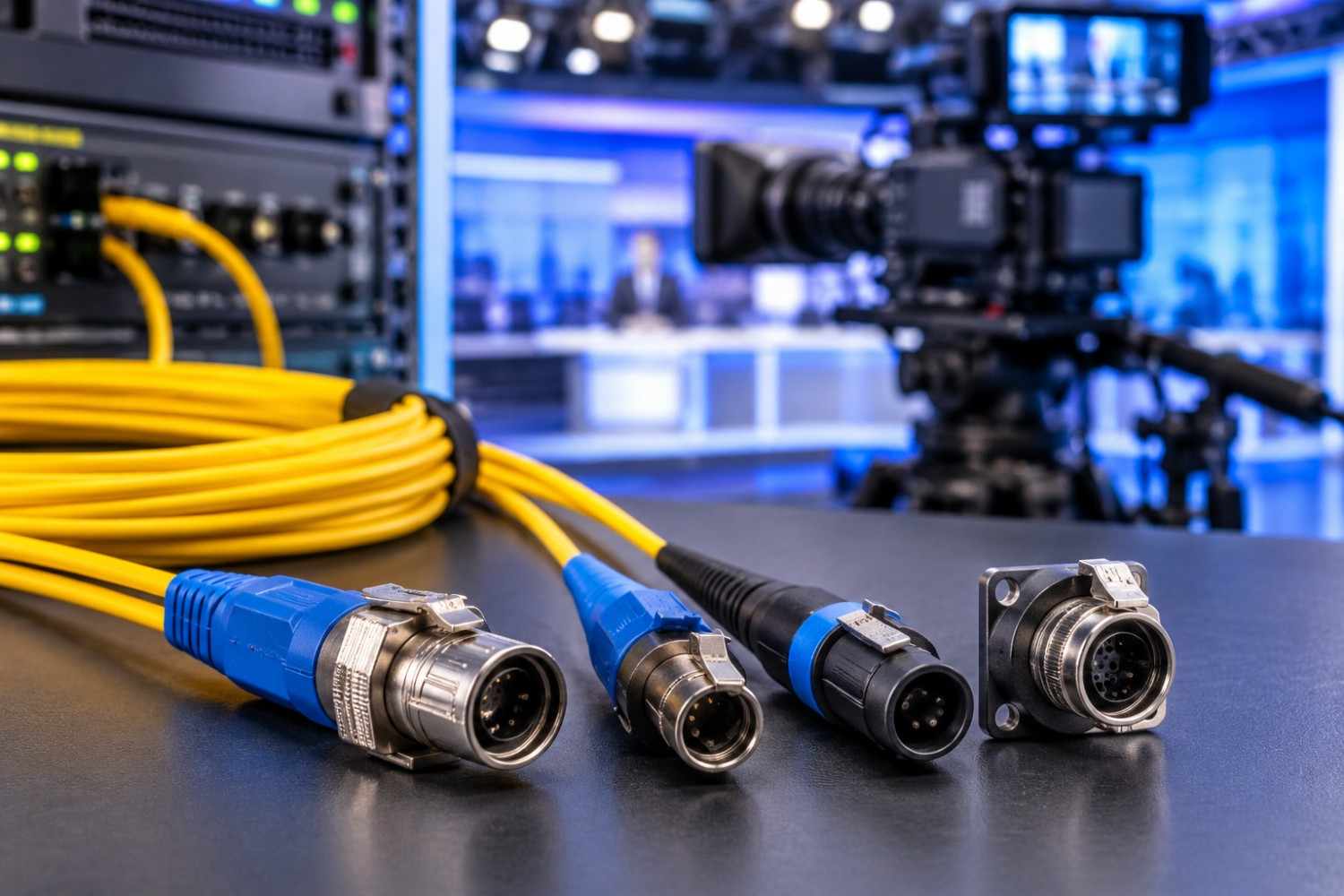
The LEMO 3K.93C is a recognised connector type associated with SMPTE hybrid broadcast camera connections. It uses a robust metal connector body and a push-pull locking mechanism designed to support secure connections in professional production environments.
Different connector configurations are available for cable-mounted and panel-mounted applications. These may include plug and socket arrangements, allowing the connection to be adapted to cameras, control units, patch panels and other compatible equipment.
Some broadcast systems also use alternative fibre connection arrangements. These may include dedicated fibre-only connectors or manufacturer-specific hybrid interfaces. Although they can serve similar production purposes, they should not automatically be treated as interchangeable with SMPTE hybrid connectors.
The correct choice depends on the equipment interface, cable design, connector termination, and applicable technical requirements.
LEMO 3K.93C hybrid connectors
LEMO 3K.93C connectors are designed for SMPTE hybrid applications and combine optical and electrical contacts in one connector body. Their push-pull locking mechanism helps provide a secure connection while allowing practical connection and disconnection during production work.
They are commonly associated with broadcast camera systems that use compatible SMPTE hybrid cable assemblies. Connector configurations should be checked carefully because plug, socket and panel-mount options serve different installation positions.
Fibre-only alternatives and other connector systems
Some broadcast applications use fibre-only connector systems when power and control are provided separately. Neutrik opticalCON, for example, is a ruggedised fibre-optic connection system used in professional audio and video environments.
A fibre-only connector is not automatically a direct replacement for a SMPTE hybrid connector. It may be appropriate where equipment has separate power connections and requires optical transmission only. The system design should determine which connection method is suitable.
Understanding SMPTE cable specifications
A SMPTE fiber cable is generally a hybrid cable designed to carry optical signals and electrical functions through one cable assembly. SMPTE ST 311 describes the hybrid camera cable used with compatible SMPTE connector systems.
A typical SMPTE 311-style assembly includes two single-mode optical fibres, electrical conductors for power and signal functions, shielding and a protective outer jacket. The exact construction and ratings should be confirmed against the cable manufacturer’s technical documentation.
Cable specifications are important because they affect signal transmission, electrical performance, handling and suitability for different production environments. A cable intended for studio use may have different flexibility or protection characteristics from one designed for repeated outdoor deployment.
The following table summarises key areas to review when evaluating a SMPTE cable assembly.
| Specification | What to review | Why it matters |
| Optical fibres | Fibre type and fibre count | Confirms optical transmission requirements |
| Electrical conductors | Power and signal conductor arrangement | Supports compatible camera functions |
| Connector interface | SMPTE-compatible connector configuration | Helps confirm equipment compatibility |
| Cable construction | Jacket, shielding and strength members | Supports mechanical protection and handling |
| Operating temperature | Manufacturer’s rated temperature range | Helps assess environmental suitability |
| Cable dimensions | Diameter and minimum bend radius | Supports routing and cable management |
| Testing documentation | Optical and electrical test information | Helps verify assembly quality |
Compatibility considerations for SMPTE fibre connections
Compatibility is one of the most important factors when selecting SMPTE fibre connectors. A connector may appear suitable based on its physical design, but the complete connection must also meet the requirements of the camera, cable, and control equipment.
Start by checking the connector standard and equipment interface. Confirm whether the camera and CCU use the expected SMPTE hybrid connection and whether the cable assembly has the correct plug or socket arrangement.
Fibre type and termination also matter. Optical contacts must be suitable for the fibre used in the assembly, and the connection should meet the equipment’s optical performance requirements. Connector cleanliness, fibre end-face condition, and correct mating procedures can affect signal quality.
Electrical compatibility should be checked separately. Power and signal contact arrangements must match the connected equipment. Never assume that two hybrid connectors are interchangeable simply because they have similar housings.
Manufacturer documentation is particularly important when equipment uses a proprietary or regional connector arrangement. Some connector systems may have different pinouts even when their overall purpose appears similar.
SMPTE fibre connector applications in broadcasting
SMPTE fibre connectors are used in professional broadcast environments where camera systems need reliable connections to control and production equipment. Their hybrid design supports applications that benefit from combining optical transmission and electrical functions in one cable.
In television studios, these connections can link cameras with control rooms and production infrastructure. This allows camera operators and production teams to work with equipment positioned in different areas of a facility.
Outside broadcast productions also use hybrid camera connections. Sports venues, live events and temporary production locations may require cameras to be positioned away from control vehicles or production areas. Suitable cable assemblies help establish the required connections across these locations. Understanding the role of broadcast fibre assemblies in live media production can also help production teams plan reliable camera and control-room connections.
Other applications include broadcast facilities, auditoriums and production venues where compatible camera systems need structured fibre connectivity. The specific connector and cable requirements will depend on the equipment and production layout.
Installation and handling considerations
Correct installation helps maintain the reliability of SMPTE fibre connections. Before deploying a cable assembly, confirm the connector configuration, cable length, and equipment requirements. Check that the route provides sufficient space for the cable and its connector bodies.
Fibre contacts require careful handling because contamination or physical damage can affect optical performance. Protective caps should remain fitted when connectors are not in use. Inspect and clean the optical interfaces using suitable tools and approved procedures before making connections.
Cable routing should also respect the manufacturer’s minimum bend radius and pulling limitations. Tight bends, excessive tension, crushing, and repeated twisting can damage the cable or affect its performance. During outdoor production, cable protection and suitable handling arrangements are particularly important.
Key Points to Check Before Connecting SMPTE Equipment
- Confirm the connector standard and equipment interface.
- Check plug and socket configurations at both ends.
- Verify the cable’s fibre type and electrical contact arrangement.
- Inspect connector end faces for dust, dirt or damage.
- Keep protective caps fitted during storage and transportation.
- Follow the manufacturer’s bend radius and pulling requirements.
- Confirm that the cable assembly has suitable test documentation.
Testing and maintaining SMPTE fibre cable assemblies
Testing helps confirm that a SMPTE fibre connection performs as expected after installation. Even when a cable assembly has been tested by its manufacturer, handling and repeated deployment can introduce damage or contamination that needs to be identified.
Visual inspection should be part of routine checks. Examine connector housings, locking mechanisms, cable jackets, and strain-relief sections for visible wear or damage. Optical contact surfaces should be inspected and cleaned using appropriate fibre-optic procedures.
Optical testing may be used to assess insertion loss and confirm that the fibre path meets the required performance criteria. Electrical checks should also be completed where the project or equipment documentation requires them.
Regular maintenance is useful for production environments where cables are frequently connected, disconnected, transported and stored. Keep cable assemblies organised, avoid sharp bends and use protective storage arrangements. Recording inspection and test results can also help production teams identify recurring issues.
Choosing the right SMPTE connector and cable supplier
Selecting a suitable supplier involves reviewing more than the product description. Broadcast teams should confirm that the connector and cable assembly meet the required standards and are compatible with their equipment.
Ask for technical information covering connector type, fibre configuration, electrical contacts, cable construction, operating conditions and available testing documentation. These details help determine whether the assembly is suitable for the intended application.
It is also useful to check available cable lengths, connector configurations, panel-mount options and custom assembly requirements. For productions involving several cameras or connection points, consistent specifications can simplify equipment setup and maintenance.
When evaluating a smpte cable specification, compare the manufacturer’s datasheet with the actual requirements of the camera and CCU. This helps avoid ordering a cable that has the correct general description but an unsuitable connector arrangement or electrical configuration.
Conclusion
SMPTE fibre connectors play an important role in professional broadcast connectivity by combining optical and electrical contacts in a specialised hybrid connection. Understanding SMPTE ST 304 and ST 311 helps production teams distinguish connector requirements from cable specifications and select compatible components.
From studio camera systems to outside broadcast productions, the right connector and cable assembly can support organised equipment connections and dependable signal transmission. Careful attention to compatibility, installation, inspection and maintenance also helps protect the performance of broadcast infrastructure.
For assistance with SMPTE fibre connectors, cable configurations or broadcast connectivity requirements, contact us to discuss your application and the technical specifications needed for your project.
FAQs
What is a SMPTE fibre connector?
A SMPTE fibre connector is a hybrid broadcast connector combining optical fibre and electrical contacts for compatible camera, control and production equipment connections.
What is the difference between SMPTE 304 and SMPTE 311?
SMPTE 304 defines the hybrid connector interface, while SMPTE 311 specifies the hybrid electrical and fibre-optic camera cable used in compatible broadcast systems.
What equipment uses SMPTE fibre connectors?
SMPTE fibre connectors are commonly used with broadcast cameras, camera control units, television studios, outside broadcast vehicles and compatible professional video production equipment.
Are all SMPTE fibre connectors interchangeable?
No. Compatibility depends on connector configuration, contact arrangement, cable construction, fibre termination and the specifications of the connected broadcast equipment.
What should I check before buying a SMPTE cable?
Check the connector type, fibre configuration, electrical contacts, cable length, operating conditions, equipment compatibility and manufacturer’s technical documentation before purchasing.