Mining connectivity is the lifeblood of your operation, yet it is often the most neglected asset on the site. If you believe your current infrastructure can survive the raw, unrefined reality of a modern extraction zone, you are likely already planning for your next emergency shutdown. When you rely on standard, office grade cabling to support a multi million dollar extraction process, you are not just taking a risk; you are actively inviting failure. True, high performance mining connectivity is not a luxury upgrade for your site; it is a mandatory engineering standard that defines the difference between a productive, high yield shift and a catastrophic, profit draining standstill.
When you install fragile, improperly shielded cabling, you are gambling with hardware that was never intended to endure the extreme heat, constant high frequency vibrations, or the abrasive particulate dust characteristic of a harsh mining environment. At Fibre Systems, we witness this technical oversight on a daily basis. We consistently visit sites where the digital nervous system has completely succumbed to environmental decay, resulting in massive operational downtime.
Professional mining connectivity begins by accepting a simple, brutal reality: if your network backbone is not explicitly built to survive the world’s most punishing conditions, it is fundamentally useless. Your role as an engineering leader is not to play the role of a desperate firefighter, but to design a rock solid, resilient system that keeps your data flowing, regardless of the pressure.
The Financial Hemorrhage of Poor Mining connectivity
Your heavy extraction equipment is built to military grade specifications, so why is your network infrastructure built to bargain bin standards? When you rely on sub par cabling for your mining connectivity, you are creating an invisible, yet massive, single point of failure that can halt an entire processing chain in seconds. A network that drops synchronization or loses data integrity due to thermal expansion or mechanical stress is not just a minor IT inconvenience; it is a silent profit killer. Every single minute spent troubleshooting connectivity issues is a minute your site is not producing output, and that is exactly why mining connectivity demands an immediate shift from a reactive replacement mindset to a proactive, ruggedized engineering approach.
If you are serious about maintaining your production targets, you must stop accepting the status quo. Genuine mining connectivity requires you to audit your physical layer with total, uncompromising scrutiny. When you treat your network as something to be fixed only when it breaks, you are essentially admitting that you have surrendered control over your own infrastructure.
You might think you are keeping the business on air, but in reality, you are just masking the symptoms of a dying system. Many managers mistakenly believe that adding redundant paths with inferior cable is a valid solution. In reality, you are just doubling the number of failure points in a system that was never designed for the weight of your operations. When that multi million dollar processing line stops, the excuse that “it was just a bad cable” will not save your budget or your reputation.
The Physical Realities of Mining connectivity in the Extraction Zone
In our experience with remote Australian sites, mining connectivity fails most frequently because standard materials are simply out of their depth. Mining environments are defined by massive daily temperature fluctuations, heavy particulate dust, and relentless, bone shaking vibration from crushing and hauling equipment. When you ignore these environmental variables, you allow signal degradation to become the standard. These are not merely minor technical issues; they are systemic threats to your total output. When you ignore the basic physics of mining connectivity, you invite signal loss to creep into your system.
It starts small, perhaps a minor dip in signal strength that you can compensate for by cranking up the transmitter power, but eventually, you hit the noise floor, and that is when catastrophic, site wide failure occurs. No amount of emergency onsite splicing can bring a dead signal back to life instantly. Mining connectivity is about maintaining the headroom that keeps your data alive during peak loads and severe environmental stress.
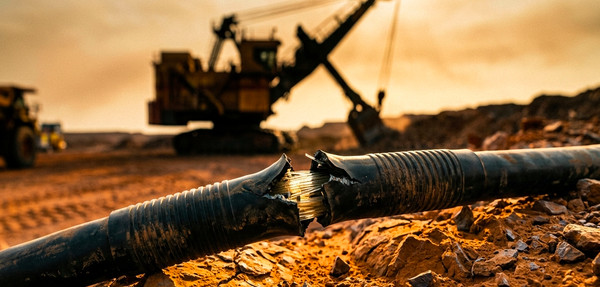
Choosing a dedicated, high performance strategy for your mining connectivity is the only way to avoid the panic of a sudden, total digital blackout. We have seen sites where the sheer vibration of an ore crusher has physically snapped fibres inside their loose tube housings. This is why engineering for the environment is not a choice; it is a survival requirement. Every connection point is a potential failure point, and in the pit, the environment is constantly trying to pry those connections apart.
Stop Troubleshooting, Start Engineering
It is time to move beyond the reactive maintenance cycle that currently dominates your operations. Mining connectivity is an engineering discipline, not a routine maintenance task. When you shift your professional mindset, you stop looking for the fault and start looking for the structural weaknesses in your infrastructure.
- Replacing failed links after a shift stop is amateur work; installing ruggedized hardware is professional engineering.
- Cleaning connectors in a dusty environment is a desperate move; mining connectivity demands sealed, industrial grade interfaces that prevent contamination from the start.
- Adjusting power levels on the fly is a band aid; engineering for a robust link budget is the cornerstone of true mining connectivity.
- Accepting downtime as an expected cost is a failure; treating uptime as the absolute, non negotiable baseline is the only goal of a professional engineer.
By adopting a proactive approach to your mining connectivity, you effectively remove the instability that causes your team to panic during high stakes production. You are not just protecting the signal; you are protecting the sanity of your entire engineering department. Think about the hours wasted by your crew standing in the heat, trying to re-terminate a cable that should have lasted for a decade. That is the true cost of poor mining connectivity. True engineering means building once and building it right, so your team can focus on optimization instead of endless, repetitive repairs.
The Role of Material Science in Mining connectivity
A significant, often overlooked part of mining connectivity is the material science behind the cable jacket. If your fibre cables lack the abrasion resistance and chemical stability required for heavy industrial use, your efforts to improve mining connectivity will always be an uphill battle. We advocate for high density, double jacketed industrial components because they are designed to maintain physical geometry even under extreme stress. When you use inferior hardware, you invite signal loss through light reflection and physical scattering. A professional approach to mining connectivity requires components that provide a consistent, low loss path for your light signals.
If your hardware is not rated for the pit, your entire policy for mining connectivity is effectively useless. We use specialized polymers that resist oil, grease, and the extreme chemical profiles found in tailings ponds and processing plants. This level of detail is what separates a professional, long term network from a temporary fix that will inevitably fail when you need it most. When you select materials engineered for the specific chemical and thermal stress of your site, you aren’t just buying cable; you are investing in the stability of your entire digital backbone.
Environmental Resilience and Mining connectivity Stability
Australian mining sites are notoriously unforgiving. Heat, moisture, and mechanical vibration are the primary enemies of long term uptime. Mining connectivity is impossible to achieve if you do not account for how these elements actively impact your physical layer. If your cable trays are prone to excessive vibration, your connections will loosen over time, leading to micro disconnections. If your environment is hot, your cable materials will expand and contract, causing internal stress on the glass core.
Proper mining connectivity includes hardware that is specifically ruggedized to absorb these environmental shocks. When we design for mining connectivity, we do not just look at the data throughput; we look at the site itself and harden the infrastructure to survive the reality of the room. This includes using hardware with high cycle vibration ratings and IP rated enclosures that prevent moisture ingress. These are the details that ensure your network remains invisible and reliable, year after year. By isolating your fibre from the physical stresses of the mine, you ensure that your data throughput stays consistent, no matter how hard the equipment around it is working.
Technical Lifecycle Management for Mining connectivity Engineers
For the serious engineering team, mining connectivity is about total lifecycle management. You should be able to document the signal health of your network over years, not just days. By keeping logs and performance metrics, you can predict when a link is beginning to degrade before it reaches the failure point. This data driven approach is the heart of mining connectivity. It turns you from a technician into a systems architect.
When you can show your management that you are managing mining connectivity through metrics rather than guesswork, you gain the authority to demand the budget needed to build a truly bulletproof backbone. We recommend regular light level testing and OTDR traces as part of your standard preventive maintenance schedule. This ensures that you are always in control of your infrastructure, rather than letting the infrastructure control your schedule. Managing the lifecycle means understanding that every component has an end of life, and planning for that replacement before it turns into an emergency.
Frequently Asked Questions
- Why your current fiber network keeps failing despite regular maintenance
You are likely treating the symptoms, not the source. If your infrastructure isn’t purpose-built for the Outback’s thermal expansion, high-frequency vibration, and abrasive dust, no amount of “maintenance” will stop the physical degradation of your glass core. You aren’t experiencing maintenance issues; you are experiencing engineering failure.
- Why “ruggedized” hardware is an investment, not an expense
Let’s talk about the cost of a six-hour production stoppage. If your “budget-friendly” cable fails even once, it has already cost you ten times more than the industrial-grade alternative. In a mining pit, generic hardware isn’t a cost-saving measure; it’s a financial liability that guarantees future downtime.
- The dangers of redundant paths using sub-par cable
Adding redundancy with the same fragile cable just doubles your failure points. If your baseline architecture is fundamentally unsuited for the environment, you are simply running two broken systems instead of one. Reliability starts with the integrity of a single, hardened link.
- How to identify a “Silent” failure before it happens
If you aren’t logging light levels and tracking signal degradation over time, you are flying blind. A “silent” failure is simply an outage that hasn’t happened yet. If you notice you’re constantly increasing transmitter power to maintain a link, your system is already on the verge of a catastrophic blackout.
- The Fibre Systems approach to site audits
We don’t just look at data packets; we look at the physics of your site. We audit based on the mechanical, chemical, and thermal realities of your specific pit environment. We don’t offer band-aids; we offer a structural transition from “reactive troubleshooting” to “engineered uptime.”
Step by Step to Bulletproof Data Integrity
If you want to stop chasing faults and actually secure your mine’s digital future, follow this engineering path:
- Baseline your network by measuring light levels on every link today to understand your actual headroom.
- Audit your physical layer to identify the sub par components that are sabotaging your mining connectivity.
- Implement strict site standards by establishing a zero tolerance policy for dirty or unsealed connectors.
- Invest in precision hardware designed for high availability industrial environments to bolster your mining connectivity efforts.
- Monitor for performance trends so you can use diagnostic tools to address degradation before it becomes a multi million dollar outage.
A Reliable Future Starts with Better Hardware
Your infrastructure should be as elite as the massive machinery you operate. Stop gambling with your uptime and start protecting your production. We are ready to help you optimize your mining connectivity strategy today. Request a custom audit for your next site project by contacting the Fibre Systems team.
Our engineers are standing by to audit your pit and ensure your protocols are built to survive the reality of your environment. Stop letting poor planning ruin your output and start building a future proof network that delivers every single time with the help of high standard mining connectivity.
Need to verify your site standards? For more information on Australian cabling standards, visit the ACMA technical cabling rules.