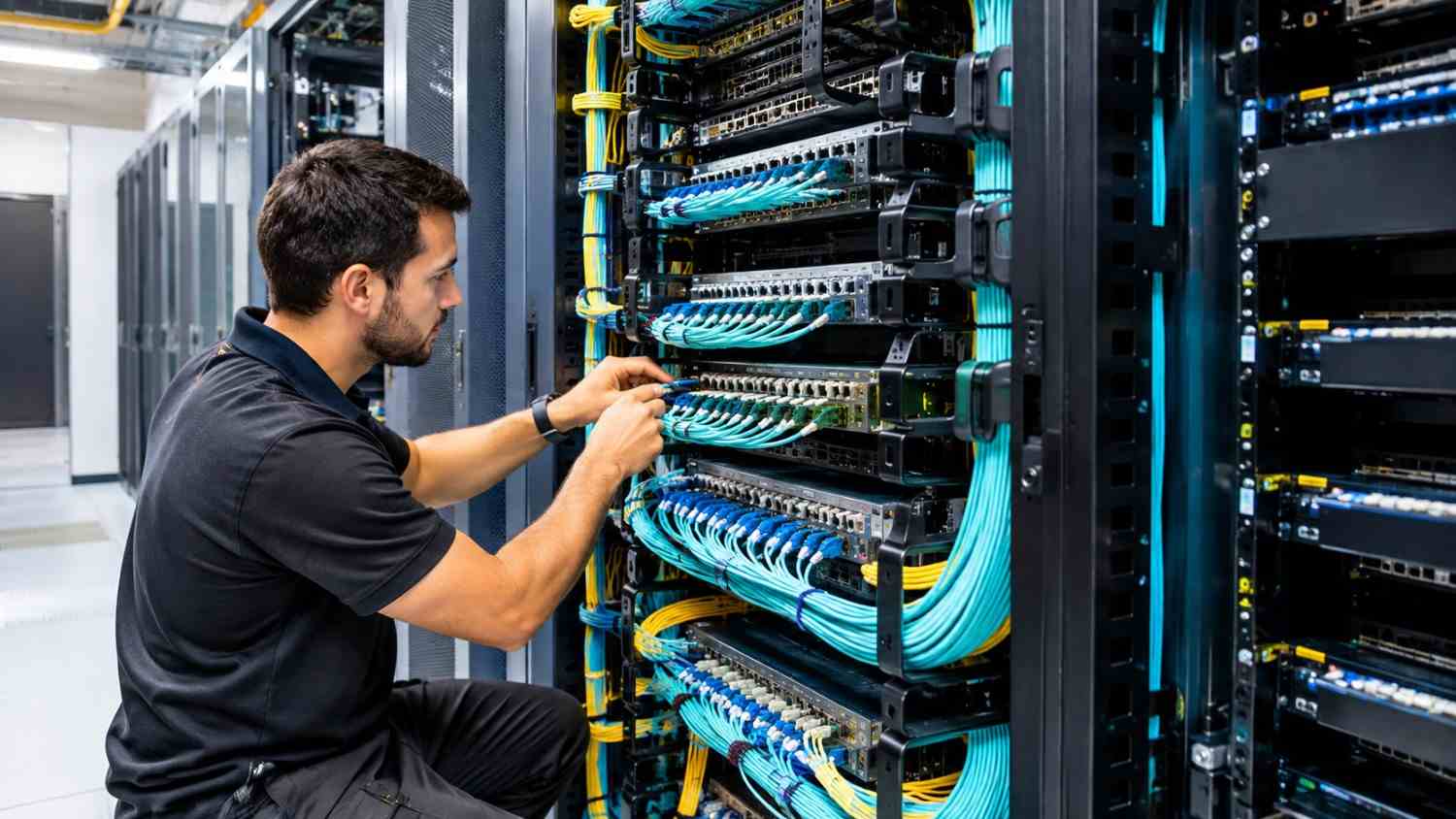
Modern businesses generate and process more data than ever before. Cloud applications, video conferencing, artificial intelligence platforms, Internet of Things devices, and hybrid work environments have transformed how organisations operate. As digital demands continue to grow, network infrastructure must evolve to support higher bandwidth requirements, lower latency expectations, and greater scalability.
Traditional copper-based systems that once served office environments effectively are increasingly struggling to meet modern performance expectations. This shift has accelerated the adoption of advanced enterprise cabling systems designed to support data-intensive business operations across corporate campuses, commercial facilities, and data centres.
Today’s organisations require infrastructure that can adapt to changing technology requirements without disrupting operations. As a result, businesses are investing in advanced network fibre solutions, high-performance connectivity components, and scalable deployment strategies that provide long-term value. Understanding how enterprise cabling is evolving helps organisations make informed decisions that support future growth while maintaining reliable network performance.
The Growing Demand for High-Bandwidth Enterprise Networks
The modern workplace depends on continuous access to digital resources. Employees regularly interact with cloud-based applications, virtual collaboration tools, real-time analytics platforms, and high-definition multimedia content. These activities generate significant network traffic that places increasing pressure on existing infrastructure.
As organisations expand their digital capabilities, network performance becomes a critical business asset. Delays, bottlenecks, and connectivity disruptions can affect productivity, customer service, and operational efficiency.
Digital Transformation Is Driving Network Growth
Businesses across virtually every industry are embracing digital transformation initiatives. From automated workflows and cloud migration projects to advanced cybersecurity systems, modern enterprises require network infrastructure capable of supporting evolving technological demands.
Higher Data Volumes Require Better Infrastructure
The volume of information moving through enterprise networks continues to increase each year. Businesses need infrastructure that can accommodate growing data loads without sacrificing speed or reliability.
How Enterprise Cabling Has Changed Over Time
Enterprise networking has evolved considerably over the past several decades. Early network deployments focused primarily on basic communication requirements and local connectivity. Today, enterprise environments require far more sophisticated infrastructure.
Modern enterprise cabling systems are designed to support scalability, flexibility, and future technology adoption. Rather than simply connecting devices, they provide the foundation for comprehensive digital ecosystems.
From Traditional Cabling to Fibre-Based Networks
Many organisations are transitioning away from legacy copper systems in favour of fibre-optic infrastructure. Fibre technology delivers superior bandwidth capacity while supporting longer transmission distances.
Infrastructure Designed for Future Expansion
Modern enterprise networks are planned with growth in mind. Structured cabling designs help organisations expand their operations without requiring complete infrastructure replacement.
Why Network Fibre Solutions Are Becoming Essential
The increasing reliance on cloud services, remote collaboration tools, and distributed computing environments has elevated the importance of reliable network fibre solutions. Fibre-optic technology offers significant advantages over traditional alternatives.
Unlike copper infrastructure, fibre networks support exceptionally high transmission speeds while maintaining signal quality over long distances. This capability makes fibre an ideal choice for modern business environments.
Supporting Cloud-Based Business Operations
Cloud platforms have become integral to enterprise operations. Reliable fibre infrastructure helps ensure seamless access to critical applications and services.
Enabling Multi-Site Connectivity
Many organisations operate across multiple offices, campuses, or facilities. Fibre-based networks provide the connectivity required to support communication between these locations.
The Role of Fibre Optic Cable Assemblies in Enterprise Networks
Reliable connectivity depends on more than just network design. The quality of physical components significantly influences overall network performance. Professionally manufactured fibre optic cable assemblies play a vital role in ensuring consistent signal transmission.
These assemblies are commonly used in data centres, telecommunications rooms, and enterprise backbone networks where performance and reliability are essential.
Improving Installation Efficiency
Pre-terminated assemblies simplify deployment and reduce installation time. This approach helps minimise disruptions during network upgrades or expansions.
Enhancing Network Reliability
Factory-tested assemblies help maintain consistent performance while reducing the risk of connection-related issues.
Data Centres Are Reshaping Enterprise Cabling Requirements
The growth of enterprise data centres has significantly influenced infrastructure design. Modern facilities support increasing volumes of business-critical applications, requiring networks capable of handling substantial traffic loads.
Data centre environments demand scalable cabling systems that support future technology upgrades without compromising performance.
Fibre Optic Adapters and Their Importance in Modern Networks
As enterprise networks become more sophisticated, interoperability between different components becomes increasingly important. Fibre optic adapters help facilitate secure and efficient connections between fibre infrastructure elements.
These components contribute to network flexibility by supporting a variety of connector types and deployment scenarios.
Supporting Modular Infrastructure Design
Modular network architectures allow organisations to adapt more easily to changing requirements. Adapters help simplify these transitions.
Simplifying Maintenance and Upgrades
Network modifications become more efficient when compatible connectivity components are readily available throughout the infrastructure.
Integrating Legacy Systems with a Fiber Optic to Ethernet Converter
Many businesses continue to operate legacy equipment alongside newer technologies. While organisations may wish to modernise their infrastructure, replacing every connected device simultaneously is often impractical.
A fibre optic to Ethernet converter helps bridge this gap by enabling communication between fibre networks and Ethernet-based equipment.
Extending the Life of Existing Assets
Converters allow organisations to maximise existing technology investments while gradually transitioning toward modern infrastructure.
Supporting Hybrid Network Environments
Many enterprise networks contain a mix of legacy and advanced technologies. Conversion solutions help maintain compatibility across diverse systems.
Enterprise Cabling for Corporate Campuses and Multi-Building Facilities
Large organisations often operate across multiple buildings connected through an extensive network infrastructure. These environments require reliable backbone connectivity capable of supporting significant traffic volumes.
Advanced enterprise cabling systems help ensure consistent communication between departments, facilities, and operational locations.
Reliable Inter-Building Connectivity
Fibre infrastructure provides the performance necessary to support communication between geographically separated facilities.
Supporting Business Continuity
Well-designed cabling systems help organisations maintain operational resilience while reducing the risk of network interruptions.
Preparing Enterprise Networks for 40G and 100G Connectivity
Network requirements continue to evolve as businesses adopt increasingly data-intensive applications. High-capacity infrastructure is becoming essential for organisations seeking to remain competitive.
Many enterprises are preparing to migrate to 40G and 100G environments to support future operational requirements.
Increasing Capacity Without Sacrificing Performance
Higher-speed infrastructure enables businesses to accommodate growing traffic demands while maintaining user experience.
Future-Proofing Digital Investments
Strategic infrastructure planning helps organisations avoid costly upgrades while supporting long-term growth objectives.
Security Considerations in Enterprise Fibre Infrastructure
Cybersecurity remains a top priority for modern organisations. While network security often focuses on software-based protections, physical infrastructure also contributes to overall security strategies.
Fibre technology offers several advantages that support secure communication and data transmission.
Reduced Vulnerability to Interference
Fibre networks are resistant to many forms of electromagnetic interference, helping maintain consistent performance.
Supporting Secure Business Operations
Reliable infrastructure contributes to operational continuity while helping organisations maintain critical communications.
Sustainability and the Future of Enterprise Networking
Environmental responsibility is becoming an increasingly important consideration for businesses. Organisations are seeking infrastructure solutions that support sustainability objectives without compromising performance.
Modern fibre-based systems can contribute to improved efficiency through reduced energy consumption and longer operational lifespans.
Efficient Resource Utilisation
Scalable infrastructure reduces the need for frequent replacement, supporting more sustainable technology practices.
Long-Term Infrastructure Planning
Future-ready network designs help organisations maximise infrastructure value while reducing operational waste.
Emerging Trends Shaping the Future of Enterprise Cabling
The enterprise networking landscape continues to evolve rapidly. Technologies such as artificial intelligence, edge computing, automation, and advanced analytics are creating new demands on network infrastructure.
Businesses that invest in scalable enterprise cabling solutions today will be better positioned to support tomorrow’s innovations. Future networks will rely heavily on advanced network fibre solutions, adaptable fibre optic adapters, efficient fibre optic to Ethernet converter technologies, and high-performance fibre optic cable assemblies to maintain connectivity and operational efficiency.
Conclusion
The evolution of enterprise cabling reflects the changing needs of modern businesses. As organisations adopt cloud services, expand data centre operations, and support increasingly connected work environments, network infrastructure must evolve to keep pace.
Advanced network fibre solutions, reliable fibre optic cable assemblies, versatile fibre optic adapters, and practical fibre optic to Ethernet converter technologies are helping organisations build scalable and future-ready networks. By investing in infrastructure designed for high-bandwidth business environments, enterprises can improve performance, support innovation, and prepare for continued digital growth.
If your organisation is planning a network upgrade or exploring fibre connectivity solutions, contact us to discuss infrastructure options tailored to your business requirements.
FAQs
1. What is enterprise cabling?
Enterprise cabling is a structured network infrastructure system that connects computers, servers, telecommunications equipment, and other business technologies. It provides the foundation for data, voice, internet, and communication services across offices, campuses, data centres, and commercial facilities.
2. Why are network fibre solutions important for businesses?
Network fibre solutions are important because they provide high-speed, high-bandwidth connectivity that supports cloud applications, video conferencing, data-intensive workloads, and future business growth. Fibre networks also offer greater scalability, reliability, and performance than many traditional copper-based network systems.
3. What are fibre optic cable assemblies used for?
Fibre optic cable assemblies are used to connect network equipment within enterprise networks, data centres, and telecommunications environments. These pre-terminated assemblies simplify installation, reduce deployment time, improve signal reliability, and help maintain consistent network performance.
4. How do fibre optic adapters benefit enterprise networks?
Fibre optic adapters enable secure connections between compatible fibre optic connectors and network components. They help organisations create flexible network designs, simplify maintenance, support infrastructure upgrades, and improve interoperability across enterprise fibre systems.
5. What does a fiber optic to Ethernet converter do?
A fibre optic to Ethernet converter allows communication between fibre-optic networks and Ethernet-based devices. It converts optical signals into Ethernet signals, enabling businesses to connect legacy equipment, extend network reach, and integrate older systems into modern fibre infrastructure.