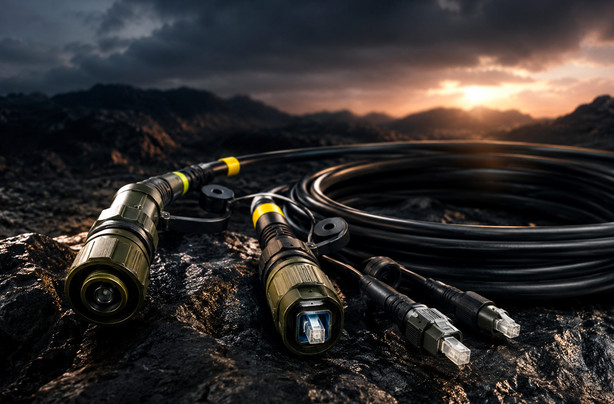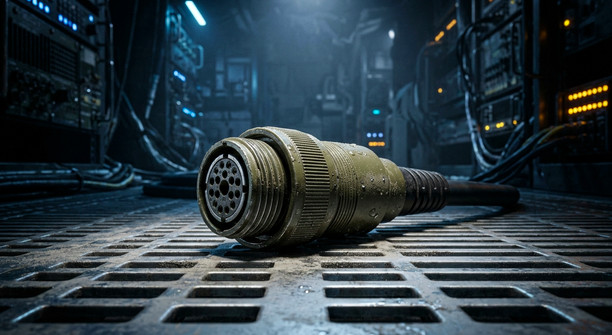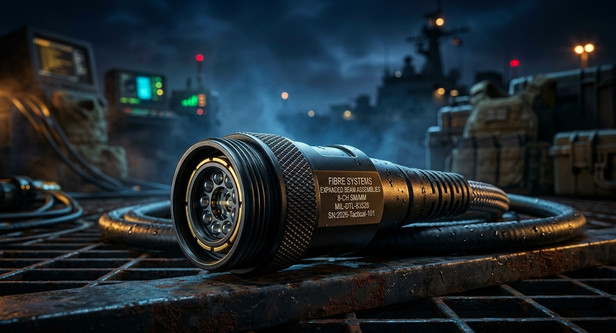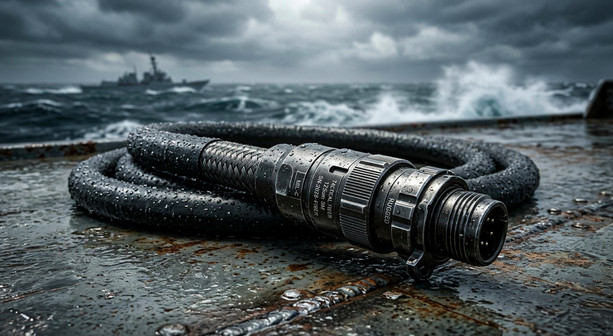
Mil-Spec Cable assemblies designed and supplied by Fibre Systems serve as the crucial optical backbone inside modern naval vessels, tactical defense systems, and high-stakes industrial machinery. A Mil-Spec Cable is a heavy-duty fiber optic or hybrid assembly built according to rigorous military specifications to ensure uninterrupted data transmission in environments where commercial grade hardware fails completely. In naval engine rooms, radar compartments, and exposed deck housings, extreme mechanical shock, violent motor vibration, and relentless salt spray create constant operational threats.
Deploying an ordinary optical link in these unconditioned compartments often leads to sudden laser signal dropouts, severe physical wear, and expensive system downtime. By implementing a properly rated Mil-Spec Cable, defense operators and marine engineers shield critical communication lines from catastrophic failure and maintain real-time situational awareness during high-stakes sea maneuvers.
Why Standard Optical Hardware Collapses Where a Mil-Spec Cable Thrives
Operating a vessel in open ocean waters presents a continuous battle against environmental deterioration. Shipboard engine rooms generate persistent low-frequency vibration and violent harmonic shock waves during high-speed engine acceleration. Standard commercial fiber assemblies rely on lightweight plastic jacketing and minimal internal aramid buffering. When subjected to continuous mechanical movement, standard cables experience internal glass strand micro-fractures, causing optical loss levels to skyrocket without warning.
Furthermore, marine air inside hull compartments carries high concentrations of corrosive salt spray, humidity, and airborne diesel soot. Commercial connectors and unsealed cable jackets allow moisture to migrate deep into internal cable channels, leading to chemical degradation and severe signal attenuation. In contrast, a certified Mil-Spec Cable utilizes multi-layer protective armor, heavy-duty outer jacketing compounds, and precision-engineered internal water-blocking gels. This specialized construction isolates sensitive glass fibers from surrounding environmental threats, ensuring that every optical channel maintains strict performance tolerances over years of continuous service.
| PERFORMANCE FEATURE | STANDARD COMMERCIAL CABLE | MIL-SPEC CABLE SOLUTION |
| Resistance to Engine Vibration | Low; prone to micro-bending fatigue | High; dynamic aramid buffering protection |
| Salt Spray and Chemical Ingress | Weak; outer plastic jacket degrades fast | Total immunity; fluoro-polymer barrier shield |
| Tensile Strength and Pulling Limit | Light duty under three hundred Newtons | Extreme duty over two thousand Newtons |
| Operational Temperature Range | Minus ten to sixty degrees Celsius | Minus fifty-five to one hundred twenty-five degrees |
| Crush and Impact Survival Limit | Poor; glass cores crack under direct foot pressure | Heavy steel armor; extreme crush resistance |
The Real Cost of Optical Failures in Unconditioned Maritime Engine Compartments
When an optical cable fails inside a shipboard control system, the operational consequences are immediate and severe. A single drop in optical signal integrity can blind radar arrays, disable automated fire control systems, or cut off vital propulsion telemetry. In commercial shipping and naval defense sectors alike, unscheduled maintenance in middle-of-the-ocean scenarios creates massive financial loss and severe safety hazards.
Replacing damaged commercial cabling inside tight naval bulkheads is a frustrating, labor-intensive process. Technicians must navigate confined crawlspaces, remove protective cable trays, and execute tedious splicing procedures while fighting sea motion. Standard cables simply lack the structural integrity required to endure repeated hull flex and thermal expansion cycles. By investing in purpose-built Mil-Spec Cable networks, ship builders and fleet managers eliminate the constant headache of emergency cable repairs, significantly lowering long-term total cost of ownership across all operational fleet assets.
Understanding the Structural Layers Inside a High-Performance Mil-Spec Cable
To understand how a Mil-Spec Cable withstands dynamic marine environments, one must examine its internal engineering. Unlike simple patch cords, military-grade optical cables feature a complex multi-layered architectural defense mechanism designed for absolute survivability.
Every core glass strand is made of ultra-pure silica glass treated with specialized primary coatings to prevent surface micro-cracking during tight bending maneuvers around bulkhead corners. Surrounding the glass are high-density Kevlar aramid strength members distributed evenly around the central tube to absorb extreme pulling tension and dynamic mechanical shock during high-speed cable pay-off routines.
Additionally, specialized dry yarns or gels swell instantly upon contact with moisture, preventing salt water from traveling along internal cable corridors if the outer skin is punctured. A corrugated steel or stainless steel braided armor layer provides total crush resistance and shields internal fibers against sharp hull edges and rodent damage. Finally, a flame-retardant, chemical-resistant tactical polyurethane outer jacket completes the Mil-Spec Cable assembly, surviving continuous exposure to diesel fuels, hydraulic oils, and intense UV radiation. Every single layer in a Mil-Spec Cable works in harmony to shield delicate optical signals, guaranteeing that data flows smoothly across internal ship networks without interruption or signal degradation.
Key Military and Industry Standards Governing Every Certified Mil-Spec Cable
Naval vessels operate under strict regulatory regimes to guarantee equipment interoperability and crew safety. Every Mil-Spec Cable specified for maritime defense application must pass demanding environmental and mechanical testing protocols before installation.
A primary benchmark for military optical cabling is MIL-PRF-85045, which governs high-reliability optical fiber cables designed for aerospace and shipboard environments. Cables meeting this standard undergo rigorous shock tests, flame propagation testing, and long-term fluid immersion evaluation. Additionally, connectors mated to these cables frequently follow MIL-DTL-38999 or ARINC 801 standards to maintain hermetic sealing against ambient pressure changes and moisture ingress.
In Australian maritime and commercial harbor installations, hardware deployment must also comply with national regulatory frameworks. Following ACMA Cabling Provider Rules and Wiring Regulations ensures that all optical network installations satisfy mandatory safety, grounding, and structural compatibility criteria. Integrating a fully compliant Mil-Spec Cable ensures seamless integration between onboard tactical networks and onshore port communications facilities.
Step-by-Step Guide: Installing a Mil-Spec Cable in Violent Vibration Zones
Installing optical infrastructure inside high-vibration engine rooms or deck compartments demands strict adherence to engineering best practices. Following a structured procedure prevents accidental fiber damage and guarantees maximum service life.
- Conduct Thorough Route Inspection: Survey the planned cable pathway through ship bulkheads and engine rooms. Identify potential pinch points, hot exhaust pipes, and sharp metal corners that require protective conduit or rubber grommets.
- Calculate Safe Minimum Bend Radius: Verify that the chosen Mil-Spec Cable maintains its minimum bend radius during both installation pulling and final securing phases. Exceeding recommended bend limits creates permanent glass strain and signal loss.
- Set Up Smooth Tensioned Payoff Equipment: Use specialized field deployment tripods and controlled payoff reels to feed the Mil-Spec Cable into main cable trays. Never pull cable directly over sharp steel deck edges without using roller guides.
- Apply Uniform Pulling Grip Forces: Attach certified pulling grips directly to the internal aramid strength members rather than the outer jacket alone. This ensures tension distributes evenly across the internal structural core during long bulkhead pulls.
- Secure Cable Using Cushioned Marine Clamps: Fasten the Mil-Spec Cable to ship structures using neoprene-lined marine clamps spaced at regular intervals. Cushioned clamps isolate the cable from continuous motor vibration while preventing outer jacket abrasion.
- Execute Precision Optical End-Face Inspection: Inspect all fiber end-faces with a digital inspection scope prior to mating. Ensure that zero dust or moisture contamination enters the connector housing during final mechanical lockup.
Solving Fretting Corrosion in Mated Mil-Spec Cable Interconnects
Fretting corrosion is one of the most deceptive technical challenges facing maritime optical networks. When two optical connectors mate inside an engine room, micro-vibrations cause the ceramic ferrules to rub against one another millions of times per hour. Over time, this microscopic friction grinds ceramic material into fine white powder, which traps laser light and destroys optical budgets.
A modern Mil-Spec Cable assembly overcomes fretting corrosion by utilizing spring-loaded terminus inserts engineered with precise contact force dynamics. High-tension stainless steel internal springs maintain uniform end-face pressure, preventing tiny physical separations during violent hull movement. By eliminating the microscopic physical gap between mated ferrules, a certified Mil-Spec Cable prevents abrasive particle buildup and ensures stable signal transmission through the stormiest sea conditions imaginable.
Environmental Threats Confronted by a Mil-Spec Cable in Maritime Operations
Naval engine compartments present a combination of physical hazards rarely encountered in land-based office environments. Understanding these threats highlights why selecting a specialized Mil-Spec Cable is an absolute necessity for mission safety.
Engine room machinery creates continuous motor vibration that causes unanchored connector backing nuts to loosen and glass strands to suffer micro-bending fatigue. Meanwhile, airborne salt mist and humidity destroy commercial aluminum housings and degrade soft plastic outer jackets over short operating periods. Furthermore, accidental exposure to diesel fuel and hydraulic fluids softens standard PVC jackets, causing internal water ingress that clouds optical channels.
Rapid thermal cycling causes physical material expansion and contraction, creating severe mechanical stress across unarmored fiber splices. Finally, severe kinetic hull shock from heavy machinery or rough sea swells dislodges unanchored cabling, leading to sudden physical shearing or complete connection failure. Using a heavy-duty Mil-Spec Cable provides total immunity against these severe environmental threats, preserving vital communications when operational conditions become extreme.
How a Specialized Mil-Spec Cable Enhances Autonomous Marine Systems
The rapid adoption of autonomous surface vessels and subsea unmanned platforms has transformed modern maritime operations. These unmanned craft rely heavily on continuous sensor data streams, navigation telemetry, and high-definition sonar imaging to operate safely without human crews aboard.
A compact, multi-fiber Mil-Spec Cable provides the ultra-high bandwidth required to stream massive volumes of sensor data back to primary command modules. Because autonomous craft possess tight space and weight limitations, using a lightweight yet extremely rugged Mil-Spec Cable allows system designers to reduce wiring weight without sacrificing physical durability. Furthermore, because optical signals travel via light rather than electrical currents, a Mil-Spec Cable offers complete immunity to electromagnetic interference generated by heavy onboard propulsion motors and high-power radar transmitters.
How to Select the Ideal Mil-Spec Cable Configuration for Your Fleet
Choosing the correct cable specification requires a clear understanding of your specific vessel geometry, bandwidth demands, and environmental exposure levels. Marine engineers should evaluate several key factors during the product selection phase.
First, determine whether single-mode fiber is required for long-distance subsea links or multimode fiber for high-density short-run data transmission within hull spaces. Second, evaluate jacket material properties carefully. Select low-smoke zero-halogen polyurethane jackets for internal hull runs to protect crew members from toxic fumes in the event of an onboard fire emergency.
Third, assess structural armoring requirements for your target installation route. Specify corrugated metallic tape or braided armor for cable paths exposed to heavy machinery or foot traffic along main access corridors. Fourth, ensure the Mil-Spec Cable terminates into military-standard multi-pin shells such as MIL-DTL-38999 or ARINC 801 to preserve hermetic sealing across bulkheads. Consulting with experienced fiber specialists ensures that your chosen Mil-Spec Cable meets exact operational requirements and delivers flawless long-term performance across every sea route.
Real-World Case Study: Overcoming Engine Room Network Blackouts
A commercial offshore support vessel operating in rough sea conditions experienced recurring data dropouts on its engine monitoring control network. Investigations revealed that standard industrial patch cables installed near the primary diesel generators were disintegrating due to continuous vibration and oil mist exposure. The outer jackets had cracked, allowing diesel fuel to penetrate the buffer tubes and cloud the fiber end-faces.
To resolve the crisis permanently, ship engineers replaced the damaged lines with custom-built Mil-Spec Cable assemblies featuring oil-resistant polyurethane jacketing and spring-loaded stainless steel terminus inserts. The new Mil-Spec Cable installation was secured using cushioned marine vibration clamps and sealed against fluid ingress.
Following the upgrade, the vessel completed over eighteen months of continuous offshore service without experiencing a single optical signal fault. The heavy-duty Mil-Spec Cable completely eliminated unscheduled network downtime, saving the operator tens of thousands of dollars in emergency repair expenses and lost operational days.
Long-Term Maintenance and Inspection Protocols for Every Mil-Spec Cable
While a certified Mil-Spec Cable is built for incredible physical endurance, implementing a routine maintenance protocol ensures optimal optical performance throughout the vessel lifespan.
Always verify that environmental dust caps remain tightly secured on unmated Mil-Spec Cable connector ends to prevent ambient dust contamination from entering precision ferrule housings. Perform periodic optical time-domain reflectometer sweeps along primary cable runs to detect subtle signal attenuation spikes before they cause complete network dropouts.
Additionally, inspect marine mounting clamps periodically to ensure fastening bolts remain tight and rubber cushions have not degraded due to heat exposure. When mating or unmating a Mil-Spec Cable, use lint-free optical wipes and approved solvent pens to clean ferrule end-faces without scratching delicate optical surfaces. By following these simple preventive maintenance steps, naval technicians maximize the operational lifespan of their Mil-Spec Cable infrastructure and guarantee mission readiness at all times.
Frequently Asked Questions
What makes a Mil-Spec Cable different from a standard industrial fiber optic cable?
A Mil-Spec Cable is built according to strict military specifications such as MIL-PRF-85045, incorporating specialized aramid buffering, fluid-resistant outer jackets, and crush-resistant metal armor. Standard industrial cables lack the specialized internal spring mechanisms, flame-retardant materials, and severe vibration resistance required for military defense and marine vessel compartments.
Can a Mil-Spec Cable withstand direct exposure to diesel fuel and salt water?
Yes, a certified Mil-Spec Cable features advanced polyurethane or fluoro-polymer outer jacketing and internal water-swellable yarn barriers designed specifically to resist diesel oil, hydraulic fluids, salt spray, and continuous high humidity without deteriorating or losing structural integrity over extended deployments.
How does a Mil-Spec Cable prevent signal loss caused by continuous engine vibration?
A Mil-Spec Cable utilizes precision-engineered internal strength members and spring-tensioned connector termini that maintain constant, uniform physical contact force between glass end-faces. This dynamic construction absorbs vibration energy and prevents ferrule separation, eliminating micro-bending loss and fretting corrosion inside high-vibration maritime compartments.
Is it necessary to use special tools when installing a Mil-Spec Cable on naval vessels?
Yes, technicians should use calibrated tension-pulling grips, smooth-wheel payoff reels, and certified digital end-face inspection scopes during installation. Using proper tension tools prevents pulling damage, while cushioned marine clamps isolate the Mil-Spec Cable from structural vibration along engine room bulkheads.
How do I select the right Mil-Spec Cable configuration for my shipboard application?
Selection depends on your specific vessel location, required fiber strand count, exposure to fluids or UV light, and connector shell type. Evaluating environmental factors such as engine room heat or deck crush risks ensures you specify a Mil-Spec Cable built with the precise armor and jacket properties required for your mission.
Key Summary Points
- Engineered for Extreme Environments: A certified Mil-Spec Cable provides total structural protection against severe engine vibration, kinetic shock, salt spray corrosion, and chemical exposure in harsh marine compartments.
- Prevents Costly Network Downtime: Replacing fragile commercial fiber with ruggedized optical cabling eliminates unscheduled signal dropouts and expensive emergency repairs during sea operations.
- Advanced Multi-Layer Construction: Built with high-density aramid strength members, water-blocking swellable elements, braided metal armor, and fluid-resistant outer polyurethane jackets.
- Eliminates Fretting Corrosion: Spring-loaded terminus assemblies keep ferrule end-faces firmly mated, preventing abrasive particle dust from degrading optical signal budgets.
- Compliant with Global and Local Standards: Meets strict military standards like MIL-PRF-85045 while satisfying national Australian cabling rules for seamless harbor and defense fleet integration.
Secure Your Critical Communications with Certified Optical Infrastructure
When operating high-value naval craft, offshore platforms, or mission-critical tactical hardware, trusting unproven optical cabling puts your entire operation at risk. A single cable breakdown inside an engine compartment can cripple vital telemetry, interrupt sensor streams, and force expensive emergency port docks. Investing in purpose-engineered Mil-Spec Cable systems ensures that your critical communication lines stay open through violent sea storms, extreme thermal shifts, and intense engine vibration.
At Fibre Systems, we design, assemble, and test heavy-duty fiber optic solutions built specifically to survive the toughest Australian defense and marine environments. Explore our complete range of tactical fiber reels, heavy-duty connectors, and custom cabling assemblies by visiting the Fibre Systems optical products catalog.
Ready to upgrade your vessel communications backbone or need expert guidance on custom military-grade cable specifications? Contact our specialized technical engineering team today through the Fibre Systems technical support team page to request a detailed quote or discuss your project requirements.