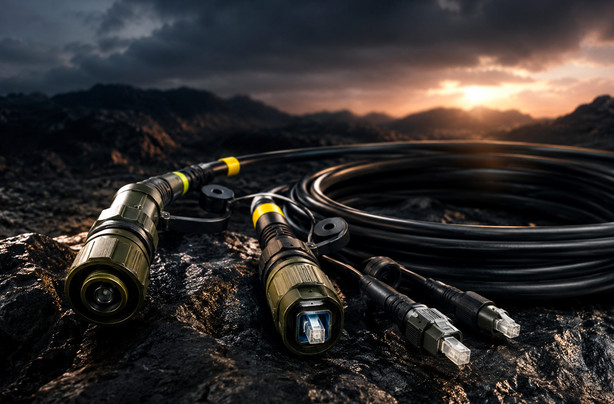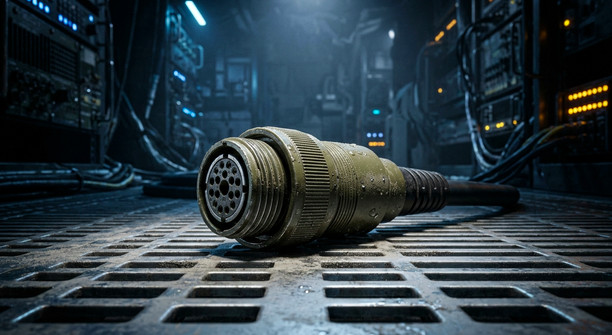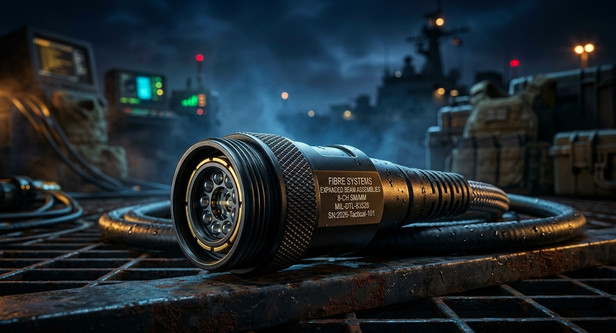
MARS Reels engineered and supplied by Fibre Systems deliver essential cable management and field deployment survivability for temporary optical links across remote military operational zones, heavy industrial installations, and expansive mining pits. Modular Advanced Reel System designs, commonly recognized as MARS Reels, represent specialized field payout hardware built specifically to deploy, retrieve, and shield multi-fiber tactical cables under extreme physical stress. In fast moving field operations, establishing temporary high-bandwidth communication lines is critical for tactical command, automated sensor backhaul, and heavy machinery telemetry.
However, unspooling fragile glass fibers over jagged rocks, heavy mud, and high-vibration vehicle beds frequently results in severe cable snags, crushed jackets, and permanent glass core fractures. Deploying heavy-duty MARS Reels eliminates these costly mechanical hazards, allowing field engineers and defense units to establish reliable optical networks in minutes without risking signal attenuation or equipment destruction.
Why Conventional Spools Collapse Where MARS Reels Thrive
Deploying fiber optic cables in harsh remote sites is radically different from installing static communications lines inside climate-controlled building conduits. Traditional wooden spools or cheap commercial plastic reels lack the structural reinforcement required to withstand rugged field transport. When exposed to severe drop impacts from utility trucks, heavy vibration inside armored personnel carriers, or extreme temperature swings, conventional reels warp, crack, or completely bind up during payout operations.
Furthermore, standard commercial spools provide zero physical protection for delicate connector end-faces during rapid retrieval. When field technicians wind tactical cables back onto cheap spools under chaotic conditions, uneven tension creates overlapping cable loops that crush underlying buffer tubes.
In sharp contrast, heavy-duty MARS Reels incorporate impact-resistant composite materials, precision internal braking systems, and integrated connector storage hubs. This specialized engineering ensures that MARS Reels maintain smooth, controlled cable payoff and retrieval even when operated under intense pressure in remote Australian outback environments.
| OPERATIONAL FEATURE | STANDARD COMMERCIAL SPOOLS | MARS REELS FIELD SOLUTIONS |
| Mechanical Impact Resistance | Low; brittle plastic or wood cracks easily | High; rugged composite armor absorbs drops |
| Cable Tension and Payout Control | Uncontrolled; prone to over-spin and tangles | Precision internal friction brake mechanism |
| Connector Protection Hub | None; connectors hang exposed to dirt | Integrated recessed housing seals end-faces |
| Portability and Field Handling | Awkward; lacks ergonomic carry points | Ergonomic frame design with stacking points |
| Environmental Durability | Weak; degrades under UV and mud exposure | High; chemical resistant and fully washable |
The Financial and Tactical Cost of Field Fiber Damage
When a tactical fiber cable suffers a micro-fracture during field deployment, the operational consequences can be catastrophic. In defense operations, a severed optical link cuts off real-time video surveillance feeds, radar data, and command communications during critical tactical maneuvers. In heavy open-pit mining operations, a damaged communications tether disables autonomous haul trucks, bringing multi-million dollar extraction routines to a complete standstill.
Replacing damaged tactical cables in remote field locations is exceptionally expensive and time consuming. Fusion splicing ultra-thin glass strands in dusty, windy outback environments requires specialized clean-field enclosures and highly trained technicians.
By standardizing on high-reliability MARS Reels, mining operators and defense contractors prevent cable tangles, eliminate localized bend radius violations, and protect high-value optical harnesses from physical destruction, ensuring maximum field uptime and eliminating costly operational delays.
Understanding the Internal Engineering Behind MARS Reels
To appreciate how MARS Reels protect delicate tactical fiber, one must examine the specific mechanical components built into every reel frame. Unlike basic hose reels, tactical fiber management hardware requires specialized engineering to maintain strict optical bend radius limits.
Central to the performance of MARS Reels is the engineered drum core diameter. Fiber optic cables cannot be wound around tight axles without introducing severe optical attenuation and micro-bending strain. The large core hub inside MARS Reels ensures that the cable never violates its safe minimum bend radius, even when wound tightly under heavy manual tension.
Additionally, MARS Reels feature adjustable drag brake mechanisms that allow operators to control payoff resistance. This feature prevents spool over-spin, which occurs when a technician stops running forward but the reel continues spinning, spilling loose loops of cable into mud or vehicle tracks. Integrated crank handles, heavy-duty axle bearings, and stackable outer cage frames complete the MARS Reels design, providing complete physical armor during transit and field storage.
Industry Standards and Compliance Protocols Governing MARS Reels
Deploying temporary optical cabling across military bases, commercial mining sites, and civil infrastructure projects requires strict compliance with international and national engineering standards. Tactical cable handling equipment must satisfy demanding physical drop tests, salt fog exposure routines, and extreme operating temperature limits.
For defense applications, tactical fiber systems and field reels must align with rigorous military specifications to ensure total interoperability with mobile command vehicles and tactical switchboards. These protocols ensure that hardware operates flawlessly in ambient temperatures ranging from sub-zero mountain passes to scorching desert mining sites.
In Australian commercial and industrial sectors, temporary communication infrastructure installations must also align with local regulatory frameworks. Adhering to ACMA Cabling Provider Rules and Wiring Regulations guarantees that field optical networks maintain safety, correct grounding, and structural compatibility when interfacing with public telecommunication networks. Utilizing fully certified MARS Reels ensures that all field deployment procedures satisfy both military field readiness criteria and national communications standards.
Step-by-Step Guide: Deploying Tactical Fiber Using MARS Reels
Establishing a temporary optical link in rugged field environments requires a methodical approach to prevent cable twisting, jacket abrasion, and connector contamination. Following a structured deployment routine ensures maximum operational reliability.
- Conduct Pre-Deployment Equipment Inspection: Inspect the outer frame of MARS Reels for physical damage and verify that the internal drag brake engages smoothly. Ensure environmental dust caps are tightly locked over all connector end-faces.
- Set Up a Stable Reel Anchor Point: Position the frame of MARS Reels on stable, level ground near the primary communications node. Utilize built-in frame anchor holes or rubber foot pads to prevent the reel from sliding during rapid payout.
- Adjust the Internal Drag Brake Friction: Set the drag tension knob on MARS Reels to provide moderate resistance. Proper drag prevents spool over-spin when field personnel run with the cable end across uneven terrain.
- Execute Controlled Cable Payout: Pull the tactical cable end smoothly away from MARS Reels, walking along pre-surveyed pathways. Avoid dragging connector ends through loose dirt, water puddles, or heavy brush.
- Secure the Static Cable Anchor Loop: Once the desired deployment length is reached, engage the reel lock pin on MARS Reels to prevent further unspooling. Secure the cable near the reel using a strain-relief grip to isolate the hub from pulling force.
- Clean and Mate Connector Termini: Remove protective dust caps from the cable connector and clean ferrule end-faces using approved optical cleaning cassettes before mating into the communications terminal.
Preventing Connector Damage During Rapid Field Retrieval
Retrieving temporary fiber cables after a field exercise or mobile mining shift presents significant risks to optical hardware. When technicians hastily drag hundreds of meters of cable across sharp gravel and heavy mud, connector end-faces are easily gouged, scratched, or contaminated.
Modern MARS Reels solve this critical vulnerability by incorporating dedicated, recessed connector storage compartments directly inside the central drum wall. Before turning the retrieval crank, field operators secure the primary connector inside this protected housing.
As the crank turns, MARS Reels wrap the tactical cable evenly across the drum core while keeping the fragile connector completely isolated from dirt, vehicle traffic, and physical impact. This simple yet highly effective feature extends the operational lifespan of expensive tactical cable assemblies by hundreds of field deployment cycles.
Environmental Hazards Overcome by MARS Reels in Australian Field Sites
Remote Australian defense training areas and open-pit mine sites present some of the most challenging environmental conditions on earth. Understanding these environmental threats highlights why selecting specialized MARS Reels is essential for reliable field communications.
Unforgiving red dust and fine silica sand quickly penetrate unsealed mechanical bearings, causing cheap commercial reels to seize up completely. High solar UV exposure degrades soft plastics, causing unreinforced spools to become brittle and shatter when dropped onto hard ground.
Furthermore, mud accumulation adds massive physical weight to unspooling cables, placing extreme pulling tension on internal glass strands. Heavy machinery traffic across field sites creates constant risk of cables being run over or snagged on passing equipment chassis. Deploying ruggedized MARS Reels provides full structural protection against these environmental hazards, ensuring uninterrupted signal flow across any terrain.
Enhancing Tactical Mobility in Unmanned and Autonomous Field Operations
The modernization of military forces and industrial mining pits heavily relies on autonomous ground vehicles, uncrewed aerial systems, and remote automated monitoring arrays. These high-tech platforms require massive data bandwidth to transmit high-definition video, thermal imaging, and real-time control signals back to central operations hubs.
Using lightweight, modular MARS Reels enables tactical teams to rapidly deploy high-capacity fiber backbones ahead of autonomous vehicle movements. Because optical fiber is immune to radio frequency jamming and high-voltage electromagnetic interference, temporary fiber tethers deployed via MARS Reels deliver unhackable, crystal-clear communications in contested or electronically noisy environments.
The compact footprint and stackable design of MARS Reels allow military light vehicles and mobile mining command units to carry multiple kilometers of tactical optical fiber without exceeding strict payload weight limits.
How to Select the Optimal MARS Reels Configuration for Your Project
Selecting the correct field reel specification depends on cable diameter, total deployment length, environmental exposure, and transport methods. Engineering teams should evaluate several critical criteria during selection.
First, calculate total cable volume and weight. Ensure the drum capacity of MARS Reels matches or exceeds the required length of your tactical cable harness, leaving adequate space to prevent cable spillage over drum flanges. Second, assess transport ergonomics. For foot-patrol applications, lightweight backpackable MARS Reels frames are essential to minimize operator fatigue.
Third, consider vehicle mounting requirements. For truck or trailer installations, select MARS Reels models featuring integrated A-frame mounts, vehicle lockdown brackets, and motorized or hand-crank options. Fourth, verify environmental sealing ratings on all mechanical brake housings and storage hubs to prevent dust and water ingress.
Consulting with experienced optical infrastructure specialists ensures that your selected MARS Reels hardware perfectly matches your tactical field requirements.
Real-World Case Study: Eliminating Fiber Failures in Remote Mine Sites
A major Western Australian iron ore mining operation experienced frequent communication blackouts across its mobile telemetry network. Field crews routinely deployed temporary fiber patch cables across pit floors using basic hand-held spools. Continuous exposure to heavy haul truck vibration, sharp rock debris, and improper manual winding caused frequent glass core fractures, resulting in hours of unscheduled autonomous truck downtime.
To eliminate these costly network failures, the mine operator replaced its legacy spools with heavy-duty MARS Reels fitted with tactical multi-fiber cables. The new MARS Reels provided controlled payout drag, preventing cable snags, while the integrated drum storage hubs protected connector end-faces during daily relocation routines.
Over the following twelve months, the mining operation reported zero cable-related optical signal blackouts. The adoption of MARS Reels completely eliminated unscheduled network downtime, saving the company hundreds of thousands of dollars in lost operational productivity.
Essential Field Maintenance Protocols for MARS Reels
To ensure long-term operational reliability in dusty and wet environments, field technicians should execute basic preventive maintenance protocols on all MARS Reels hardware.
Regularly inspect outer frame structures for cracks or missing hardware after every major field deployment. Wash down MARS Reels using clean fresh water to remove accumulated mud, salt spray, and abrasive dirt from drive gears and axle bearings.
Periodically check and adjust drag brake friction pads to ensure smooth, consistent payout resistance. Apply light marine-grade silicone lubricant to rotating axle shafts and folding crank handle hinges to prevent corrosion. Finally, verify that protective rubber dust seals inside connector storage compartments remain soft, pliable, and free of sand debris.
Following these straightforward maintenance steps ensures that MARS Reels remain fully operational and ready for immediate deployment during mission-critical field operations.
Frequently Asked Questions
What does the acronym MARS Reels stand for in field fiber optics?
MARS Reels stands for Modular Advanced Reel System reels. They are heavy-duty, highly portable cable management spools engineered specifically to deploy, retrieve, and shield tactical fiber optic cables in harsh military, emergency, and industrial environments.
How do MARS Reels prevent optical fiber core fractures during rapid payout?
MARS Reels incorporate large-diameter central drums that enforce safe minimum bend radius limits for tactical optical cables. Additionally, adjustable internal drag brakes prevent spool over-spin, eliminating loose cable loops that cause snags, kinks, and severe glass core fractures.
Can MARS Reels be stacked or mounted onto mobile defense vehicles?
Yes, modern MARS Reels feature ruggedized, stackable outer cage frames and optional vehicle mounting brackets. This modular structural design allows defense forces and mining operators to stack multiple reels securely inside transport trucks or mount them onto mobile command platforms.
Are MARS Reels resistant to mud, salt water, and chemical exposure?
Yes, high-grade MARS Reels are constructed using high-impact composite materials, stainless steel hardware, and chemical-resistant coatings designed specifically to endure harsh Australian outback mud, diesel fuel splash, UV radiation, and salt spray without corroding or seizing up.
How do I choose the correct size MARS Reels for my tactical cable length?
Selecting the right size requires calculating the outer diameter and total length of your tactical fiber cable. Match these dimensions against the drum volume specifications of MARS Reels to ensure the cable fits comfortably within the drum flanges with adequate clearance for safe transport.
Key Summary Points
- Engineered for Harsh Field Deployment: MARS Reels deliver unmatched physical protection for tactical fiber cables across rugged defense training zones and open-pit mining operations.
- Prevents Severe Optical Core Damage: Large engineered drum diameters maintain strict minimum bend radius limits, preventing glass micro-fractures, optical loss, and costly signal downtime.
- Integrated Connector Protection: Recessed connector storage hubs isolate delicate ferrule end-faces from mud, dust, and crushing impacts during field retrieval and transit.
- Controlled Cable Payout Dynamics: Adjustable internal drag brake mechanisms prevent spool over-spin, tangles, and loose cable loops during rapid field deployment.
- Compliant with Technical Standards: Meets strict military field readiness specifications while satisfying national Australian cabling regulations for seamless network integration.
Upgrade Your Field Communications with Rugged Tactical Infrastructure
Deploying temporary fiber optic lines in extreme environments should never be a game of chance. Trusting fragile commercial spools or unreinforced cable management hardware exposes your team to frustrating network dropouts, damaged equipment, and costly field delays. Investing in purpose-built MARS Reels ensures that your high-capacity optical links remain operational through violent vehicle transport, harsh weather shifts, and rapid field maneuvers.
At Fibre Systems, we specialize in providing battle-tested tactical fiber solutions, rugged reels, and custom cable assemblies engineered to survive the most demanding Australian conditions. Explore our full range of field deployment hardware by visiting the Fibre Systems optical products catalog.
Ready to optimize your mobile communications setup or need expert advice on selecting the ideal reel specifications for your fleet? Contact our specialized technical engineering team today through the Fibre Systems technical support team page to discuss your project requirements or request a detailed quote.