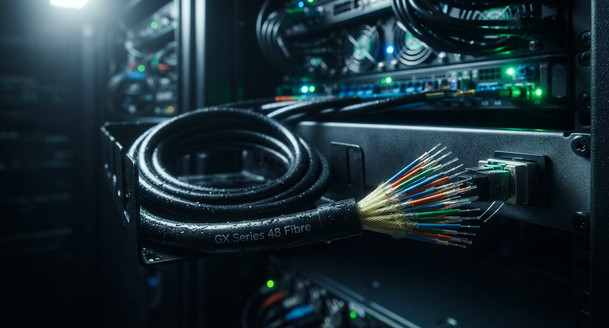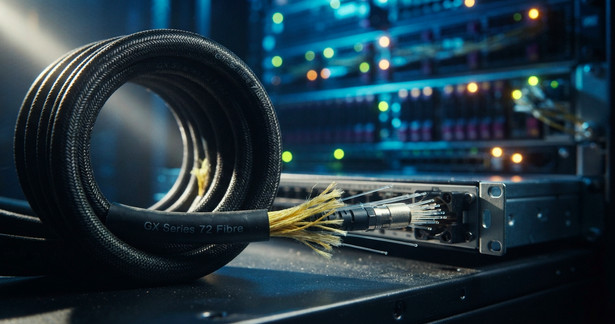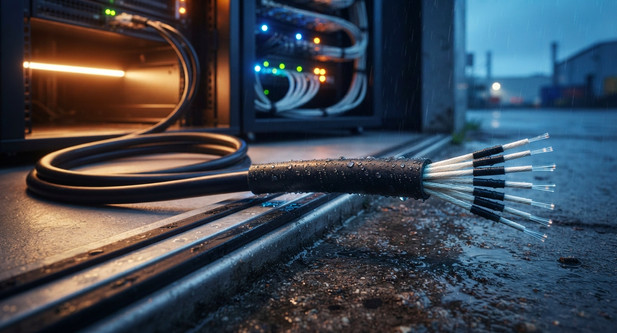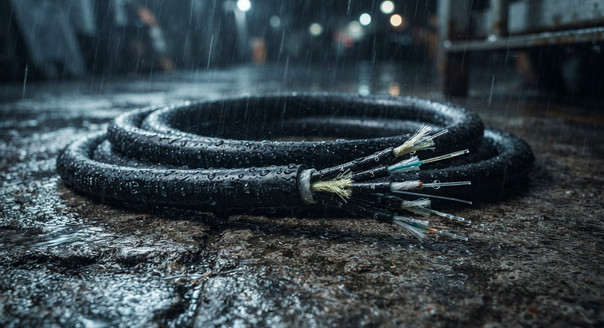
Breakout Cable ARIB External deployments face an unforgiving world where commercial-grade cabling systems surrender to the elements within months. Every field engineer knows the frustration of tracing an abrupt network outage back to an exterior cable jacket that completely disintegrated under relentless ultraviolet radiation and thermal shock. When outdoor transmission lines fail because the outer sheathing cracked or let moisture seep into the buffer tubes, entire remote operations grind to an expensive halt. That is why Fibre Systems engineers heavy-duty outdoor connectivity solutions built from the ground up to conquer severe weather and punishing atmospheric conditions without breaking a sweat.
Operating across remote industrial yards, utility corridors, and exposed infrastructure poles requires physical infrastructure that treats harsh weather as a baseline rather than an exception. Utilizing a proper Breakout Cable ARIB External solution shields your transmission pathways from driving rain, freezing temperatures, and mechanical pulling strain during field installation. Without ruggedized Breakout Cable ARIB External architecture protecting your long-run links, your facility remains vulnerable to unpredictable signal attenuation and endless maintenance headaches. This guide breaks down how specialized outdoor engineering safeguards your critical physical layer against premature environmental breakdown.
Decoding the Harsh Environmental Realities Facing Exposed Infrastructure
Outdoor routing environments expose optical pathways to a constant barrage of climatic and physical stressors that indoor systems never encounter. Temperature swings between blazing afternoon heat and freezing night cycles cause standard cable materials to expand and contract violently, leading to microscopic jacket fractures. When moisture penetrates these tiny fissures, water migrates down the length of the cable, freezing in cold weather and causing catastrophic fiber pinching. Implementing a robust Breakout Cable ARIB External configuration stops this degradation cycle by incorporating heavy-duty moisture barriers and stabilized outer compounds. Every meter of Breakout Cable ARIB External material is specifically formulated to repel water ingress and resist ultraviolet breakdown under direct sunlight.
Engineering Defensive Barriers Against Ultraviolet and Thermal Degradation
The sun’s ultraviolet rays act as a silent predator, slowly breaking down standard polymer chains until outer cable jackets become brittle, chalky, and useless. A high-performance Breakout Cable ARIB External build utilizes specially blended, UV-stabilized outer sheathing that reflects solar radiation and maintains structural flexibility over decades of exposure. Furthermore, the internal sub-units within a certified Breakout Cable ARIB External layout are individually buffered and protected by heavy aramid yarn reinforcements. This multi-layered defense ensures that even if the outer jacket experiences extreme surface wear from blowing sand or debris, the inner optical fibers remain completely untouched and fully operational.
Surviving High Velocity Wind Shear and Mechanical Torsional Stress
Open-air installations on towers, poles, and exterior building facades subject transmission lines to continuous wind-induced vibrations and heavy mechanical twisting forces. If an exterior cable lacks proper internal damping, these constant oscillations translate into severe microbending losses and sudden bandwidth drops. Modern industrial deployments rely on Breakout Cable ARIB External technology because its independent sub-cables absorb kinetic shock and dissipate torsional stress evenly across the entire assembly. Technicians installing Breakout Cable ARIB External runs across long spans appreciate how this structural independence prevents external physical forces from distorting the glass cores inside.
Overcoming Space Constraints in Crowded Outdoor Junction Cabinets
Exterior termination enclosures and junction boxes are notoriously cramped, forcing installation teams to squeeze numerous lines through tightly packed ports without damaging the glass. Forcing traditional armored cables into these confined outdoor spaces often results in tight bends that trigger permanent macrobending attenuation. Deploying a flexible Breakout Cable ARIB External architecture allows maintenance crews to route individual sub-cables cleanly around tight corners while maintaining strict bend radius compliance. Each sub-unit inside a Breakout Cable ARIB External assembly operates as an independent line, eliminating the clutter of bulky transition boxes and saving precious enclosure space.
Analyzing Structural Strengths Through a Breakout Cable ARIB External Comparison
Selecting the correct cabling architecture for outdoor projects requires evaluating how different physical designs handle harsh operating conditions. The table below compares key performance metrics to guide your infrastructure planning.
| Performance Metric | Standard Outdoor Loose Tube Cable | Traditional Armoured Direct Burial | Breakout Cable ARIB External Solution |
| Tensile Strength Rating | Low to Moderate | High Steel Armour | Extremely High due to Individual Sub-Cables |
| Termination Complexity | Requires Gel Removal and Splice Trays | Heavy Armour Stripping and Grounding | Direct Connectorization Without Extra Kits |
| Weather Resistance | Vulnerable to Jacket UV Degradation | Heavy and Rigid in Enclosures | Superior UV and Moisture Protection via Special Jackets |
| Space Efficiency | High Density in Ducts | Bulky in Junction Boxes | Optimized for Direct Equipment Patching |
Reviewing these operational comparisons highlights why field engineers consistently choose a structured Breakout Cable ARIB External system for high-exposure outdoor projects. While traditional armored options provide crush resistance, they lack the flexibility and direct connectorization ease required for fast cabinet patching. Upgrading to a specialized Breakout Cable ARIB External layout streamlines termination workflows while delivering superior environmental protection against moisture and UV damage. This balanced approach protects your long-term capital investment from repeated replacement cycles and unexpected field failures.
Step-by-Step Installation Methodology for Outdoor Field Deployments
Executing a flawless outdoor cable installation requires disciplined adherence to established industry protocols and mechanical safety limits. Follow this structured installation process to ensure your Breakout Cable ARIB External network performs reliably from day one.
- Pre-Installation Route Survey and Environmental Mapping
Inspect the entire outdoor pathway to identify areas of high sun exposure, potential chemical runoff, and sharp structural edges before pulling any lines. Plan your Breakout Cable ARIB External entry points carefully to maintain proper drip loops and water barriers. - Managing Pulling Tension and Outdoor Mechanical Limits
Attach pulling grips securely to the central strength members of the Breakout Cable ARIB External assembly rather than relying on the outer jacket. Use calibrated tension meters during the pull to ensure you never exceed the manufacturer’s specified maximum load limits. - Securing and Managing Runs Within Weatherproof Enclosures
Anchor each sub-cable using weather-rated hardware and flexible management loops inside outdoor cabinets to absorb thermal expansion and contraction movement. Ensure that every Breakout Cable ARIB External leg has enough slack to prevent tension on connector ferrules during high winds. - Precision Termination and Environmental Sealing
Strip the individual sub-units carefully using precision tools to expose the 900-micron buffered fibers without nicking the cladding or coating. Clean all connector end-faces thoroughly and seal all enclosure entry ports against dust, insects, and moisture ingress.
Adhering to strict regulatory frameworks is vital for any professional telecommunications installation. Technicians must align their deployment procedures with official guidelines set by regulatory authorities such as the ACMA to guarantee safety, compliance, and legal operational standards. Following these standardized wiring codes ensures your Breakout Cable ARIB External installation integrates safely with existing utility networks.
Mitigating Hidden Operational Costs of Substandard Exterior Cabling
Choosing cheap commercial-grade wire for outdoor projects to save initial capital almost always triggers a devastating cascade of long-term expenses. When exterior jackets crack under ultraviolet stress, moisture floods the core, destroying signal clarity across entire remote communication loops. Emergency contractor dispatches, replacement materials, and prolonged operational downtime quickly eclipse any upfront savings achieved through inferior procurement. Specifying industrial-grade infrastructure from the start ensures your remote network remains resilient against punishing environmental conditions year after year.
Ensuring Long-Term Signal Integrity Through Advanced Buffer Design
Maintaining stable optical performance across vast outdoor expanses demands meticulous engineering around core protection and internal tension distribution. As outdoor temperature gradients fluctuate wildly between day and night, materials expand and contract at different physical rates. Without specialized buffer layers designed to absorb these differential movements, internal fibers experience micro-strains that degrade bandwidth capacity. Advanced manufacturing protocols ensure that each individual optical core floats freely within its own protected sub-unit, completely isolated from thermal stress. This engineering precision guarantees that your transmission pathways deliver consistent, high-speed data transfer regardless of how volatile the external climate becomes.
Preventing Common Field Maintenance Pitfalls in Exposed Industrial Networks
Neglecting routine physical layer inspections often leads to catastrophic network downtime and costly emergency contractor dispatches. Technicians must monitor outdoor connection points regularly to identify early signs of physical wear or jacket degradation. Adopting a proactive maintenance schedule for your Breakout Cable ARIB External infrastructure ensures minor issues are resolved before escalating. Well-maintained Breakout Cable ARIB External pathways sustain peak operational efficiency throughout decades of continuous service. Training personnel to handle Breakout Cable ARIB External connections correctly safeguards your long-term network availability.
Frequently Asked Questions About Breakout Cable ARIB External Systems
What makes a Breakout Cable ARIB External different from standard patch cords?
A standard Breakout Cable ARIB External assembly features ruggedized individual sub-cables with independent strength members, allowing them to withstand severe environmental stress and direct outdoor connectorization. This design provides industrial-grade protection that typical office-grade patch cords simply cannot match in harsh settings.
Can a Breakout Cable ARIB External cable be routed through high-vibration areas?
Yes, every Breakout Cable ARIB External structure is specifically engineered to absorb mechanical shock and continuous wind-induced vibration without inducing microbending losses. Their robust construction ensures steady data transmission even when installed near heavy industrial machinery.
How does a Breakout Cable ARIB External simplification reduce labour costs?
Because each sub-cable in a Breakout Cable ARIB External setup contains its own aramid yarn reinforcement and jacket, technicians can terminate connectors directly onto the fibre. This eliminates the time-consuming step of installing separate fan-out kits or outdoor splice cassettes during deployment.
What precautions are necessary when pulling a Breakout Cable ARIB External through conduits?
Always ensure that pulling forces are applied exclusively to the central strength members and avoid exceeding the recommended bend radius limitations. Using approved pulling lubricants and swivel connectors will also protect your Breakout Cable ARIB External sheath from abrasion.
Summary of Key Takeaways for Breakout Cable ARIB External Networks
- Robust Protection: Every Breakout Cable ARIB External build features reinforced sub-cables that shield optical fibres from severe physical stress and environmental hazards.
- Streamlined Termination: Direct connectorization eliminates the need for clumsy breakout kits, reducing installation time and potential points of failure.
- Compliance and Safety: Aligning your Breakout Cable ARIB External deployment with established industry benchmarks ensures long-term operational stability and regulatory adherence.
Ready to upgrade your infrastructure with resilient optical solutions? Request a custom quote for your next industrial project by contacting the Fibre Systems team. You can also view the full range of Fibre Systems tactical solutions designed for demanding operational environments.