Fibre Optic Splicing is the precise process of joining two glass strands together to create a continuous and permanent signal path for data transmission. Fusion splicing, which utilizes a specialized electric arc to melt and weld the fibre ends together, is the preferred method for modern industrial networks due to its ultra-low insertion loss (typically less than 0.1 dB) and superior physical strength. While mechanical splicing remains a temporary alternative for quick fixes, fusion splicing is the global industry standard for establishing high-reliability links in critical sectors like Australian Mining and Defence.
The Importance of Precision in Fibre Optic Splicing
In a ruggedized network environment, even a single weak link can lead to total system failure and costly operational downtime. At Fibre Systems, we understand that even the highest grade of cable is only as effective as the points where it is joined. A poorly executed splice introduces signal reflection and attenuation, which can degrade the performance of high-speed optical hardware over time.
Whether you are performing a complex repair at a remote mine site or terminating a new backbone for a tactical communication hub, successful fibre optic splicing requires a balance of high-end technology and strict technical discipline. Achieving a near-perfect alignment ensures that light particles pass through the junction with almost zero interference, preserving the integrity of mission-critical data.
Fusion Splicing vs. Mechanical Splicing: Which is Better?
While both serve the purpose of connectivity, their performance in harsh industrial environments differs significantly.
| Feature | Fusion Splicing | Mechanical Splicing |
| Method | Electric Arc (Welding) | Alignment Sleeve (Internal Clip) |
| Insertion Loss | Ultra-Low (0.02 to 0.1 dB) | Higher (0.2 to 0.5 dB) |
| Reliability | Permanent and High Strength | Temporary and Fragile |
| Cost per Splice | Very Low (after equipment) | High (consumable parts) |
| Best Application | Mining, Defence, Backbones | Emergency Temporary Repairs |
Why Fusion Splicing Wins in Industrial Sites
For industrial projects across Australia, fusion is the only viable choice for long-term reliability. The “weld” created by a fusion splicer tool is chemically and physically almost as strong as the original glass strand itself. This permanent bond prevents the signal from leaking or reflecting back into the laser source, which is a critical requirement when using high-speed equipment for long-distance communication in remote areas.
How to Use a Fusion Splicer: A Step-by-Step Guide
The quality of a splice is determined by the preparation of the glass before the arc is ever fired. Following a structured process ensures that every connection meets industrial standards.
- Stripping the Fibre: Use a precision stripping tool to remove the protective polymer buffer coating, revealing the bare 125-micron glass cladding.
- Cleaning: This is the most underrated step. Use 99% isopropyl alcohol and lint-free wipes to ensure the glass is pristine and free of microscopic oils or dust.
- Cleaving: Use a high-precision cleaver to create a perfectly flat end-face at a 90-degree angle. A bad cleave is the primary cause of splice failure.
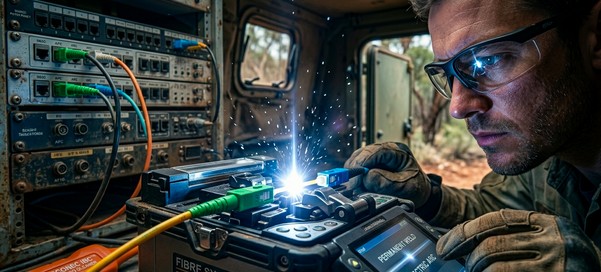
- Fusing: Place the prepared fibres into the fusion splicer tool, which automatically aligns the cores using internal cameras and applies the electric arc to fuse them. This precision-driven hardware ensures that the connection meets the rigorous signal integrity requirements of industrial and military-grade networks.
- Protection: Immediately slide a heat-shrink splice protector over the joint and place it in the tool’s oven to prevent future breakage or environmental contamination.
The Role of Fusion Splicing in Mining and Defence
Ruggedized networks in Australia must withstand constant vibration, moisture, and massive thermal expansion. Mechanical splices often fail under these environmental stresses because they rely on an internal “index-matching gel” that can dry out or degrade over time.
Defence Applications
In Defence-grade communication, signal security and hardware longevity are paramount. Fusion splicing ensures that secure data streams are not compromised by high return loss or physical fragility. When tactical units deploy fibre in the field, they need the confidence that every termination can handle the rigours of rapid movement and extreme weather.
Mining Networks
In deep pit or underground mining operations, the permanent nature of a fusion splice reduces the need for frequent and dangerous maintenance visits. By ensuring a solid connection from the start, Fibre Systems help operators minimize risk and maintain constant connectivity for autonomous vehicles and safety monitoring systems.
Troubleshooting Common Splicing Errors
Even with the best equipment, errors can occur if the environment is not controlled or the preparation is rushed. Recognizing these faults early saves time and hardware.
- High Loss Splice: This is often caused by a “bad cleave” where the glass end-face is chipped or angled incorrectly, preventing a seamless melt.
- Bubble in Splice: A bubble usually indicates that there was dust or moisture on the fibre end-face before the arc was fired. This highlights the importance of the cleaning stage.
- Offset Error: This occurs when the machine cannot align the two fibre cores. This is usually due to a bent fibre or dirty V-grooves within the splicer itself.
Frequently Asked Questions
How long does a typical fusion splice last?
A properly executed and protected fusion splice is designed to last for the entire lifespan of the fibre optic cable, often exceeding 20 to 25 years. Because it is a physical weld, it does not suffer from the degradation issues found in mechanical or adhesive-based connections.
Is fusion splicing difficult to learn for field technicians?
Modern automated splicers have significantly simplified the process with core-alignment technology and automatic arc calibration. However, the manual steps of stripping, cleaning, and cleaving still require professional training to ensure consistent results in harsh environments.
Can I splice different types of fibre together?
While you can splice different brands of fibre, you should generally avoid splicing Single-mode to Multimode fibre as the core sizes are incompatible. The splicer will likely give an “alignment error” or the resulting signal loss will be too high for practical use.
Why does my splicer show a “Dirty V-Groove” error?
The V-grooves are the tiny channels that hold the fibre in place during alignment. Even a single speck of dust can throw off the alignment by several microns. Regular cleaning with a specialized brush is essential for field maintenance.
What is the benefit of a core-alignment splicer over clad-alignment?
Core-alignment splicers use multiple cameras to see the actual glass core, ensuring the most precise connection possible. Clad-alignment is faster and cheaper but less accurate, making core-alignment the standard for high-performance backbone links.
Investing in Splicing Integrity with Fibre Systems
Choosing the right method for Fibre Optic Splicing is about more than just establishing a temporary signal; it is about ensuring that your connection lasts for the life of the infrastructure. At Fibre Systems, we provide the expertise and the professional termination solutions needed to keep Australia’s most critical networks running without interruption. Our hardware is engineered to withstand the most demanding environmental conditions, providing a stable and permanent data path for industrial-scale operations.
By standardizing on fusion splicing and utilizing high-quality, factory-tested tools, you protect your network ROI and minimize the risk of costly downtime. Whether you are managing a tactical defence rollout or a large-scale mining expansion, the integrity of your splices will dictate the success of your communication strategy.
Request a custom quote for your next industrial project by contacting the Fibre Systems team today.
Key Summary for Field Technicians
- Fusion Splicing provides the lowest loss and highest strength for permanent links.
- Cleaning and Cleaving are the most critical steps in the entire splicing process.
- Mining and Defence sectors require fusion over mechanical methods for environmental stability.
- Core Alignment technology from Fibre Systems ensures the most accurate data path.
- Always protect the finished splice with a heat-shrink sleeve to prevent physical damage.