Fibre optic connector types are defined by their specific physical shape and polishing style, which directly impacts the quality of your data transmission. These are categorized into three primary standards: PC (Physical Contact), UPC (Ultra Physical Contact), and the gold standard for high-performance networking, APC (Angled Physical Contact).
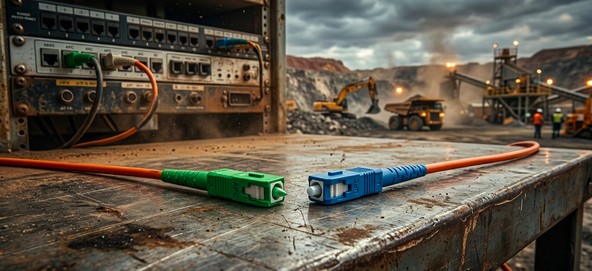
For the high-stakes, mission-critical environments of Mining and Defence, APC connectors (identifiable by their distinct Green housing) are the absolute industry standard. These connectors feature a precision-engineered 8-degree angled end-face that effectively minimizes back reflection, ensuring that your signal remains clean and consistent even in the most demanding 2026 data center or remote field installations.
Choosing the correct connector type is not just a technical detail; it is an essential step in reducing Insertion Loss and shielding your sensitive network hardware from permanent signal degradation. By standardizing on APC (Green) technology from Fibre Systems, you are guaranteeing a robust, future-proof backbone that can handle the rigorous demands of industrial-scale automation and high-speed communication.
Understanding Fibre Optic Connector Interfaces
In a professional network deployment, the connector is the most critical point of contact within the entire infrastructure. It aligns hair-thin glass strands to allow light signals to pass through with minimal disruption. However, not all connectors are created equal. At Fibre Systems, we emphasize that the “polish” of the connector the way the glass tip is finished directly impacts the signal’s Return Loss. This measurement determines how much light bounces back toward the laser source, which can cause heat buildup and data errors if not managed correctly.
Whether you are deploying LC UPC connectors in a standard data center or APC connectors in a ruggedized industrial site, understanding these technical nuances is what separates a reliable network from a failing one. For engineers and project managers in Australia, selecting the correct interface is a foundational step in ensuring long-term return on investment for critical communication links.
PC vs. UPC vs. APC: What is the Technical Difference?
Each style is specifically designed to handle “Back Reflection” or Optical Return Loss (ORL) differently. The physical geometry of the fibre tip determines how much light stays within the core and how much is reflected out into the cladding.
| Connector Type | Color Code | End-Face Shape | Typical Return Loss | Best Application |
| PC (Physical Contact) | Black/Grey | Slightly Curved | -40 dB | Basic Telecom / Older Systems |
| UPC (Ultra Physical Contact) | Blue | Extended Curve | -50 dB | Enterprise Networks / Digital TV |
| APC (Angled Physical Contact) | Green | 8-Degree Angle | -60 dB | Mining, Defence, FTTX, RF Video |
PC (Physical Contact) – The Baseline
The original polishing style, PC connectors, have a slightly curved end-face to reduce air gaps between two connecting fibres. While they were the standard for years, they are now largely superseded by UPC in modern digital applications. The slight curvature ensures that the cores of the two fibres touch at the highest point, but the return loss of -40 dB is often insufficient for modern high-speed transceivers that require cleaner signal paths.
UPC (Ultra Physical Contact) – The Digital Standard
Recognized by their Blue housing, UPC connectors undergo extended polishing to create a significantly better surface finish. They are the standard for most fibre-to-the-home (FTTH) and enterprise data applications where high signal quality is needed. While they offer a much better return loss of -50 dB compared to PCs, they still reflect light directly back down the center of the fibre core. This makes them ideal for digital data but less suitable for high-power analog or specialized industrial sensors.
APC (Angled Physical Contact) – The Industrial Gold Standard
This is where Fibre Systems hardware excels. APC connectors, identified by their Green housing, feature an 8-degree angled end-face. This precise angle causes reflected light to leak out into the cladding rather than reflecting straight back to the source. For Mining and Defence, this is non-negotiable to prevent damage to expensive laser equipment and to ensure that signals remain clear over massive distances in remote environments.
Why Connector Choice Matters for Harsh Environments
Ruggedized industrial networks, like those found in Australian mining operations, face extreme conditions that go beyond standard office environments. Dust, vibration, and temperature fluctuations can all affect a connector’s performance. In these scenarios, the physical stability of the connection is paramount. A connector that fails due to improper polishing or poor environmental resistance can lead to hours of costly downtime.
High-Performance Demand in Defence
In Defence-grade communication, even a minor signal bounce can lead to data corruption or latency in mission-critical systems. By standardizing APC (Angled Physical Contact) connectors, Fibre Systems ensures that back reflection is kept to an absolute minimum. This level of precision maintains the integrity of data streams even in tactical deployments where equipment is frequently connected and disconnected in the field.
The Dominance of LC UPC in Enterprise Data
While APC is king in the field, the LC UPC connector remains the workhorse of the data center and server room. Its small form factor (SFF) allows for high-density patching, making it the ideal choice for compact rack environments where space is at a premium. Because enterprise data is typically digital and less sensitive to minor reflections than high-power RF signals, the UPC polish provides an excellent balance of cost and performance for indoor, climate-controlled environments.
Troubleshooting and Best Practices
Maintaining a fibre optic network requires more than just high-quality hardware. Technicians must follow strict protocols to ensure that the physical contact between connectors remains pristine.
- Never Mix Polish Types: Plugging a green (APC) connector into a blue (UPC) port will permanently damage the fibre end-face. The angled tip of the APC connector will physically crush the curved tip of the UPC connector, creating an air gap and potential permanent scratching.
- Color Coding is Key: Always follow the industry standard color codes. Green always signifies APC, while Blue signifies UPC. Training staff to recognize these colors immediately can prevent thousands of dollars in hardware damage.
- Inspect Before You Connect: Even the highest quality connector from Fibre Systems requires inspection. Dust is the number one enemy of fibre optics. Using a microscope to check for debris before mating two connectors is the only way to ensure the 8-degree angle of an APC tip remains effective.
Frequently Asked Questions
How does Fibre Systems ensure cable reliability in harsh mining environments?
Fibre Systems manufactures ruggedized cabling with high-tensile strength and chemical-resistant jacketing to withstand the extreme conditions of mine sites. By using in-house assembly and rigorous testing, Fibre Systems provides connectivity solutions that prevent downtime and maintain signal integrity in high-vibration areas.
Why is APC preferred over UPC for sensitive military equipment?
Military applications require the lowest possible return loss to protect expensive laser transceivers. The 8-degree angle on APC connectors ensures that reflected light is absorbed by the cladding, making it the most reliable choice for mission-critical hardware where signal clarity is vital.
What is the benefit of LC connectors over older SC types?
The LC connector is approximately half the size of the SC connector, allowing for twice the density in a standard patch panel. This “Small Form Factor” is essential for modern high-speed networks where dozens of connections must fit into a single rack unit without compromising the quality of the polish.
Can a scratched connector be repaired in the field?
While some field polishing kits exist, it is almost impossible to replicate the precision of a factory-grade UPC or APC polish in a field environment. We always recommend replacing the patch lead with a factory-tested cable to ensure the network meets its original performance specifications.
Does the color of the cable jacket matter as much as the connector color?
While jacket colors typically signify the type of fibre (Yellow for Single-mode, Aqua for Multimode), the connector housing color (Blue or Green) is the definitive way to identify the polish type. Always verify the connector housing before making a connection.
Optimizing Your Network with the Right Connector Strategy
The choice between PC, UPC, and APC isn’t just about aesthetics; it’s a strategic decision that affects the lifespan and reliability of your infrastructure. At Fibre Systems, we provide a comprehensive range of fibre optic connector types designed to meet the rigorous demands of the Australian industrial sector. From the depths of a mine site to the high-pressure environment of a defence tactical hub, the quality of your physical connection dictates the success of your communication.
By understanding the technical trade-offs of each polishing style, you can protect your network ROI and ensure peak performance across all communication channels. Whether you need the density of LC UPC or the extreme precision of APC, Choosing Fibre Systems Patch Leads means choosing hardware backed by industry-leading expertise and a commitment to ruggedized reliability. Our range is specifically engineered to survive the high-vibration and extreme thermal cycles of the Australian Outback, ensuring that your network maintains peak signal integrity where standard equipment fails. Whether you are operating in a primary crusher or a remote defence outpost, these high-performance links are the essential backbone for your 2026 data infrastructure.
Quick Summary for Engineers
- PC (Physical Contact): Basic curved polish, -40 dB return loss, largely legacy.
- UPC (Ultra Physical Contact): Blue housing, -50 dB return loss, standard for digital data and enterprise.
- APC (Angled Physical Contact): Green housing, 8-degree angle, -60 dB return loss, essential for Mining and Defence.
- Compatibility Rule: Never mate APC with UPC; physical damage will occur immediately.
- Maintenance: Always inspect and clean connectors before every mating cycle to maintain signal integrity.