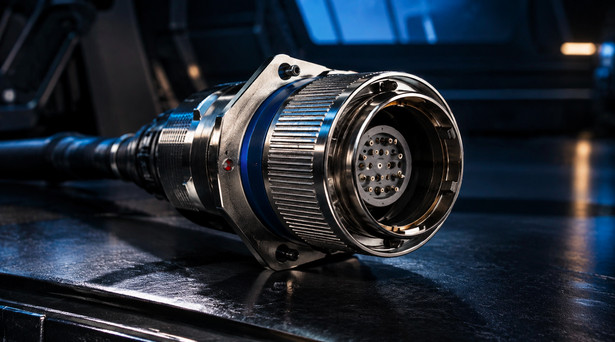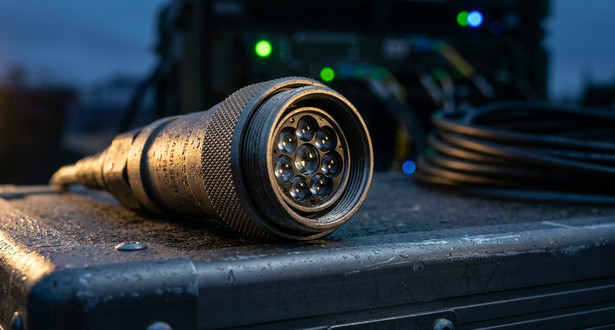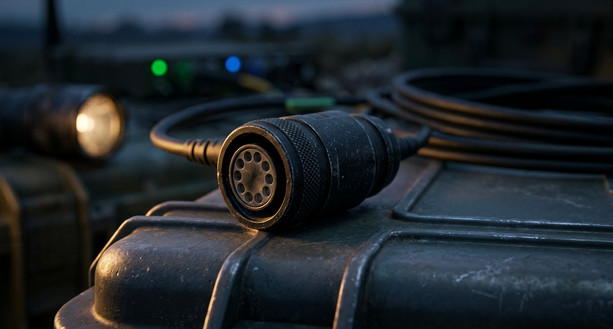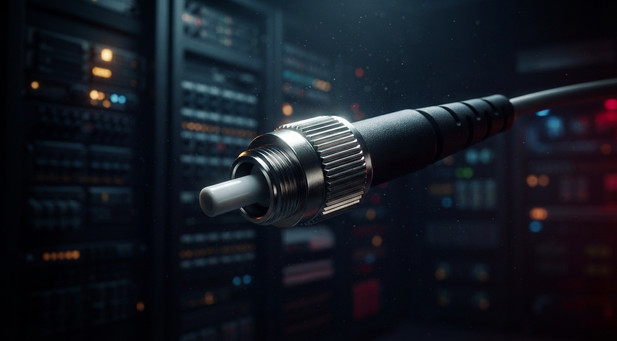
Splice-on Connector FC technology is completely transforming how heavy industrial facilities and remote infrastructure networks manage critical optical transmission lines. When legacy threaded connectors are deployed in high vibration manufacturing plants, mining sites, or transport hubs, constant mechanical resonance causes threaded ferrules to slowly back out of alignment. Industry leaders like fibre systems engineer advanced termination solutions to eradicate these persistent mechanical failure points entirely.
Traditional threaded cabling methods were never designed to withstand the relentless micro shocks generated by heavy industrial machinery. Relying on outdated screw on hardware creates invisible optical attenuation spikes that quietly drain power budgets and cripple network reliability over time. Understanding the physical vulnerabilities of threaded fiber hardware is the essential first step toward building a ruggedized network infrastructure that never compromises on performance.
Modern industrial environments demand physical layer components that can endure extreme thermal shifts, mechanical shock, and continuous operational stress without degradation. Unfortunately, many facility managers continue to rely on legacy FC connector designs that depend on threaded barrels and manual field polishing to maintain optical continuity.
These traditional assembly methods introduce microscopic air gaps and inconsistent core alignments that leave optical links vulnerable to external environmental forces. Addressing these structural vulnerabilities requires transitioning away from high maintenance threaded assemblies toward permanent, factory grade fusion technology. By fusing the optical fiber directly onto a factory polished stub inside a ruggedized housing, engineering teams eliminate the mechanical variables that cause unexpected link failures.
Furthermore, the financial toll of recurring optical budget degradation across large scale industrial installations is staggering. When micro vibrations loosen a threaded connector by even a fraction of a millimeter, insertion loss increases exponentially across the entire transmission span. Maintenance teams spend countless hours troubleshooting intermittent link drops, dispatching technicians to re-torque loose bulkheads that inevitably slip loose again weeks later. Adopting advanced termination methodologies permanently solves this cycle of reactive maintenance, ensuring that high vibration communication pathways remain optically pristine and mechanically secure throughout decades of continuous heavy industrial operation.
Key Benefits of Splice-on Connector FC Technology
Transitioning legacy infrastructure to a modern optical termination standard delivers immediate, measurable advantages for mission critical industrial facilities:
- Elimination of Threaded Back-Out: Permanent fusion bonding replaces loose screw threads with a solid glass pathway, making the connection completely immune to harmonic vibration and mechanical creep.
- Factory-Grade Insertion Loss Consistency: Bypassing manual field polishing and variable epoxy curing ensures uniform, ultra-low insertion loss across every single terminated port.
- Enhanced Environmental Sealing: Robust internal housing protection shields the critical glass interface from airborne dust, metal shavings, and moisture condensation.
- Maximum Transceiver Protection: Superior physical contact geometry neutralizes destructive optical return loss, protecting expensive active electronics from premature laser degradation.
- Accelerated Deployment Times: Streamlined assembly workflows allow technicians to complete high-reliability terminations rapidly during tight operational maintenance windows.
Splice-on Connector FC And The Structural Weaknesses of Threaded Field Assemblies
The physical architecture of a standard threaded fiber connection relies entirely on the frictional grip of a barrel nut pressing a spring-loaded ferrule against a mating adapter. In static office environments, this mechanical design performs adequately under controlled conditions. However, when deployed near heavy industrial crushers, turbine generators, or high speed conveyor systems, continuous harmonic vibration causes threaded components to rotate and loosen. A Splice-on Connector FC eliminates this vulnerability by fusing the optical fiber directly into a continuous glass pathway, bypassing movable mechanical joints entirely.
Field durability remains a constant struggle for network engineers tasked with maintaining reliable communications across sprawling industrial facilities. Traditional field polished connectors rely on manual dexterity and chemical adhesives that degrade rapidly when exposed to fluctuating ambient temperatures and chemical vapors. Permanent fusion bonding creates a molecular glass weld that withstands extreme thermal expansion without shifting or cracking. Every mechanical joint introduced into an industrial fiber run acts as an invitation for environmental contamination and signal attenuation.
To fully appreciate the engineering superiority of a Splice-on Connector FC, one must examine the micro scale mechanics of optical transmission under mechanical stress. When light travels through a standard threaded connection, even sub-micron lateral misalignments scatter photons away from the receiving core. In high vibration settings, threaded barrels experience microscopic galling and thread wear, progressively widening the air gap between mating ferrules. This cumulative mechanical wear transforms a stable low-loss link into a high-attenuation bottleneck that triggers urgent alarms in the network operations center. Permanent fusion technology completely neutralizes this risk by replacing mechanical clamping forces with an unyielding fusion splice located safely inside a protective boot.
Splice-on Connector FC Solving Mechanical Vibration and Screw Loosening in Industrial Plants
Industrial facilities are inherently hostile environments where heavy machinery creates constant low frequency vibration that shakes equipment racks to their foundations. Traditional threaded hardware is uniquely susceptible to this vibrational energy because rotational forces naturally uncouple threaded barrels over thousands of operational cycles. Deploying a Splice-on Connector FC architecture ensures that the critical optical interface remains completely immune to vibrational uncoupling and mechanical creep.
Splice-on Connector FC Maintaining Optical Alignment Under Continuous Heavy Machinery Shock
Heavy industrial machinery introduces complex harmonic frequencies that travel through cable trays and equipment enclosures, directly stressing physical layer termination points. When a Splice-on Connector FC is installed in these demanding scenarios, the fusion splice point absorbs zero lateral tension because the structural load is distributed across the ruggedized connector body and strain relief boot. This robust mechanical design prevents the glass core from experiencing bending stress or axial pull forces during heavy plant operations.
Maintaining stable optical return loss thresholds in vibrating environments protects sensitive active transceiver modules from destructive back scatter. Technicians no longer need to worry about legacy screw on couplings backing out and exposing optical end faces to airborne dust and grease. Superior physical contact geometry ensures that light passes seamlessly across the mating boundary without disruptive modal noise or bit error rate spikes.
Network administrators frequently misdiagnose transient transceiver failures as active hardware malfunctions when the root cause originates from loose bulkhead threads. Upgrading the physical interconnect layer with a Splice-on Connector FC solution neutralizes invisible vibrational alignment drift before it can impact switch performance. Clean optical pathways translate directly into rock solid data transmission uptime across core industrial control networks and supervisory control and data acquisition systems.
Splice-on Connector FC Overcoming High Insertion Loss in Long Span Industrial Cabling
As industrial networks expand across vast manufacturing complexes and remote resource extraction sites, total link distance increases optical power budget pressures significantly. Every tenth of a decibel of insertion loss matters when calculating maximum allowable attenuation across long span single mode fiber runs. A Splice-on Connector FC delivers ultra low insertion loss figures that keep extended industrial links safely within international performance margins.
Legacy field installation kits often yield highly inconsistent insertion loss numbers due to manual cleaving variations and uneven epoxy curing times. Factory controlled stub preparation paired with precise fusion alignment completely removes human error from the termination equation. Every deployed port achieves identical optical efficiency regardless of the technician’s experience level or environmental working conditions in the field.
Choosing a Splice-on Connector FC approach ensures predictable optical power budgeting across complex, multi tiered industrial topologies. Traditional field termination methods introduce wild variance in insertion loss from one connection point to the next, making it virtually impossible to guarantee link performance without exhaustive post installation OTDR testing. Fusion spliced connectors eliminate this variability by standardizing the physical splice interface to elite factory grade specifications. Every single channel achieves identical low loss performance, providing engineers with the reliable attenuation margins required to support next generation industrial automation protocols.
Power budget exhaustion forces facility operators to deploy costly optical amplification hardware prematurely. Deploying high purity connection assemblies preserves valuable decibels across every span in the facility, eliminating the need for intermediate repeater cabinets in remote outdoor areas. Preserving optical margin provides essential headroom for future network expansion and higher bandwidth data protocols. Without meticulous optical budgeting, scaling industrial infrastructure becomes an expensive guessing game that compromises long term capital planning.
Splice-on Connector FC Preventing Dust and Moisture Contamination in Harsh Environments
Industrial workspaces are routinely contaminated with airborne particulate matter, metal shavings, chemical mists, and high humidity levels that compromise open optical interfaces. When traditional threaded connectors are uncoupled for inspection or maintenance, microscopic dust settles directly onto the polished ceramic ferrule end face. Implementing a Splice-on Connector FC strategy minimizes exposed mating surfaces and protects internal optical connections against severe environmental contamination.
Non sealed patch panels and exposed screw type adapters allow moisture condensation to form across mating glass surfaces during overnight temperature drops. This trapped moisture acts as a contaminant that scatters laser light and accelerates pitting on the ceramic end face during high power transmission. A Splice-on Connector FC utilizes precision housing seals and internal gel free fusion protection to ensure that moisture and dust never reach the critical optical glass interface.
Furthermore, standard cleaning procedures in dusty manufacturing plants often push particulate matter deeper into threaded adapter sleeves rather than removing it. Technicians working in cramped industrial enclosures struggle to maintain pristine end face cleanliness under time pressure. By utilizing factory sealed fusion connectors and robust bulkhead adapters, facilities drastically reduce the frequency of manual cleaning interventions and eliminate catastrophic end face scratching caused by abrasive industrial grit.
Splice-on Connector FC Ensuring Strict Compliance With Australian Cabling Regulations
Adhering to strict national and international electrical safety codes is non-negotiable for enterprise infrastructure projects operating in commercial and industrial sectors. Facilities must comply with rigorous guidelines established by regulatory authorities like the Australian Communications and Media Authority regarding telecommunications cabling and structured wiring practices. Deploying certified Splice-on Connector FC components ensures that your facility meets or exceeds all mandated industry compliance benchmarks.
Non compliant cabling materials can release toxic smoke during thermal incidents or fail rigorous building safety audits conducted by regional authorities. Utilizing fully certified optical components guarantees that your industrial installation passes inspection without costly project delays or mandated rip and replace orders. Regulatory adherence protects both your capital investment and your operational licensing, ensuring seamless commercial continuity across all regional sites.
Documentation and traceability are core requirements for modern commercial and industrial network installations. Standardized termination methods simplify testing, verification, and certification procedures during commissioning phases. Engineers can generate flawless certification reports that satisfy both internal safety auditors and external regulatory bodies effortlessly, establishing a baseline of professional excellence that reassures stakeholders and regulatory inspectors alike.
Navigating the intricate landscape of regional telecommunications regulations requires absolute confidence in the physical components specified for heavy industrial builds. Regulatory frameworks governing structured cabling demand rigorous adherence to mechanical performance, flame retardancy, and optical attenuation limits. Specifying certified Splice-on Connector FC hardware ensures that commercial installations satisfy every statutory requirement without requiring expensive remediation work prior to final sign off. Furthermore, maintaining complete traceability across all physical layer assets simplifies ongoing safety audits and provides facility owners with documented proof of elite engineering standards.
Splice-on Connector FC Performance Comparison Matrix
Evaluating performance realities with Splice-on Connector FC deployments requires comparing legacy threaded alternatives against modern fusion technology across critical engineering metrics.
| Performance Quality | Legacy Threaded Connectors | Splice-on Connector FC Technology | Industrial Operational Impact |
| Vibration Resistance | Threaded barrels loosen under harmonic shock | Permanent fusion bonded glass core | Eliminates intermittent vibration induced link drops |
| Insertion Loss Consistency | Highly variable based on manual polish skill | Ultra low and uniform every port | Preserves critical optical power budgets |
| Contamination Defense | Open threaded sleeves trap dust and moisture | Sealed housing protects optical interfaces | Prevents catastrophic end face pitting and failure |
| Maintenance Overhead | Requires frequent re-torque and cleaning cycles | Maintenance free permanent glass weld | Dramatically reduces ongoing operational labor costs |
Splice-on Connector FC Streamlining Maintenance Protocols and Reducing Field Error Rates
Maintenance windows in mission critical industrial facilities are exceptionally short, often limited to scheduled plant shutdown periods lasting only a few hours. When technicians struggle with finicky field polishing kits and threaded alignment sleeves under intense time pressure, mistakes happen. Adopting a Splice-on Connector FC architecture streamlines moves, adds, and changes significantly through simplified termination procedures.
Simplified assembly workflows reduce the time required to reconfigure optical distribution frames during plant expansions and automation upgrades. Technicians spend less time squinting at magnifying scopes and more time validating active network services and telemetry feeds. Streamlined maintenance workflows directly correlate with lower operational overhead and reduced human error across every shift.
Standardizing physical layer hardware across multiple industrial locations simplifies spare parts inventory management significantly. Maintenance teams no longer need to stock dozens of specialized polishing films, epoxy syringes, and messy field assembly kits. A unified connectivity standard ensures rapid incident response times across every regional facility, minimizing mean time to repair during unexpected network anomalies. Operational efficiency thrives when physical layer components are engineered for intuitive deployment under pressure.
Streamlining routine maintenance tasks inside mission critical facilities directly impacts overall organizational productivity and service level agreement compliance. When network engineers face tight maintenance windows during scheduled upgrade cycles, every minute spent fiddling with complex field termination tools increases the risk of operational disruption. Standardizing your physical layer connectivity around advanced Splice-on Connector FC hardware removes procedural ambiguity and accelerates deployment times across the board. Maintenance personnel can execute moves, additions, and changes with absolute confidence, knowing that every terminated port will meet stringent optical parameters on the first attempt without requiring tedious post installation rework.
Splice-on Connector FC Frequently Asked Questions For Industrial Networks
How does a Splice-on Connector FC prevent connection failure in high vibration mining and manufacturing environments?
A Splice-on Connector FC eliminates movable threaded mechanical joints by permanently fusing the optical fiber directly onto a factory polished stub inside a ruggedized housing. This molecular glass weld prevents vibrational uncoupling and micro bending, ensuring continuous signal stability even when mounted directly to heavy industrial machinery.
Why do traditional threaded connectors cause high insertion loss over time in harsh facilities?
Traditional screw on connectors rely on manual field polishing and mechanical clamping. Continuous harmonic vibration causes threaded barrels to loosen and creates microscopic air gaps between mating ceramic ferrules, resulting in severe insertion loss and optical signal degradation.
Can legacy distribution frames be upgraded to utilize modern fusion spliced hardware?
Upgrading your legacy infrastructure is entirely achievable when you select modular adapter panels and compatible chassis hardware. A Splice-on Connector FC solution fits standard industrial patch panels, allowing seamless facility migration without replacing your entire rack enclosure ecosystem.
Bulleted Summary
- Splice-on Connector FC technology eliminates vulnerable threaded joints by permanently fusing fibers directly into factory polished ferrules.
- Permanent molecular bonding prevents vibrational uncoupling and micro displacement in high vibration industrial facilities.
- Ultra low insertion loss preserves critical optical power budgets across sprawling manufacturing and resource extraction networks.
- Sealed housing designs protect sensitive optical interfaces against airborne dust, metal shavings, and moisture condensation.
- Full compliance with strict industry regulations ensures seamless facility audits and long term operational safety.
Transforming Industrial Infrastructure Through Splice-on Connector FC Excellence
Ignorance of physical layer limitations in harsh industrial environments is the silent killer of enterprise network uptime and automation scalability. Sticking with legacy threaded termination methods in high vibration facilities invites catastrophic signal degradation, expensive transceiver failures, and frustrated engineering teams. Embracing Splice-on Connector FC architecture transforms vibration prone control rooms into streamlined, high performance optical powerhouses.
Ready to eliminate physical layer bottlenecks and secure your high speed industrial infrastructure against unexpected downtime? Deploying a Splice-on Connector FC strategy ensures your physical layer remains completely bulletproof. Contact us today to speak directly with our industrial infrastructure specialists. Explore our full range of precision engineered solutions in our product section to find the exact ruggedized hardware your enterprise architecture demands.
#IndustrialAutomation #NetworkEngineering #FiberOptics #OS2 #Infrastructure #CriticalFacility #FiberSystems #Uptime #DataCom #GlobalTech