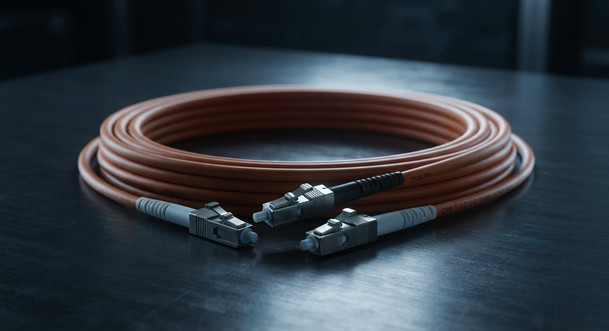
Patch Cord OM1 LC-LC units provide essential connectivity tools designed to support modern infrastructure and heavy duty operational demands without unexpected failures. When engineering teams rely on fibre systems for their daily communications, network stability becomes the absolute foundation of successful project delivery across every single facility. Every single link within a facility determines whether data travels smoothly or grinds to a frustrating halt during critical operational hours. Understanding how to maintain this vital data flow starts with recognizing the exact physical components that hold your entire enterprise network together.
A reliable network does not happen by accident because it requires careful planning, rigorous testing, and proven hardware choices from trusted manufacturers. Many project managers face unexpected setbacks simply because inferior cables fail under pressure when environmental stressors peak inside industrial work zones. Choosing the right hardware ensures that your facility maintains continuous connectivity without risking sudden dropouts that paralyze daily productivity. The first time you experience a major network failure during a busy shift, you realize how vital quality components truly are.
This comprehensive article explores why choosing the right optical components protects your financial investment and keeps your technical team fully operational year round. We will look at how proper hardware selection eliminates hidden vulnerabilities across your entire facility layout, from server racks to remote outpost terminals. By focusing on practical clarity and robust engineering principles, you can secure your infrastructure against unexpected disruptions and costly maintenance bottlenecks. Let us dive into the core elements that make high performance connectivity possible for modern Australian businesses operating in demanding sectors.
Why Patch Cord OM1 LC-LC Matters for Modern Australian Networks
Every facility manager understands that network reliability directly influences overall productivity, data safety, and commercial project success rates. When communication lines fail, entire operations freeze while troubleshooting teams scramble to locate the source of the fault in complex wiring trays. Implementing a dependable Patch Cord OM1 LC-LC within your local network infrastructure eliminates these recurring headaches entirely by securing every connection point. This specific component bridges critical gaps between networking equipment, ensuring data flows without interruption or packet loss across the board.
Modern Australian industries operate in demanding environments where dust, vibration, and temperature fluctuations test equipment limits daily across mining sites and manufacturing plants. Using substandard cables in these harsh settings invites premature failure and expensive emergency replacements that drain operational budgets unnecessarily. A properly rated Patch Cord OM1 LC-LC is engineered to withstand these physical stressors while maintaining pristine signal transmission integrity over extended periods. Quality manufacturing standards ensure that every connection remains secure even when surrounding heavy machinery creates continuous structural vibrations.
Investing in robust infrastructure components saves organizations thousands of dollars in averted downtime, emergency callouts, and lost labor hours during peak schedules. When your communication channels remain stable, your technical staff can focus on strategic growth rather than constant firefighting and emergency patching. The Patch Cord OM1 LC-LC serves as a reliable backbone for local area networks that demand absolute precision and high modal bandwidth capacity. Emphasizing physical durability from the start prevents minor component failures from snowballing into catastrophic system wide outages that affect client deliverables.
How Patch Cord OM1 LC-LC Solves Hidden Signal Degradation
Signal degradation often creeps into networks silently, slowly eroding data transfer speeds long before a total blackout occurs in your primary server room. Technicians often spend hours hunting down intermittent connection drops caused by poor internal reflections or mismatched core sizes within legacy cabling infrastructure. Deploying a high grade Patch Cord OM1 LC-LC prevents these microscopic flaws from compromising your network integrity during heavy data processing tasks. Precision polished connectors ensure optimal light transfer with minimal loss across every single termination point in your rack array.
When light travels through optical fibers, any imperfection at the junction point creates scattering and reflection that weakens the optical power budget. These optical losses accumulate across long runs, eventually confusing receivers and forcing retransmissions that slow down local network traffic significantly. Choosing a meticulously crafted Patch Cord OM1 LC-LC guarantees clean contact and precise core alignment between transceivers and patch panels. This level of manufacturing accuracy keeps insertion loss exceptionally low, preserving maximum bandwidth for your most critical industrial and commercial applications.
Maintenance teams benefit immensely when optical channels remain clear and free from erratic signal attenuation caused by poor connector mating tolerances. Routine testing becomes straightforward because baseline performance metrics stay consistent month after month without requiring constant recalibration or emergency troubleshooting. The Patch Cord OM1 LC-LC absorbs routine handling stress during moves, adds, and changes without degrading optical performance or physical connector geometry. Protecting your signal quality at every junction point ensures long term network health and predictable operational throughput across all connected departments.
Comparing Options Using Patch Cord OM1 LC-LC Versus Standard Alternatives
Evaluating different connectivity options requires a clear understanding of how physical specifications impact real world network performance under demanding operational conditions. Facility planners often weigh multimode solutions against single mode alternatives depending on distance and bandwidth requirements within the facility layout. Integrating a Patch Cord OM1 LC-LC into shorter range high bandwidth setups offers distinct advantages in cost flexibility and port density management. The table below outlines key performance and application differences to guide your next infrastructure upgrade project.
| Feature Comparison | Patch Cord OM1 LC-LC | Standard Generic Cable | Premium Single Mode Alternative |
| Core Diameter Size | Sixty two point five micrometers | Varies inconsistently | Nine micrometers |
| Primary Deployment | Local area networks and data racks | General office patching | Long haul campus backbones |
| Connector Precision | High grade ceramic ferrule | Standard plastic housing | Precision metallic body |
| Signal Loss Profile | Extremely low insertion loss | Moderate to high loss risk | Minimal loss over distance |
| Environmental Resilience | Reinforced protective outer jacket | Basic lightweight coating | Heavy armored shielding |
Choosing the appropriate hardware involves matching technical specifications to your exact physical environment and data load expectations without cutting corners. While generic alternatives might look appealing on an initial invoice, their long term failure rates prove costly when systems experience unexpected operational strain. The Patch Cord OM1 LC-LC provides a balanced mix of bandwidth capacity and physical robustness for enterprise settings requiring dependable short reach links. Reviewing these specifications carefully ensures your network architecture supports current demands and future expansion plans seamlessly.
Installing Patch Cord OM1 LC-LC Safely Within Industrial Frameworks
Proper installation practices dictate whether an optical network thrives or suffers from chronic connectivity issues that plague daily operational workflows. Before laying out any new hardware, technicians must review relevant guidelines such as the ACMA wiring regulations to ensure full compliance with Australian standards. Handling delicate optical fibers requires extreme care to prevent contamination from dust, oils, or microscopic debris floating in industrial air supplies. Even a tiny fingerprint on a connector tip can scatter light and ruin signal integrity instantly upon mating.
Step one of any successful installation involves inspecting and cleaning all connector end faces using specialized optical cleaning tools and lint free wipes. Never skip this vital cleaning step, as microscopic particles cause permanent scratching when mating connectors together inside high density patch panels. Step two requires routing the cables carefully through cable management trays without exceeding minimum bend radius limits specified by the manufacturer. Forcing a cable around tight structural corners stresses the glass core and introduces severe attenuation that ruins data flow.
Step three involves securing the connections gently until you hear a distinct click confirming proper latch engagement within the adapter housing. Always test the completed link using an optical power meter or fault locator to verify performance parameters before handing the line over to operations. Integrating a Patch Cord OM1 LC-LC following these rigorous steps guarantees immediate operational readiness and long term stability across your entire facility. Proper documentation of each run simplifies future troubleshooting and maintenance cycles for your engineering department.
Essential Maintenance Practices for Patch Cord OM1 LC-LC Deployments
Maintaining peak performance across enterprise networks requires proactive inspection routines rather than reactive responses after a major outage disrupts business continuity. Establishing a scheduled maintenance protocol ensures that every single Patch Cord OM1 LC-LC in your server room operates at peak efficiency. Technicians should conduct quarterly visual inspections of patch panels to check for dust accumulation, physical pinching, or strain on connector boots. Catching minor physical anomalies early prevents sudden network degradation during critical processing windows.
When dusting or cleaning server racks, staff must exercise caution to avoid knocking loose any active fiber connections or introducing particulate matter into open ports. Keeping dust caps on all unused connectors and adapters preserves optical purity until actual deployment takes place on the rack floor. Whenever a network link exhibits erratic latency or intermittent packet loss, isolating the patching tier is always the fastest diagnostic starting point. Swapping out a questionable line with a spare Patch Cord OM1 LC-LC immediately verifies whether the physical medium is the root cause.
Furthermore, proper cable labeling and color coding prevent accidental disconnection during high pressure maintenance windows or equipment upgrades involving multiple server racks. Documenting cable paths and port allocations within your internal asset management database ensures that junior technicians never apply excessive physical force during routine moves. Treating your physical layer with the same respect as your core server hardware guarantees uninterrupted communication channels for all enterprise applications. Diligent upkeep transforms your network from a fragile liability into a rock solid asset that supports continuous business expansion.
Preventing Network Bottlenecks With Patch Cord OM1 LC-LC
Network bottlenecks frequently frustrate administrative staff and slow down automated industrial machinery when data packets queue behind overloaded or mismatched physical links. Utilizing a certified Patch Cord OM1 LC-LC ensures that your short reach trunk lines and switch interconnects never restrict maximum data flow rates. Modern enterprise applications demand high speed data exchange without artificial latency barriers caused by substandard or outdated cabling components. Upgrading your physical patch layer removes these invisible friction points and optimizes overall network responsiveness.
When designing high density server racks, airflow management and cable organization go hand in hand to prevent thermal throttling and physical strain on delicate connectors. Routing cables through dedicated vertical and horizontal managers keeps weight off the transceivers and maintains proper alignment across all LC interfaces. Every installed Patch Cord OM1 LC-LC contributes to a clean, organized, and highly efficient patching ecosystem that simplifies future capacity expansions. Avoiding tangled cable bundles also reduces troubleshooting time when technicians need to trace specific circuits during emergency maintenance.
Investing time in proper cable management and selecting premium interconnect components pays dividends in reduced administrative overhead and superior network uptime statistics. Your technical staff gains peace of mind knowing that the physical foundation supporting enterprise communications is built for endurance and high performance. Eliminating localized bottlenecks allows data to travel swiftly between workstations, databases, and automated control systems without unnecessary delays. This seamless connectivity directly translates to improved operational efficiency and faster project completion rates across your organization.
Key Benefits of the Patch Cord OM1 LC-LC
- Optimizes Short Range Transmission: Delivers reliable short range data communication with excellent modal bandwidth capacity for local area networks and data racks.
- Maximizes Rack Port Density: Utilizes compact Lucent Connectors to optimize port density in crowded server racks and high density patch panels.
- Ensures High Precision Alignment: Integrates high grade ceramic ferrules to guarantee precise core alignment and minimal insertion loss across every termination point.
- Provides Superior Mechanical Protection: Features robust outer jackets and strain relief boots designed to absorb mechanical shock and torsional stress on factory floors.
- Simplifies Enterprise Maintenance: Supports easy routine testing and cleaning procedures to maintain consistent baseline performance and long term network reliability.
Frequently Asked Questions About Patch Cord OM1 LC-LC
What makes this specific component ideal for enterprise local area networks?
The Patch Cord OM1 LC-LC delivers reliable short reach data transmission with excellent modal bandwidth capacity for legacy and mixed speed environments. Its compact connector design maximizes port density in crowded server racks while maintaining secure optical alignment.
How often should optical patch cables be inspected or replaced?
Optical cables should be inspected and cleaned annually or whenever unexplained network slowness occurs during routine operational checks. If physical jacket damage or severe attenuation is detected, immediate replacement is necessary to prevent downtime.
Can these cables handle heavy industrial vibrations near machinery?
Yes, quality variants feature sturdy outer jackets and strain relief boots designed to absorb mechanical shock and torsional stress effectively. This construction protects the internal glass fibers from micro fractures caused by constant operational vibrations on the factory floor.
Are special tools required to deploy these assemblies in the field?
While pre terminated assemblies eliminate field polishing needs, cleaning kits and optical inspection scopes remain essential for verification. Proper cleaning tools ensure dust free connections during initial setup and ongoing maintenance routines.
How does modal bandwidth impact short reach data transmission performance?
Modal bandwidth determines the information carrying capacity of multimode fiber over specific distances before pulse dispersion degrades the signal quality. Selecting properly rated components ensures high fidelity data transfer without transmission errors in local networks.
Securing Your Future Reliability With Patch Cord OM1 LC-LC
Building a resilient digital infrastructure demands uncompromising attention to detail at every single level of your network design and hardware selection process. When you eliminate weak points in your physical layer, your entire organization gains operational confidence and processing speed across all departments. Utilizing a dependable Patch Cord OM1 LC-LC ensures your data transmission remains pristine across every daily workflow and automated task. Taking proactive steps today prevents frustrating bottlenecks and expensive emergency repairs down the road as your business scales.
Your operational success relies on seamless communication between administrative teams, automated machinery, and remote monitoring systems deployed across challenging Australian job sites. Investing in proven hardware components demonstrates a commitment to technical excellence that resonates throughout your entire enterprise and client base. Do not let subpar connectivity compromise your hard earned reputation for reliability, safety, and operational efficiency in competitive markets. Now is the ideal moment to audit your current patching setup and upgrade where necessary to protect future project timelines.
Ready to enhance your facility connectivity and eliminate unexpected signal drops for good with a reliable Patch Cord OM1 LC-LC solution today? Request a custom quote for your next industrial project by contacting us right now. You can also explore our complete inventory by viewing the full range of options directly on our product page. Let our technical experts help you secure your network with robust solutions built specifically for the toughest Australian operational environments.