MTP MPO Connector Migration is the strategic transition from traditional single-fiber connectivity (like LC or SC) to multi-fiber array connectors (MTP/MPO) to support high-bandwidth applications and facilitate seamless upgrades to 400G, 800G, and beyond. In an era where data demands are exploding due to AI, remote industrial automation, and real-time analytics, sticky-taping old infrastructure is no longer an option. At Fibre Systems, we know that if your 2026 network roadmap doesn’t prioritize high-density scalability, you are not just building a network; you are building a future dead-end bottleneck that will eventually suffocate your operations.
The High-Density Nightmare: A Field Reality Check
Imagine this: Your board has mandated a massive upgrade to support AI-driven analytics or real-time remote operations. You walk into your comms room, and it is a chaotic bird’s nest of hundreds of individual LC duplex patch cords. Your rack space is maxed out, your cable management is failing under the weight of “yellow spaghetti,” and the mere thought of tracing a single failed link sends shivers down your spine.
This is the painful reality of ignoring MTP MPO Connector Migration. Trying to achieve 2026 speeds using legacy connectivity is a losing battle against physics. You are fighting a war against physical space, cooling efficiency, and polarity complexity. Every single LC connector you add is another potential failure point, another cleaning headache, and another barrier to entry for the next generation of active equipment. When you are trying to push massive data streams, relying on “one fiber at a time” is a recipe for operational paralysis and massive financial loss.
Why Your Current Network is a Ticking Time Bomb
The traditional approach of “adding more cables” as you grow has reached its expiration date. In 2026, the industrial and defense sectors are moving toward parallel optics. This means the hardware is designed to send data across multiple fibers simultaneously. If you are still relying on duplex links (one fiber for transmit, one for receive), you are essentially forcing a multi-lane highway’s worth of traffic into a single-lane dirt road.
Failing to commit to an MTP MPO Connector Migration plan results in:
- Rack Congestion: You will run out of physical space for patching before you run out of bandwidth.
- Thermal Issues: A dense “spaghetti” of patch cords blocks airflow, leading to overheating in expensive switches.
- Operational Blindness: Troubleshooting a network with thousands of individual connections is impossible without massive downtime.
- Sunk Costs: Every dollar spent on legacy LC cabling today is money you will eventually spend again to replace it when it inevitably fails to scale.
The Workhorse: Understanding MTP vs. MPO
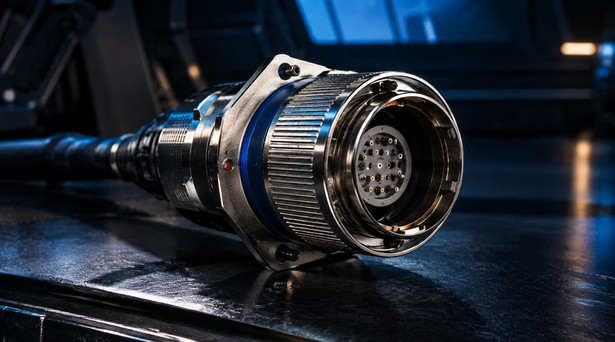
Before we dive into the migration strategy, we must clear up the confusion. MPO (Multi-Fiber Push-On) is the generic industry standard. MTP®, however, is the high-performance evolution engineered by US Conec. At Fibre Systems, we standardize on the MTP® connector because it offers superior mechanical and optical performance.
The MTP connector features a floating ferrule that ensures physical contact remains stable even under the stress of cable pulling or vibration, a common occurrence in mining and industrial environments. In an MTP MPO Connector Migration, using authentic MTP components is the difference between a network that stays up and one that suffers from intermittent “ghost” errors that drive engineers crazy.
The Specialist Migration Strategy
Migrating a live network isn’t something you do on a whim. It requires a 2026-ready blueprint.
1. The Backbone Foundation
The first step in MTP MPO Connector Migration is installing a high-fiber count MTP backbone. Instead of pulling 12 individual fibers, you pull a single MTP trunk. This backbone serves as the “highway” that connects your core switches to your distribution racks. Fibre Systems armored MTP trunks are specifically designed for this, providing the physical protection needed in rugged Australian sites.
2. Transitioning via Cassettes
You don’t have to replace all your LC gear overnight. During the transition phase, we use MTP-to-LC cassettes. These modules take the 12-fiber MTP connection from the backbone and break it out into 6 LC duplex ports on the front. This allows you to keep using your current LC-based servers and switches while the underlying infrastructure is already future-proofed.
3. The Jump to Parallel Optics
Once your backbone is MTP-ready, moving to 40G or 100G becomes as simple as swapping a cassette for an MTP adapter plate and using an MTP patch cord to plug directly into your high-speed QSFP+ transceivers. This is where the MTP MPO Connector Migration pays for itself; what used to be a weekend-long cabling project now takes five minutes.
Polarity: The Silent Killer of High-Density Links
The biggest hurdle in any migration is polarity; ensuring the “talk” side of the switch connects to the “listen” side of the receiver. In an MTP system with 12 fibers, this gets complicated fast. There are three industry-standard methods:
- Method A (Straight-through): Easy to understand but requires specialized patch cords at one end.
- Method B (Flipped): The preferred choice for most 2026 deployments as it allows for standard patch cords at both ends.
- Method C (Pair-flipped): Often used in legacy systems but becoming less common.
Fibre Systems specialists work with you to define your polarity strategy before a single cable is shipped. We eliminate the “trial and error” phase of deployment, ensuring your MTP MPO Connector Migration is “plug-and-play” on day one.
Ruggedized Performance in the Australian Field
While data centers can afford “commercial grade” MPO connectors, our clients in mining and defense cannot. An MTP MPO Connector Migration in the field faces unique threats:
- Invasive Red Dust: A single speck of dust on a 12-fiber array can ruin the entire link. Our IP-rated MTP solutions provide the sealing necessary to keep contaminants out.
- Vibration and Shock: Heavy machinery creates constant vibration. Our MTP connectors feature precision-engineered springs that maintain contact even when the ground is shaking.
- Extreme Heat: The Australian sun can make enclosures incredibly hot. We use high-grade materials that won’t warp or become brittle, maintaining the integrity of the connection.
The Cost of Inaction
Building a network that “dies” isn’t just a technical failure; it’s a financial one. If you delay your MTP MPO Connector Migration, you are choosing to pay for:
- Increased labor costs for manual patching.
- More frequent hardware replacements due to heat damage.
- Catastrophic downtime when a legacy link finally gives up under the pressure of 2026 data rates.
Your 2026 High-Density Blueprint
The path to a resilient, scalable network is clear. By embracing MTP/MPO technology, you are freeing your infrastructure from the constraints of the past. You are gaining the ability to scale at the speed of your business, not the speed of your cabling team.
Fibre Systems is here to ensure that your migration is seamless, ruggedized, and future-proof. We provide the individual test reports, the engineering support, and the high-performance hardware required to succeed in the most demanding environments on Earth.
Summary of Core Benefits:
- Scalability: Move from 10G to 100G+ without pulling new cables.
- Efficiency: Reduce rack space usage by up to 90% compared to LC patching.
- Reliability: Eliminate field termination errors with factory-certified trunks.
- Durability: Ruggedized MTP solutions built for the Australian outback.
- Expertise: End-to-end support for polarity and migration planning.
Don’t let your infrastructure become a ghost of the past. Request a custom quote for your MTP MPO Connector Migration today and build a network that lives to see the future.