Fibre Lab 750 hardware systems supplied by Fibre Systems deliver unmatched reliability for telecommunications engineers requiring precise network emulation and multi-span latency testing across demanding environments. When network architects configure high-speed data transmission routes, introducing exact propagation delays and optical loss characteristics is critical to verifying system stability. Deploying this specialized testing platform guarantees that every optical time domain reflectometer, transceiver module, and high-capacity transmission link operates with absolute precision under realistic operational conditions. Telecommunications laboratories and mission-critical engineering centers rely heavily on these custom-configured enclosures to maintain rigorous performance benchmarks and avoid catastrophic deployment failures.
Every testing cycle introduces complex signal variables that standard generic patch panels simply cannot replicate or support. Microscopic insertion losses, incorrect modal dispersion, and unstable attenuation profiles pose a continuous threat to precise network validation. Integrating a high-density, rack-mounted simulation chassis transforms laboratory workflows by providing compact, organized access to custom fiber lengths long before active rollout. Modern engineering teams prioritize advanced optical simulators to keep expensive test environments fully structured, fiercely secure, and ready for immediate diagnostic deployment in the most rigorous testing facilities.
Simulating Complex Optical Spans with Absolute Precision Using a Fibre Lab 750
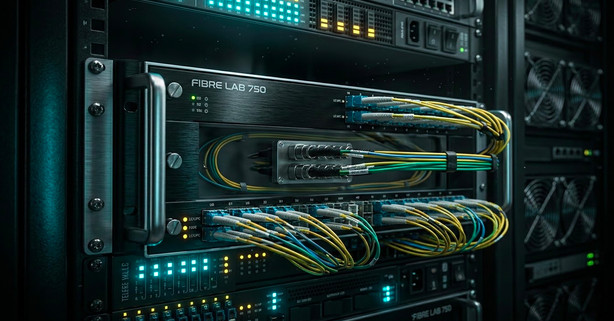
Telecommunications engineering demands absolute measurement accuracy because a single unverified latency spike in a high-speed link can degrade an entire network backbone. Enclosures manufactured specifically for rigorous laboratory simulation deliver robust mechanical protection alongside an immaculate internal routing matrix for multiple fiber spools, a capability built right into the Fibre Lab 750. Project managers frequently ask how advanced spool organization within the Fibre Lab 750 prevents micro-bends and signal attenuation during extensive multi-kilometer link testing. High-grade protective chassis configurations feature custom fiber lengths tailored to exact distance profiles, ensuring delicate glass strands stay secured safely inside your Fibre Lab 750 housing.
Maintaining immaculate optical connector faces is paramount when operating in high-frequency testing environments where microscopic dust rapidly compromises data throughput. Investing in the Fibre Lab 750 guarantees that vital patch leads, testing interfaces, and spliced nodes stay entirely free from environmental contamination. Technical specialists emphasize that proper structural housing via the Fibre Lab 750 significantly extends the operational lifespan of sensitive testing assets. Proactive equipment protection directly minimizes unexpected component replacement expenses and streamlines routine calibration schedules across all vital project phases.
Navigating Strict Infrastructure Testing Compliance Standards Using a Fibre Lab 750
Adhering to strict national compliance guidelines ensures that telecommunications testing hardware consistently meets official safety and performance benchmarks. Official regulatory frameworks managed by the Australian Communications and Media Authority outline clear, non-negotiable standards governing structured cabling integrity and network safety. Deploying specialized simulation chassis designed to house compliant components helps engineering teams maintain strict regulatory alignment and constant audit readiness. Highly organized internal management layouts drastically reduce human error during complex latency calibration tasks under intense schedule pressure.
Compliance also requires rigorous physical testing to verify that equipment housings can withstand heavy structural stress, accidental high-impact shifts, and continuous rack-mount operations. Units built for heavy laboratory deployment undergo thorough stress testing to achieve elite durability and thermal stability. Field supervisors and lab directors regularly consult statutory guidelines to ensure all onsite testing hardware abides by official safety benchmarks. Combining compliant system components with specialized simulation platforms guarantees seamless network commissioning across the most challenging telecommunications architectures.
Strategic Comparison of Network Simulation Solutions Using a Fibre Lab 750
Selecting the right simulation platform requires evaluating chassis density, custom fiber capacity, and connector adaptability, which makes the Fibre Lab 750 an ideal choice. Operational leaders regularly compare basic discrete fiber spools against specialized multi-span enclosures like the Fibre Lab 750 to determine long-term testing efficiency. Purpose-built simulation solutions such as the Fibre Lab 750 far excel standard alternatives by offering tailored distance configurations and superior space conservation. The comparison table below highlights key performance metrics when choosing optical test hardware for your Fibre Lab 750 setup, ensuring optimal results every time you deploy the Fibre Lab 750.
| Simulation Risk Scenario | Chassis Structural Response | Fiber Capacity & Reach | Primary Testing Pain Point Addressed |
| Loose Standalone Spools | Unprotected Exposed Coils | Limited Single Length | Tangled cables and high risk of fiber micro-bending |
| Standard Patch Enclosure | Basic Metal Box | Low Density Spooling | Insufficient distance replication for complex routing |
| Fibre Lab 750 | 3RU Rack-Optimized Chassis | Up to 180km+ Custom Spans | Fragmented test setups and inaccurate latency simulation |
Evaluating these distinct categories demonstrates exactly why industry leaders transition away from unorganized spool setups in favor of a dedicated platform like the Fibre Lab 750. Utilizing custom-configured internal layouts prevents delicate fiber strands from experiencing excessive bend radius strain during intensive testing phases. Technicians can immediately perform visual connection audits to confirm all links are properly routed before initiating automated test sequences, massively boosting overall lab productivity. Every tailored chassis delivered reflects rigorous engineering standards tailored for demanding telecommunications environments.
Maximizing Daily Laboratory Workflows Through Smart Chassis Design
Maximizing testing efficiency in busy engineering labs depends heavily on how rapidly technicians can reconfigure optical paths and test parameters, a process streamlined by the Fibre Lab 750. Enclosures configured around specific workflow patterns completely eliminate lost time spent untangling loose fiber coils or searching for correct connector types within the Fibre Lab 750. When every optical channel rests in a dedicated, custom-matched slot inside your Fibre Lab 750, testing speed increases dramatically. Specialists design internal routing architectures alongside active network engineers to ensure ultimate practical convenience on the bench.
Furthermore, secure internal routing inside the Fibre Lab 750 prevents delicate fiber jumpers from pinching or breaking during frequent test bed modifications. Sizing chassis units specifically for multi-span testing guards fragile optical interfaces against accidental strain when utilizing a certified Fibre Lab 750. Organizations prioritizing proper hardware protection experience drastically fewer equipment breakdowns and achieve far higher operational reliability. A properly organized testing workstation supports absolute precision and safety on every single evaluation.
Advanced Logistics Management for Laboratory and Field Deployments
Moving sensitive technical testing instrumentation across vast distances requires meticulous logistical planning and flawless execution, which is easily managed using the Fibre Lab 750. Engineering teams frequently encounter unexpected environmental hurdles that can permanently compromise delicate hardware before it even reaches the testing site unless secured within a Fibre Lab 750. Implementing a structured approach to asset management ensures that every piece of diagnostic equipment is accounted for and structurally secured against external shocks inside your Fibre Lab 750. Specialized transit and rack units eliminate the dangerous guesswork of equipment handling by providing designated slots for every connector and fragile link.
Engineers working across complex projects must also contend with thermal variations that can induce signal fluctuation inside poorly ventilated enclosures, making a reliable Fibre Lab 750 essential. High-performance housing incorporates optimized structural designs that stabilize internal thermal atmospheres while maintaining a completely protected environment against airborne dust. This uncompromising level of structural defense preserves the optical clarity and performance consistency of expensive testing equipment deployed via a Fibre Lab 750. Prioritizing robust enclosure engineering ultimately saves organizations thousands of dollars in premature hardware replacements and agonizing project downtime.
Step-by-Step Laboratory Deployment Workflow for Telecom Engineers
Executing a clean, efficient test setup requires a systematic routine to care for sensitive optical simulation hardware. Follow this simple operational workflow to maximize the protective lifespan of your equipment enclosures:
- Inspect the internal rack mounting points and cable management paths of your simulation chassis to remove any dust before installation.
- Clean all optical connectors and patch leads meticulously before routing them into their designated faceplate ports.
- Verify that all fiber spool lengths and connector types match your exact network simulation criteria.
- Secure every external patch cable cleanly to prevent accidental tension or strain on front-panel bulkheads.
- Record the active link configuration map secured with the enclosure to maintain highly accurate documentation across testing cycles.
Following this structured process ensures technical crews maintain complete readiness regardless of complex testing requirements. Gear maintained inside ruggedized simulation housing delivers perfectly accurate test readings and reliable operation from initial prototyping to final network signoff.
Frequently Asked Questions Regarding Advanced Network Simulation Solutions
How does specialized housing protect delicate optical testing hardware?
Enclosures use precision-engineered rack chassis designs to securely anchor fiber spools, preventing micro-bends and physical damage during continuous laboratory use.
Why is custom fiber spooling absolutely critical for accurate testing?
Custom spool configurations replicate exact real-world distance and latency metrics, ensuring test results reliably reflect actual field deployment conditions.
Can suppliers provide custom configurations specifically for complex defense projects?
Yes, industrial partners supply elite ruggedized simulation units tailored to meet tough military and telecom environmental specifications. Each chassis is engineered to handle rigorous multi-span testing requirements.
What routine upkeep keeps optical simulation cases working flawlessly?
Technicians should clean connector bulkheads regularly, inspect patch cables for wear, and maintain clean rack environments. Proper care keeps your testing hardware operating at peak precision for years of service.
Essential Key Takeaways for Telecommunications Engineering Teams
- Protecting fragile optical testing configurations requires high-density chassis enclosures designed specifically for rigorous laboratory conditions.
- Tailored simulation housing eradicates cable clutter and vastly streamlines technician testing workflows.
- Compliance with strict infrastructure wiring standards guarantees reliable telecommunications networks across all deployment phases.
- Expert guidance ensures your engineering teams receive custom-tailored simulation hardware built for long-term operational survival.
Deep-Dive Analysis Into Long-Term Network Simulation Resilience
Expanding the critical conversation around equipment protection requires looking closely at how daily laboratory operations influence overall project profitability. When engineering teams deploy simulation assets across complex testing matrices, unmanaged optical cables accumulate micro-stresses that degrade signal integrity over time. Standard open-spool setups leave delicate fibers exposed to ambient dust, physical bumps, and accidental tension drops. Over time, this repetitive exposure degrades optical patch performance and compromises test accuracy long before project milestones are reached.
Investing in a purpose-built simulation platform completely eliminates these hidden vulnerabilities by introducing rigid structural integrity combined with elite internal fiber management. Field veterans understand that an unexpected hardware failure during a critical compliance test completely halts progress. Replacing damaged fiber spans on short notice is rarely an option when strict project deadlines loom. Robust physical protection acts as a non-negotiable insurance policy for your entire engineering lab, guaranteeing that technicians always have fully operational testing gear ready to evaluate complex network topologies.
Furthermore, ergonomic considerations play a massive role in day-to-day lab efficiency. When a testing rig features chaotic wiring or disorganized patch fields, technicians waste valuable hours tracing lines and troubleshooting false attenuation drops. Professional chassis architectures solve this issue entirely by providing a clean, organized interface for every single optical channel. Quick visual inspections become second nature, allowing team leads to verify test setups in seconds rather than minutes. This seamless organization significantly reduces human error during high-pressure network validations and client demonstrations.
To maximize network deployment performance, every Fibre Lab 750 undergoes intense signal simulation before leaving the factory floor. Operational managers understand that choosing a reliable system directly correlates with a reduction in long-term maintenance overhead. Field technicians frequently report that deploying robust hardware transforms chaotic logistical tasks into streamlined execution routines. Furthermore, integrating a durable unit into daily workflows prevents unexpected equipment failure during remote site travels.
When deploying assets across complex testing matrices, a specialized Fibre Lab 750 safeguards delicate testing instruments against violent mechanical shifts. Maintaining structural integrity across extreme environments requires trusted hardware to absorb continuous operational energy. Every single configuration utilizes high-density internal routing to anchor expensive fiber spools firmly in place. Technical teams operating in isolated regions consistently depend on reliable equipment for daily asset management.
Advanced engineering standards dictate that each unit must feature clean bulkhead mating to block fine dust and heavy moisture. Project leaders verify that deploying a certified Fibre Lab 750 eliminates costly hardware replacement cycles. Selecting an elite platform guarantees absolute compliance with rigorous industrial transport requirements. Operational continuity is securely maintained whenever structural engineering accompanies field units.
Logistics coordinators agree that a premium assembly significantly accelerates equipment setup and teardown times on location. Technicians performing urgent evaluations find immense value in how a well-organized workspace eliminates clutter inside service racks. Safety audits consistently highlight the advantages of utilizing specialized gear during high-stress infrastructure upgrades. Long-term asset longevity is drastically improved when every sensitive optical component resides inside a dedicated enclosure.
Environmental stress testing proves that industrial simulation hardware withstands crushing forces and extreme thermal fluctuations without structural failure. Infrastructure contractors specify heavy-duty equipment to protect mission-critical investments across harsh geographic landscapes. Field supervisors note that reliable tools reduce human error during hectic emergency network validations. Ultimate equipment protection is fully achieved when an authentic assembly is deployed on every remote route.
Securing Mission-Critical Telecommunications Assets in Complex Testing Environments
Packing your tactical test gear into fiercely secure chassis housing protects critical assets against severe mechanical shock, dust ingress, and connection wear.
- Secures delicate optical fibers against harsh handling and rack vibrations.
- Eliminates setup delays with structured internal routing mapped to specific channels.
- Maintains strict environmental defense against dust and performance degradation.
Protecting critical engineering equipment across demanding environments requires unwavering commitment to high-quality hardware housing and smart organization. Integrating a Fibre Lab 750 built by experienced specialists ensures your optical instruments stay safe and fully operational. Explore our wide range of ruggedized field options by browsing our products collection today. To discuss your custom enclosure requirements or request expert advice, please visit our contact us page to connect directly with our team.