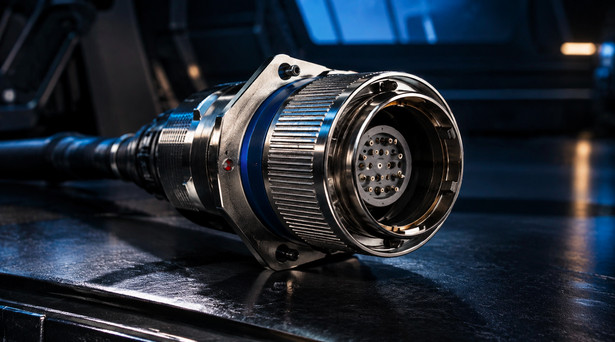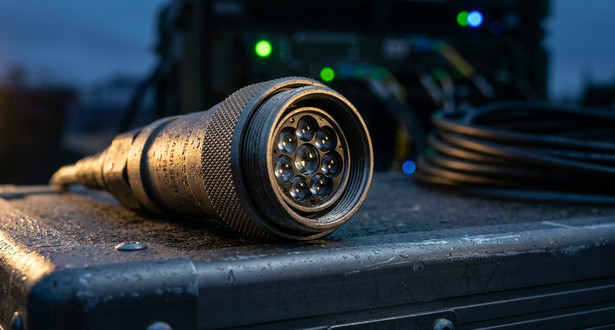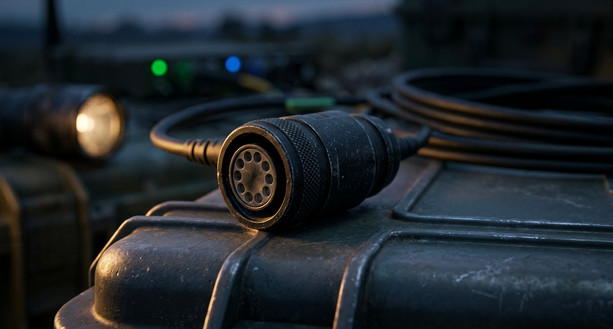
Expanded Beam Maxi Series technology is completely redefining how heavy industries and military-grade communication networks manage optical transmission lines in extreme environments. When traditional physical contact connectors are deployed in dusty, muddy, or vibration-heavy outdoor settings, microscopic dust particles settle directly on the ceramic ferrule end faces, causing catastrophic insertion loss and complete link failure. Industry leaders like fibre systems engineer advanced non-contact optical solutions to eradicate these microscopic contamination points entirely.
Traditional butt-joint cabling techniques were never built to handle the grit, moisture, and mechanical abuse of heavy industrial sites. Relying on exposed physical contact practices creates invisible attenuation bottlenecks that silently degrade optical signal integrity over time. Understanding the physical limitations of legacy hardware is the first step toward building a truly resilient infrastructure that can withstand extreme workloads without unexpected degradation or catastrophic failure.
Modern industrial networks operate under unprecedented pressure to maintain flawless data transmission across rugged terrain, mining sites, and defense installations. As automation, telemetry, and high-speed data acquisition systems scale exponentially, the underlying physical infrastructure must evolve in tandem. Unfortunately, many network engineers continue to rely on legacy termination practices that were designed decades ago for clean, climate-controlled data centers.
These outdated methods introduce invisible physical layer vulnerabilities that undermine the reliability of mission-critical communication hardware. Addressing these vulnerabilities requires a fundamental shift in how organizations approach optical fiber interconnection, moving away from vulnerable physical contact ferrules toward advanced expanded beam technology designed specifically for hostile environments. Transitioning to the Expanded Beam Maxi Series ensures that every single transmission path performs with absolute optical reliability regardless of external contamination.
Furthermore, the physical architecture of contemporary industrial enclosures demands components that maximize durability without sacrificing optical performance. Every millimeter of outdoor deployment space carries a substantial operational risk, pushing facility managers to protect patch panels and transceiver enclosures against severe weather. In such congested and hostile environments, traditional patch cords and exposed mechanical ferrules invite rapid degradation.
Technicians are frequently forced to deploy cabling through areas prone to heavy dust storms and water splash, which invites particulate accumulation and signal attenuation. Adopting advanced non-contact methodologies ensures that industrial routing remains mechanically stable and optically pristine over years of continuous operation, shielding enterprise operations from avoidable maintenance emergencies. Deploying the Expanded Beam Maxi Series prevents the microscopic dust pitting and lateral crushing that routinely plague legacy fiber links.
Key Benefits of Expanded Beam Maxi Series Technology
Transitioning legacy infrastructure to a modern non-contact optical standard delivers immediate, measurable advantages for mission-critical industrial facilities:
- Elimination of Physical Contact Contamination: Non-contact lens collimation expands the light beam across an air gap, making dust, mud, and oil completely harmless to the optical path.
- Extreme Vibration and Shock Resistance: Robust mechanical housings and floating lens designs isolate internal optics from heavy machinery and transport vibration.
- Simplified Field Maintenance: Bypass tedious end-face cleaning kits and microscopic inspection scopes in dirty outdoor maintenance windows.
- Ultra-Low Insertion Loss Consistency: Precision optical lenses maintain stable power budgets across extensive multi-kilometer industrial links.
- Accelerated Deployment Times: Ruggedized plug-and-play architecture allows field crews to establish secure connections rapidly under pressure.
Highlighting the core advantages of the Expanded Beam Maxi Series framework ensures long-term network stability and predictability across harsh industrial deployments.
The Physical Limitations of Butt-Joint Connectors in Harsh Environments
The physical layer of any industrial network acts as the central nervous system for all operational telemetry. When technicians rely on traditional physical contact connectors inside dirty enclosures, microscopic dust and fluid residue ruin alignment instantly. Bypassing traditional hardware by integrating the Expanded Beam Maxi Series solves this by expanding and collimating the light beam across an air gap, eliminating physical ferrule-to-ferrule contact entirely.
Field durability remains a constant struggle for engineers working in harsh outdoor environments or tight maintenance windows. Traditional connectors often slip or degrade when subjected to thermal expansion and heavy machinery vibrations. Non-contact expanded beam technology eliminates movable physical contact points within the connection path entirely, creating a robust optical pathway that resists environmental stress.
Every mechanical joint introduced into an industrial fiber run acts as an invitation for environmental contamination and signal attenuation. Over months of thermal cycling and exposure to corrosive agents, air gaps form between mating glass surfaces, causing catastrophic packet loss and intermittent link flapping. Industrial operators invest millions in high-speed automation gear, yet often overlook the micro-scale imperfections sitting at the patch panel interface. Ignoring these foundational physical layer realities exposes the entire organization to unexpected operational outages and tedious diagnostic troubleshooting sessions that drain valuable engineering resources.
How Lens Collimation Works in the Expanded Beam Maxi Series
To appreciate the engineering superiority of non-contact optics, one must examine the micro-scale physics of beam expansion. Inside standard connectors, light exits a microscopic fiber core and immediately diverges, making it extremely sensitive to any speck of dust sitting on the glass. The Expanded Beam Maxi Series utilizes precision-engineered gradient-index (GRIN) lenses or aspheric ball lenses to expand the diameter of the light beam by many times its original size.
When the beam is expanded across the optical gap, a 50-micron speck of dust blocks only a tiny fraction of the total light footprint, resulting in negligible attenuation rather than total link failure. This fundamental optical principle shields mission-critical communications from the invisible hazards that routinely disable conventional data links.
Modern industrial transceivers rely on pristine optical paths to maintain stable modulation schemes across long transmission spans. When physical connectors feature inferior polish geometry or sub-par end-face cleanliness, reflected light travels backward into the laser diode assembly, heating internal semiconductor junctions and accelerating component aging. By locking in superior non-contact optical parameters at every termination point, enterprise networks achieve maximum hardware lifespan and dramatically lower annual replacement expenditures for active optical gear.
Eradicating Dirt, Dust, and Mud Contamination Challenges
Industrial sites such as open-cut mines, construction zones, and agricultural facilities expose network hardware to relentless particulate pollution. Airborne dust and wet mud coat conventional connectors during routine maintenance, forcing technicians to clean end faces repeatedly before every mating cycle. When deploying the Expanded Beam Maxi Series, cleaning requirements are reduced to a simple wipe with standard field supplies because the expanded light beam bypasses surface debris effortlessly.
Furthermore, when mud and grit contaminate standard physical contact connectors, mating them forces abrasive particles directly into the soft ceramic ferrule, permanently scratching the glass. The Expanded Beam Maxi Series completely prevents this destructive scratching mechanism, extending connector lifecycles exponentially across grueling field conditions.
Field technicians frequently underestimate the physical damage inflicted by airborne particulate matter. Over time, trapped dirt acts like sandpaper inside standard adapter sleeves, distorting alignment tolerances and causing gradual signal degradation. Non-contact lens designs eliminate physical friction entirely, ensuring long-term signal stability even in the most dust-choked industrial environments where cleanliness is impossible to maintain.
Withstanding Extreme Mechanical Shock and Vibration Stress
Heavy industrial machinery, rail transport, and defense vehicles generate continuous mechanical vibration and shock loads that fracture standard glass-to-glass connections. Traditional connectors suffer from micro-motion between mating ferrules, which introduces intermittent signal drops and optical return loss spikes. Designing resilient networks requires hardware engineered to absorb mechanical abuse without transmitting stress to the optical fiber.
By utilizing heavy-duty outer shells and floating optical sub-assemblies, the Expanded Beam Maxi Series decouples external mechanical shock from the internal light path, ensuring uninterrupted data transmission even when mounted directly onto vibrating diesel engines or heavy mining equipment.
Network administrators often misdiagnose transceiver failures as active hardware bugs when the root cause originates from mechanical vibration at the patch panel. Upgrading the physical interconnect layer neutralizes invisible micro-motion spikes before they impact switch performance. Clean optical pathways translate directly to rock-solid uptime across core industrial routing switches. When mechanical stress is properly isolated from day one, active hardware operates within manufacturer thermal specifications for years longer, significantly reducing ongoing capital replacement expenses.
Ensuring Regulatory Compliance With Australian Standards
Adhering to strict national and international electrical and optical safety codes is non-negotiable for enterprise and industrial infrastructure projects. Facilities must comply with rigorous guidelines established by regulatory authorities like the Australian Communications and Media Authority regarding telecommunications cabling and structured wiring practices. Specifying fully certified hardware ensures that commercial and industrial installations satisfy every mandated industry compliance benchmark.
Navigating regional telecommunications regulations requires absolute confidence in the physical components specified for heavy industrial builds. Regulatory frameworks governing structured cabling demand rigorous adherence to mechanical performance, environmental sealing, and optical attenuation limits. Specifying certified components guarantees that industrial installations satisfy every statutory requirement without requiring expensive remediation work prior to final operational sign-off. When reviewing regulatory documentation for the Expanded Beam Maxi Series, safety auditors find complete alignment with all statutory mechanical and optical criteria.
Documentation and traceability are core requirements for modern commercial and industrial network installations. Standardized non-contact termination methods simplify testing, verification, and certification procedures during commissioning phases. Engineers can generate flawless certification reports that satisfy both internal safety auditors and external regulatory bodies effortlessly, establishing a baseline of professional excellence that reassures stakeholders and regulatory inspectors alike.
Technical Performance Comparison Matrix
Evaluating performance realities with the Expanded Beam Maxi Series requires comparing legacy butt-joint alternatives against modern expanded beam lens technology across critical engineering metrics.
| Performance Metric | Traditional Butt-Joint Connectors | Expanded Beam Maxi Series | Industrial Operational Impact |
| Contamination Tolerance | Highly vulnerable to dust, mud, and oil | Beam expansion bypasses surface debris | Eliminates catastrophic link failure in dirty environments |
| Vibration Resistance | Prone to micro-motion and signal drop | Floating optical lenses absorb heavy shock | Guarantees continuous uptime on machinery |
| Cleaning Requirements | Requires meticulous microscopic cleaning | Wipes clean easily with standard supplies | Drastically reduces field maintenance overhead |
| Insertion Loss Stability | Degrades rapidly over mating cycles | Maintains consistent ultra-low attenuation | Preserves critical optical power budgets |
Streamlining Field Maintenance and Operational Workflows
Maintenance windows in mission-critical industrial facilities are exceptionally short, often restricted to brief scheduled shutdowns. When field technicians struggle with finicky cleaning swabs and microscopic inspection scopes in muddy trenches, human error and operational delays skyrocket. Adopting a modern Expanded Beam Maxi Series architecture streamlines moves, adds, and changes significantly through simplified non-contact mating.
Simplified connection verification reduces the time required to reconfigure field lines during rapid deployments. Standardizing physical layer hardware across multiple industrial sites simplifies spare parts inventory management. Maintenance teams no longer need to stock dozens of specialized polishing kits and cleaning solvents. A unified connectivity standard ensures rapid incident response times across every regional facility, minimizing mean time to repair during unexpected network anomalies. Operational efficiency thrives when physical layer components are engineered for intuitive deployment under pressure. When standardizing an inventory framework around the Expanded Beam Maxi Series, enterprise logistics teams achieve maximum operational readiness and reduced spare parts overhead.
Streamlining routine maintenance tasks inside harsh industrial facilities directly impacts overall organizational productivity and service level agreement compliance. When network engineers face tight maintenance windows during scheduled upgrade cycles, every minute spent fiddling with complex field cleaning tools increases the risk of operational disruption. Standardizing your physical layer connectivity around advanced non-contact hardware removes procedural ambiguity and accelerates deployment times across the board. Maintenance personnel can execute moves, additions, and changes with absolute confidence, knowing that every terminated port will meet stringent optical parameters on the first attempt without requiring tedious post-installation rework.
Frequently Asked Questions For Harsh Environments
How does the Expanded Beam Maxi Series prevent contamination failure in muddy industrial environments?
The Expanded Beam Maxi Series utilizes advanced lens collimation to expand the light beam across an air gap. Because the beam diameter is magnified significantly, surface dust, oil, and mud block only a fraction of the light, preventing insertion loss spikes.
Why is lens collimation superior to traditional physical contact ferrules in high-vibration applications?
Traditional ferrules rely on direct glass-to-glass contact that degrades under vibration. The Expanded Beam Maxi Series eliminates physical contact friction entirely, protecting the optical path from micro-motion and mechanical wear.
Can legacy industrial patch panels be retrofitted with expanded beam technology?
Yes, upgrading your infrastructure is achievable using modular adapter plates and compatible chassis hardware designed to house the Expanded Beam Maxi Series without replacing your entire enclosure ecosystem.
Bulleted Summary
- The Expanded Beam Maxi Series eliminates physical contact contamination by expanding and collimating light across a protective air gap.
- Advanced lens technology ensures that dust, mud, and oil cause negligible attenuation instead of catastrophic link failure.
- Heavy-duty mechanical housings isolate internal optics from extreme industrial vibration, shock, and thermal expansion.
- Simplified non-contact maintenance drastically reduces field cleaning time and eliminates ferrule scratching.
- Full compliance with strict industry regulations ensures seamless facility audits and long-term operational safety.
Transforming Industrial Infrastructure Through Excellence
Ignorance of physical layer limitations in harsh environments is the silent killer of industrial network uptime and operational scalability. Sticking with legacy butt-joint termination methods in dusty or vibrating facilities invites catastrophic signal degradation, expensive transceiver failures, and frustrated engineering teams. Embracing the Expanded Beam Maxi Series architecture transforms high-maintenance field installations into streamlined, high-performance optical powerhouses.
Ready to eliminate physical layer bottlenecks and secure your high-speed industrial infrastructure against unexpected downtime? Deploying the Expanded Beam Maxi Series strategy ensures your physical layer remains completely bulletproof. Contact us today to speak directly with our industrial infrastructure specialists. Explore the Expanded Beam Maxi Series in our product section to find the exact ruggedized hardware your harsh environment architecture demands. For more industry insights and technical articles, visit Fibre Systems or browse our resources section.