M28876 Termini assemblies provided by Fibre Systems deliver robust optical performance designed to withstand extreme mechanical stress, environmental exposure, and heavy operational demands. In high-density tactical, marine, and mobile broadcast deployments, single-channel or multi-channel fiber interconnects serve as the core backbone for uncompressed data transfer. When engineers deploy heavy-duty optical lines in unpredictable field conditions, every physical connection point must maintain total structural integrity. The reliance on high-precision optical hardware means that even microscopic contaminants or subtle mechanical misalignments can bring down an entire live feed instantly. Understanding how to deploy, clean, and protect every M28876 Termini assembly ensures long-term transmission stability and guards against catastrophic hardware failures when production deadlines are on the line.
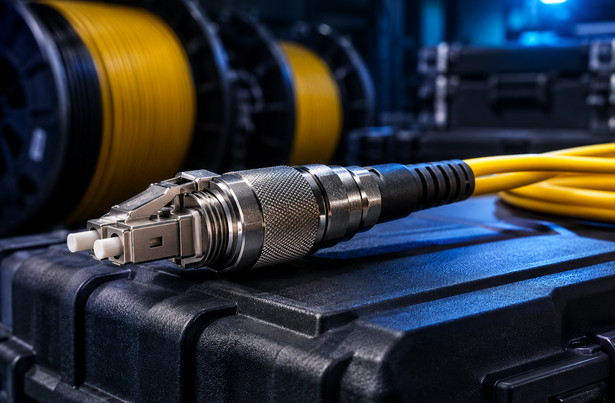
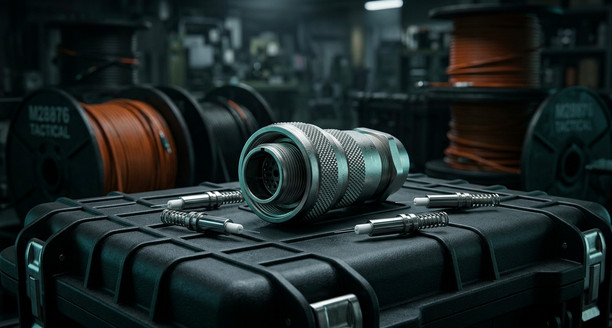
The M28876 Termini standard represents a high-density, MIL-PRF-28876 qualified fiber optic connector pin and socket system engineered specifically for harsh environments. Featuring precision ceramic ferrules, stainless steel retaining bodies, and alignment sleeves, these components ensure tight optical coupling under severe physical vibration. However, when operators bypass routine cleaning protocols or fail to implement strain relief, signal degradation quickly follows. Preventing insertion loss spikes begins with recognizing that optical glass faces constant threats from airborne dust, mechanical shock, and improper handling techniques during rapid field setup.
Understanding M28876 Termini Mechanical Construction and Transmission Basics
An M28876 Termini assembly is built to maintain sub-micron alignment between opposing optical fibers, even when subjected to intense physical shock, continuous heavy vibration, or sudden structural movement. The precision pin and socket design relies on high-grade Zirconia ceramic ferrules housed within heavy-duty, corrosion-resistant stainless steel shells. This advanced dual-layer construction isolates the fragile internal glass core from extreme external forces, ensuring that severe lateral pressure or bending force on the outer heavy-duty cable jacket does not transfer directly to the polished optical contact face.
Despite this rugged construction, an M28876 Termini connection remains exceptionally vulnerable to microscopic environmental contaminants. The microscopic light-guiding core of a standard single-mode optical fiber measures approximately 9 microns in diameter, which is roughly one-tenth the width of a single human hair strand. When a microscopic airborne dust particle or salt crystal lodges between two mating ferrule faces, it physically prevents true surface-to-surface glass contact, creating a microscopic air gap that triggers severe insertion loss spikes and hazardous back-reflection levels. Over prolonged field operations, repeatedly torquing down a contaminated connector housing grinds that trapped dust particles straight into the polished ceramic or glass surface, inflicting permanent pitting and surface scratches that require complete manual field re-polishing or total pin replacement.
Proper mechanical assembly and field deployment of every M28876 Termini requires disciplined torque management, proper tool handling, and structured cable routing practices. Technicians must avoid applying excessive torque to outer coupling nuts, which strips internal precision threads and permanently deforms internal spring retention mechanisms designed to maintain continuous forward contact force. Establishing clean handling habits during initial breakout assembly shields fragile internal alignment sleeves from airborne debris, keeping signal insertion loss well within strict operational tolerance windows across multi-year field deployments.
Key Benefits of Deploying M28876 Termini in High-Density Networks
Adopting military-grade optical interconnect standards provides crucial operational advantages for mission-critical infrastructure:
- Uncompromised Optical Alignment Under Strain: Precision Zirconia ferrules hold core centering to sub-micron tolerances, eliminating light leakage during physical shock.
- Corrosion-Resistant Structural Protection: Heavy-duty metal bodies shield internal optical interfaces against salt spray, high humidity, and aggressive industrial chemicals.
- High-Vibration Lock Retention: Threaded coupling mechanisms prevent accidental connector backing-off during continuous mobile truck transit or machine operation.
- Extended Service Lifecycle: Engineered to endure hundreds of mating cycles without mechanical fatigue, safeguarding capital hardware investments over years of service.
- Rapid Field Serviceability: Removable alignment sleeves allow field crews to inspect, clean, and clear debris quickly without taking down whole patch bays.
Critical Causes of M28876 Termini Degradation in Field Applications
Field environments present a relentless barrage of physical hazards that constantly compromise sensitive optical hardware performance. Operating in temporary outdoor venues, heavy industrial mining sites, or high-salinity coastal zones exposes optical interfaces to aggressive salt spray, high ambient humidity, airborne silica dust, and extreme diurnal temperature swings. If technicians handle an M28876 Termini without deploying protective dust caps or wearing clean lint-free gloves, microscopic skin oils immediately transfer onto the polished ceramic ferrule end face, creating a sticky residue that attracts fine airborne dirt particles like a magnet.
Severe thermal fluctuation represents another silent threat to continuous optical link stability. When outdoor equipment rack enclosures heat up under direct solar exposure or unventilated power supply units, adjacent metallic frame chassis and plastic adapter components expand at vastly different thermal rates. This differential thermal expansion places continuous axial stress on every M28876 Termini interface, gradually forcing the precision ceramic ferrule out of true sub-micron axial alignment. As ambient temperatures drop rapidly at night, structural thermal contraction causes microscopic air gaps to form between mated connectors, triggering unexpected signal dropouts right in the middle of live broadcast operations.
Mechanical vibration further accelerates component wear whenever patch cables lack adequate structural strain relief. In mobile broadcast OB trucks or heavy industrial generator sites, continuous mechanical vibrations constantly shake patch panels, frame chassis, and bulkhead adapters. Without proper cable strain relief isolating the connection points, these persistent micro-vibrations generate destructive micro-friction between joined M28876 Termini ferrules, gradually wearing down the mirror-smooth polished glass surface finish. Over months of demanding field service, this physical surface friction severely degrades optical return loss ratings, increases insertion loss attenuation, and introduces persistent signal instability across active data channels.
M28876 Termini vs. Standard Optical Interfaces
| Feature / Metric | M28876 Termini Standard | Commercial LC/SC Interfaces | Direct Operational Impact |
| Environmental Sealing | Heavy-duty O-ring & corrosion-resistant shell | Basic plastic latch & friction fit | Prevents moisture, salt spray, and airborne dust ingress |
| Mechanical Shock Resistance | High vibration / MIL-SPEC qualified | Standard indoor rack rating | Eliminates micro-friction wear during mobile truck transport |
| Ferrule Construction | Precision Zirconia Ceramic with metal sleeve | Standard ceramic ferrule | Maintains sub-micron core alignment under physical stress |
| Field Serviceability | Removable alignment sleeves for rapid cleaning | Fixed internal sleeve design | Enables instant field maintenance without panel teardown |
| Re-mating Durability | Rated for 500+ heavy-duty mating cycles | Rated for 100-200 standard cycles | Protects long-term hardware investments in high-use fleets |
Step-by-step M28876 Termini Cleaning and Inspection Workflow
Maintaining peak signal performance requires a disciplined, repeatable cleaning process before every single mating cycle. Following a strict inspection and cleaning routine prevents cross-contamination, preserves pristine end face polish, and extends the service life of your high-density optical patch panels.
- Perform Initial Visual Inspection under Fiber Scope: Remove the protective dust cap and insert the M28876 Termini into a clean digital fiber inspection scope. Examine the end face at 200x or 400x magnification to inspect for oil residue, dust particles, scratches, or glass pitting across the core and cladding zones.
- Apply Dry Cleaning via Precision Reel Cleaner: If light dust or minor debris is present, insert the M28876 Termini ferrule into a specialized optical reel cleaner. Advance the micro-fiber tape smoothly across the end face using single-direction strokes to sweep away dry particulates without scratching the glass.
- Execute Wet-to-Dry Cleaning for Stubborn Oils: For heavy oil contamination or dried residue, apply a single drop of optical-grade solvent to a lint-free dry wipe. Touch the M28876 Termini ferrule to the solvent-wetted area, then immediately drag it across a dry section of the wipe to remove all remaining solvent film.
- Re-Inspect the Polished Ferrule Face: Place the M28876 Termini back onto the inspection scope to confirm complete contaminant removal. Never mate an optical connector without verifying cleanliness on screen first.
- Install Clean Protective Caps Immediately: If the M28876 Termini is not being plugged directly into an active bulkhead, immediately attach a clean, dry dust cap to seal the polished interface against ambient airborne dust.
Preventing Cable Strain and Mechanical Damage on M28876 Termini Cables
Proper physical cable management serves as the primary line of defense against premature mechanical failure and unexpected link drops across high-density optical patch environments. When field technicians route optical jumpers across crowded rack bays, tensioning cables tightly around sharp metal frame corners introduces severe bend radius violations. Bending a heavy-duty optical cable past its specified minimum bend radius places intense physical shear stress on the internal M28876 Termini crimp sleeve, forcing micro-curvature within the glass structure that triggers physical core offset, modal dispersion, and immediate optical signal attenuation.
Installing dedicated rear cable lacing bars, horizontal strain relief trays, and padded field breakout kits ensures that the heavy physical mass of multi-core trunk cables does not hang directly from the fragile rear connector body. Structurally securing heavy cable breakout legs to main rack enclosure members isolates each M28876 Termini interface from external mechanical pulling forces, allowing the internal precision spring mechanism to maintain constant, perfectly balanced forward contact pressure across the mated ceramic ferrule face.
Field technicians must also enforce strict physical handling rules throughout initial cable insertion, routine maintenance, and final system teardown. Always grip the outer metal coupling ring or primary connector housing directly when plugging in an M28876 Termini assembly, pushing the unit straight into the bulkhead adapter bay until the threaded or bayonet locking mechanism fully engages. Never pull on the bare outer fiber jacket or flex the strain relief boot to disconnect an active line, as applying lateral lever action can easily fracture delicate internal Zirconia ceramic alignment sleeves or chip the micro-polished glass ferrule tips.
Environmental Controls and Thermal Auditing for M28876 Termini Patch Panels
Operating optical patch panels in extreme environmental temperatures requires proactive monitoring protocols alongside active thermal control strategies. In outdoor production venues, high ambient heat combined with direct solar radiation on heavy-duty mobile equipment enclosures can drive internal rack temperatures well beyond safe operational thresholds. Staging an M28876 Termini patch bay inside an unventilated housing invites catastrophic thermal distortion, which distorts plastic alignment sleeves, warps protective adapter bodies, and expands internal metallic retention clips beyond their mechanical elastic limits.
Field leads must deploy active auxiliary cooling fan units, elevated shading canopies, and high-flow vented rack panels to guarantee continuous, uniform airflow across every optical patch bay. Ensuring steady dissipation of trapped ambient heat prevents localized hot spots around high-density M28876 Termini connections, safeguarding sub-micron ceramic ferrule alignment tolerances over multi-day continuous outdoor live broadcasts.
Conducting structured thermal audits with high-precision infrared thermometer guns or automated inline temperature monitoring sensors empowers maintenance engineers to detect localized heat spikes long before physical link failure occurs. If a specific patch bay exhibits dangerous temperature elevation, immediately re-routing high-wattage power supplies or mounting heat-deflecting blanking plates re-establishes optimal airflow channels around every M28876 Termini assembly.
Best Practices for Dust Cover Management and Environmental Sealing
Protective dust caps serve as the primary defensive barrier preserving pristine optical end faces whenever an M28876 Termini is demated from an active bulkhead port. Uncovered pin or socket assemblies exposed to ambient field air accumulate airborne dust particles, moisture vapor, and micro-contaminants within minutes. Deploying heavy-duty, gasket-sealed dust covers maintains structural environmental sealing and prevents ambient debris from settling onto precision ceramic ferrule tips during storage or tactical transport.
Field maintenance leads must enforce strict operational discipline regarding dust cover storage and handling. Technicians should never place removed protective caps onto bare soil, dirty equipment cases, or inside unsealed pockets where interior grit accumulates. Storing removed caps inside clean, sealable protective bags ensures that re-attaching the cover does not inadvertently introduce heavy abrasive particles directly back onto the polished M28876 Termini ferrule surface.
Storage Protocols and Transit Protection for Ruggedized Cable Fleets
Long-term hardware reliability and consistent signal integrity depend heavily on how complex optical assemblies are stored, handled, and transported between active field deployments. Heavy-duty tactical cable assemblies terminated with a precision M28876 Termini system should always be coiled onto heavy-duty, large-diameter cable storage drums specifically engineered to preserve minimum dynamic bend-radius specifications. Tightly wrapping flexible jumpers or multi-fiber breakout legs around small commercial storage spools introduces severe, permanent mechanical stress within the protective outer jacketing, gradually distorting delicate internal glass fiber geometry, weakening structural aramid strength members, and placing intense physical strain on rear crimp sleeve retention points.
During high-vibration mobile vehicle transit, rough maritime transport, or air freight operations, tactical cable reels and breakout assemblies must be firmly secured inside custom-built, ruggedized, foam-padded flight cases designed to absorb extreme mechanical impact shock and sudden drop forces. Protecting the outer heavy-duty connector shells from direct mechanical drops prevents costly thread deformation, keyway alignment damage, and internal ceramic alignment sleeve fractures. Establishing comprehensive, mandatory storage and transit guidelines shields capital equipment investments from preventable transport wear, ensuring that every deployable M28876 Termini asset operates at peak optical performance the very instant field engineers plug it in on site.
Advanced Insertion Loss and OTDR Diagnostic Protocols for M28876 Termini
Field validation of high-density optical links requires comprehensive, multi-tiered diagnostic testing protocols that go far beyond standard visual fiber scope inspections. Deploying an optical time-domain reflectometer alongside a precision-stabilized light source and an optical power meter allows field test engineers to accurately pinpoint and isolate optical loss events down to the individual M28876 Termini interface. Establishing detailed baseline attenuation profiles during initial system commissioning ensures that subsequent signal degradation, acute macro-bending events, or subtle ferrule misalignment issues can be identified and diagnosed instantly without tearing down complete structural cabling infrastructure.
During routine preventive link verification, qualified optical technicians must systematically measure both signal insertion loss and optical return loss across all active single-mode and multimode transmission channels. Insertion loss for a precision-polished M28876 Termini connection should remain consistently within tight operational tolerance windows, typically averaging under 0.35 dB per mated pair under standard laboratory and field test conditions. High or excessive return loss values indicate strong back-reflections caused by microscopic air gaps between mated ferrule faces, severe ferrule surface scratches, or residual skin oil film, signaling an immediate operational requirement for thorough wet-to-dry cleaning cycles or complete ferrule re-polishing in the field.
Regulatory Standards and Compliance Requirements for M28876 Termini Installers
Every commercial, industrial, and defense optical deployment must comply with established national wiring regulations, physical installation safety standards, and strict signal transmission benchmarks. In Australia, field cabling practices must strictly align with rules managed by the ACMA, ensuring that optical infrastructure installations meet rigorous safety, mechanical grounding, and long-term network performance criteria.
Applying recognized military and commercial industry standards guarantees that every M28876 Termini installation maintains structural reliability and physical alignment even under the most demanding operational conditions. Regulatory compliance frameworks govern critical installation variables, including strict minimum cable bend radii, connector housing tensile retention forces, optical core alignment limits, and maximum allowable insertion loss thresholds across public, private, and tactical enterprise networks.
Documenting full regulatory compliance through detailed optical time-domain reflectometer (OTDR) trace records provides verifiable, audit-ready proof of physical link quality and structural integrity. Systematically cataloging and storing baseline OTDR trace files for every installed M28876 Termini link gives site engineering teams a precise historical reference point for long-term signal degradation tracking, rapid field troubleshooting, and routine preventive maintenance audits.
Frequently Asked Questions About M28876 Termini Maintenance
What is the maximum allowable insertion loss for an M28876 Termini connection?
The standard allowable insertion loss for a high-precision M28876 Termini connection typically ranges between 0.3 dB and 0.75 dB per mated pair, depending on whether single-mode or multi-mode fiber is deployed. Maintaining loss levels within this window requires strict adherence to inspection and cleaning procedures before every mating cycle.
How often should an M28876 Termini ferrule be inspected in the field?
An M28876 Termini ferrule should be inspected under a digital fiber scope every single time it is unplugged, moved, or prepared for mating. Assuming a connector is clean simply because it had a dust cap on is a primary cause of cross-contamination in active networks.
Can alcohol wipes be used to clean an M28876 Termini ferrule?
Standard isopropyl alcohol wipes should be avoided if possible, as standard rubbing alcohol contains water content that leaves streaks and film residue on the glass core. Always use optical-grade cleaning solvents or high-purity dry micro-fiber cleaning tapes designed specifically for an M28876 Termini.
Why does an M28876 Termini fail after repeated mating cycles?
An M28876 Termini typically fails after repeated mating cycles due to accumulated micro-contaminants that ground into the ferrule end face, causing physical scratches or glass pitting. Physical wear on internal spring retention mechanisms or damaged alignment sleeves can also lead to axial offset over time.
How do environmental dust caps protect an M28876 Termini?
Environmental dust caps prevent airborne dust, salt spray, moisture, and skin oils from settling on the polished M28876 Termini end face when the cable is not connected to a sealed bulkhead port. Dust caps also protect the ceramic ferrule tip from physical impacts during transit.
Summary Checklist for M28876 Termini Care
- Inspect every M28876 Termini end face with a digital fiber scope prior to connector mating.
- Perform dry reel cleaning or wet-to-dry cleaning using optical-grade solvents for oil removal.
- Maintain clean protective dust caps on every un-mated M28876 Termini connector.
- Secure patch cables to dedicated lacing bars to prevent cable strain on the M28876 Termini body.
- Ensure adequate ventilation around patch panels to prevent thermal distortion on the M28876 Termini bay.
- Verify that all field wiring practices comply with local ACMA cabling standards.
- Conduct regular OTDR testing to log baseline insertion loss for every active M28876 Termini link.
- Store spare patch leads inside padded, dust-sealed flight containers during field transport.
Protecting Your Long-Term Network Reliability
Maintaining uncompromised signal stability across complex optical networks requires relentless attention to hardware hygiene, proper strain relief, and structured maintenance workflows. Treating every M28876 Termini connection as a high-precision optical component ensures that live feeds remain uninterrupted, even under severe environmental stress. Skipping routine cleaning steps or ignoring physical cable strain inevitably leads to intermittent signal drops, high repair costs, and unexpected downtime during critical production windows.
Establishing disciplined inspection routines protects operating budgets by reducing emergency hardware replacements and eliminating unnecessary dispatch fees for field troubleshooting teams. Investing in high-quality cleaning supplies, protective storage hardware, and comprehensive training for technical staff builds an operational environment where network failures are caught and prevented long before equipment goes live on air.
To explore our full range of heavy-duty optical hardware and patch panel solutions, visit our Products catalog today. If your engineering team needs customized technical advice or assistance with specialized deployment requirements, get in touch directly through our Contact Us page to speak with an optical connectivity specialist.