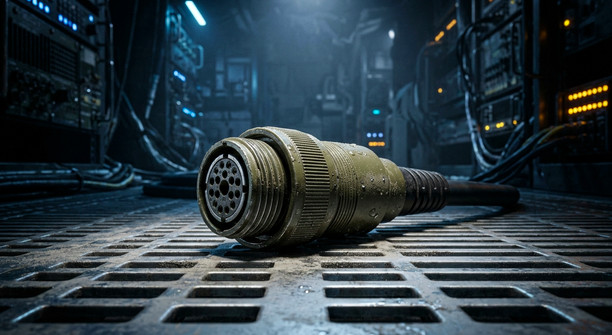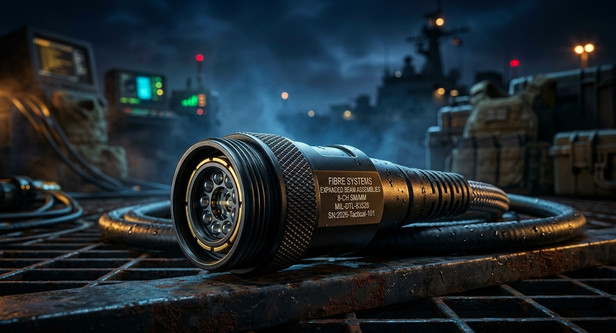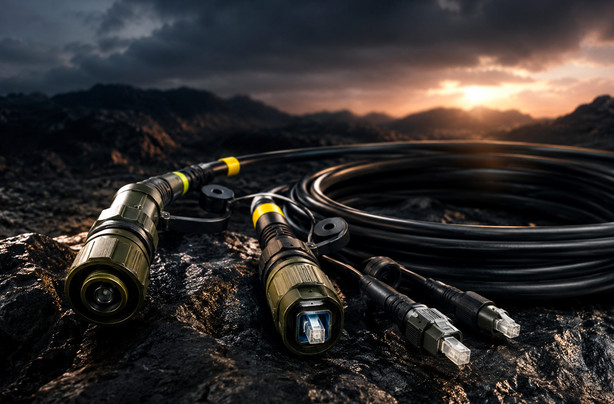
Mil-Spec Fibre Assemblies are purpose built fibre optic cable assemblies designed for applications that require reliable data transmission, durable connections, and performance under demanding operating conditions. Unlike ordinary indoor patch leads, these assemblies can be specified with rugged cable constructions and connectors suited to field deployment, military communications, and other challenging environments. Fibre Systems supports Australian industries with specialised fibre optic connectivity solutions for demanding applications.
A connection failure may appear to be a small technical problem, but its consequences can extend well beyond the cable itself. When communication equipment stops working in the field, technicians may need to inspect connectors, test cable runs, arrange replacement parts, and repeat installation work that should already have been completed.
For Defence contractors, field communication teams, and industrial project managers, the real concern is not simply the cost of another cable. It is the time, labour, disruption, and uncertainty that follow repeated failures.
Choosing the right assembly starts with understanding where it will be used, how it will be handled, and what conditions it must withstand. A product that performs well inside a controlled facility may not be the right choice for a temporary field network exposed to dust, moisture, vibration, repeated handling, and changing temperatures.
This guide explains how to assess these risks, choose appropriate specifications, and reduce avoidable maintenance without relying on exaggerated product claims.
Mil-Spec Fibre Assemblies: Understand the Real Cost of Repeated Failures
The cost of a failed connection often extends far beyond the price of replacing a cable, which is why engineering teams rely on Mil-Spec Fibre Assemblies for harsh environments. The additional work required to locate the fault, restore communications, and verify the repair can place severe pressure on an entire project when standard cabling fails.
Consider a field team that deploys Mil-Spec Fibre Assemblies to secure a communications network before a scheduled operation. If a non-ruggedized connector becomes damaged during transport or a generic cable jacket deteriorates during handling, the team may have to stop and investigate before the network can be used, proving why robust mil-spec fibre assemblies are critical.
The same issue can become far more expensive when equipment is installed in a remote location without proper Mil-Spec Fibre Assemblies in place. Replacement parts may not be immediately available, and sending a technician back to the site can involve additional transport, labour, and scheduling costs. Investing in factory-tested mil-spec fibre assemblies eliminates these avoidable field failures, ensuring that high-density Mil-Spec Fibre Assemblies maintain complete signal integrity under extreme physical stress.
Where the hidden costs begin
Repeated connection problems commonly create several challenges:
- Unplanned maintenance: Technicians must interrupt planned work to investigate and repair a fault.
- Operational delays: Communications equipment may remain unavailable while the cause of the problem is identified.
- Replacement expenses: Damaged assemblies, connectors, and associated components may need to be replaced.
- Repeated testing: A repaired connection must be checked before the system can return to service.
- Reduced confidence: Teams may begin questioning whether the same connection will fail again during the next deployment.
These costs are not always recorded under the original cable purchase. They may appear across labour budgets, equipment maintenance, project delays, and logistics.
That is why procurement decisions should consider the expected service conditions and the total effort required to maintain a connection over time.
A lower purchase price does not automatically mean a lower operating cost. The more demanding the application, the more important it becomes to assess the complete assembly rather than comparing products on price alone.
Mil-Spec Fibre Assemblies: Why Ordinary Cables Can Fall Short
Ordinary fibre optic cables are not automatically unsuitable for demanding environments, but their intended application matters compared to purpose-built Mil-Spec Fibre Assemblies. A cable designed for a protected office or equipment room may lack the mechanical protection, connector retention, or environmental suitability needed for repeated outdoor deployment where rugged mil-spec fibre assemblies are necessary.
Military and industrial applications introduce different challenges that standard cabling cannot handle like Mil-Spec Fibre Assemblies do. Cables may be transported between locations, packed with other equipment, routed around temporary installations, and retrieved after use. Each activity creates opportunities for damage if the assembly is not selected for those conditions, which is why operators choose field-ready Mil-Spec Fibre Assemblies.
Deploying high-performance mil-spec fibre assemblies protects delicate optical lines from crush hazards and environmental exposure during rapid field setups. When mission critical reliability is required, relying on certified Mil-Spec Fibre Assemblies ensures uninterrupted signal performance even in the most unforgiving operational environments.
Common causes of premature failure
Mechanical stress is one important consideration. Pulling a cable around sharp corners, crushing it under equipment, or exceeding its minimum bend radius can damage the cable structure or affect optical performance.
Connector damage is another concern. Connectors can be exposed to impact, contamination, moisture, and repeated mating cycles. A damaged connector or contaminated optical end face can increase signal loss even when the cable itself remains intact.
Environmental exposure also matters. Heat, cold, water, chemicals, ultraviolet radiation, and abrasive surfaces can affect materials differently. The level of protection required depends on the actual conditions and the manufacturer’s stated specifications.
Before selecting an assembly, consider the following questions:
- Will the cable remain installed or be deployed and retrieved regularly?
- Will it be exposed to dust, rain, mud, oils, or cleaning chemicals?
- Could vehicles, tools, or heavy equipment damage the cable?
- How frequently will the connectors be connected and disconnected?
- Does the application require a particular military specification or documented qualification?
These questions help establish what the assembly must do rather than relying on the word rugged alone.
Mil-Spec Fibre Assemblies: What Makes a Reliable Assembly?
A reliable assembly combines suitable optical components, appropriate cable construction, compatible connectors, and controlled manufacturing processes, which defines quality Mil-Spec Fibre Assemblies. No single feature guarantees performance in every environment without the structural integrity provided by mil-spec fibre assemblies.
For demanding projects, the complete assembly should be evaluated against the operating requirements, not simply the specifications of an individual connector or cable. Selecting certified Mil-Spec Fibre Assemblies ensures that every component meets rigorous mechanical and optical standards during mission critical operations.
Cable construction and physical protection
The cable jacket protects the internal components against the conditions for which it is designed, making it a critical component of high-performance Mil-Spec Fibre Assemblies. Polyurethane, for example, is commonly used in tactical cable constructions where abrasion resistance and flexibility are important considerations. However, material suitability still depends on the specific formulation and application of the mil-spec fibre assemblies being deployed.
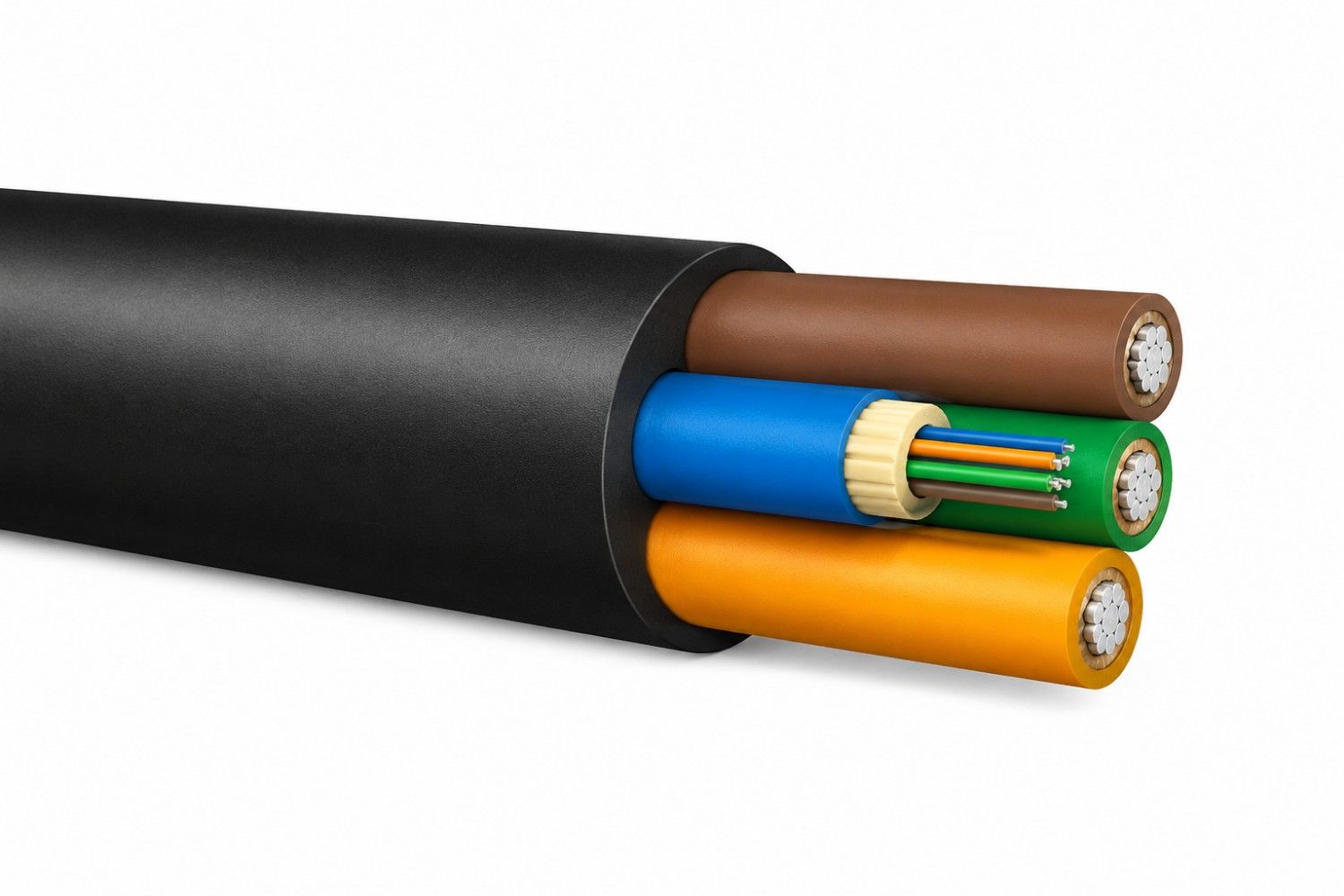
Additional strength members and cable construction features can help manage mechanical loads across Mil-Spec Fibre Assemblies in the field. Some tactical cable designs use aramid strength members, flexible internal structures, or specialised jackets to support repeated handling and harsh conditions.
Fibre Systems lists military tactical cable options intended for harsh environments, including constructions designed for outdoor deployment and demanding commercial or industrial applications that utilize Mil-Spec Fibre Assemblies. The exact performance of selected mil-spec fibre assemblies should always be confirmed against their current datasheet.
Connector selection and retention
Connectors determine how the assembly interfaces with the equipment. They must match the required port, fibre type, optical configuration, and environmental conditions.
A connector that fits physically is not necessarily compatible with every optical system. Differences in fibre mode, polish, alignment, and connector design can affect performance or prevent a correct connection.
For field applications, teams should also consider connector retention, protective caps, cleaning access, and the expected number of connection cycles.
Manufacturing quality and traceability
Manufacturing controls matter because an assembly can only perform as intended when its components and assembly processes meet the required specifications.
For qualified Defence applications, buyers should confirm applicable manufacturing certifications, product qualification status, inspection requirements, and supporting documentation. Fibre Systems identifies its manufacturing facility as certified to MIL-STD-790G for relevant military grade products. Project teams should verify the specific requirements applicable to their procurement.
Mil-Spec Fibre Assemblies: Choosing the Right Fibre Type
The correct fibre type depends on transmission distance, equipment compatibility, required bandwidth, and the optical interfaces used by the network. Singlemode and multimode fibre serve different purposes, so neither should be selected solely because it appears more advanced.
Singlemode fibre is commonly used for longer transmission distances and applications that require suitable optical performance across extended links. Multimode fibre is frequently used for shorter links where the installed equipment and network design support it.
The choice must match the entire transmission system, including the transceivers, connectors, and required data rate.
Singlemode versus multimode
| Consideration | Singlemode fibre | Multimode fibre |
| Typical use | Longer distance links | Shorter distance links |
| Fibre core | Smaller core | Larger core |
| Equipment compatibility | Requires matching singlemode optics | Requires matching multimode optics |
| Common examples | OS2 | OM1, OM3, OM4 |
| Main selection priority | Distance and optical budget | Distance, bandwidth, and supported optics |
| Best approach | Confirm link requirements and equipment | Confirm link requirements and equipment |
These are general distinctions rather than a complete specification. Actual supported distance and data rate depend on the optical equipment, fibre category, link design, and installation conditions.
Questions to ask before specifying the fibre
- What transmission distance must the connection support?
- Which fibre type does the connected equipment require?
- How many fibres are needed for the intended application?
- What connector interfaces are specified at each end?
- Is the assembly intended for permanent installation or repeated deployment?
Answering these questions early can prevent compatibility problems and reduce the risk of ordering an assembly that cannot be used as intended.
Mil-Spec Fibre Assemblies: Understanding Connector Options
Connector selection has a direct effect on installation, maintenance, and compatibility. The correct choice depends on the equipment interface, environmental exposure, and how frequently personnel will handle the connection.
Physical contact connectors rely on accurately aligned optical end faces. They can provide excellent performance when properly matched, inspected, cleaned, and maintained. However, contamination and damage to the end face can affect signal quality.
Expanded beam connectors use optical elements to expand and refocus the light across the connection interface. This design can reduce sensitivity to some forms of surface contamination compared with traditional physical contact designs, although it does not eliminate the need for inspection and appropriate care.
Matching the connector to the working environment
A connector used inside a protected equipment cabinet may face different risks from one repeatedly handled outdoors. Field applications may require stronger housings, secure retention, protective covers, and designs that simplify maintenance.
When comparing connector options, review:
- Interface compatibility with the equipment.
- Optical performance and insertion loss requirements.
- Environmental protection ratings where applicable.
- Mechanical retention and resistance to expected handling.
- Cleaning and inspection requirements.
- Availability of compatible replacement components.
The best connector is the one that meets the actual technical and environmental requirements without introducing unnecessary complexity.
Mil-Spec Fibre Assemblies: How to Reduce Preventable Connection Problems
Preventing connection failures requires more than buying a stronger cable. Correct installation, careful handling, routine inspection, and suitable storage all contribute to dependable operation.
Even a well specified assembly can be damaged through improper routing, excessive pulling force, contaminated connectors, or careless retrieval.
A practical deployment and maintenance process
Step 1: Inspect before deployment.
Check the cable jacket, connector housings, protective caps, and visible signs of damage. If the assembly requires formal inspection or optical testing, follow the applicable procedure and record the results.
Step 2: Confirm compatibility.
Verify that the fibre mode, connector interfaces, fibre count, and equipment requirements match the installation plan. Do not assume that similar looking connectors are interchangeable.
Step 3: Route the cable correctly.
Avoid sharp edges, crushing hazards, excessive tension, and bends below the manufacturer’s minimum bend radius. Keep the cable away from moving equipment and other foreseeable sources of damage.
Step 4: Protect connector ends.
Keep optical interfaces clean and protected until connection. Use the appropriate inspection and cleaning tools, and never touch exposed optical end faces with bare fingers.
Step 5: Test the installed link.
Use suitable test equipment and acceptance criteria for the application. Record results so the team has a baseline for future troubleshooting.
Step 6: Retrieve and store carefully.
When the installation is temporary, retrieve the cable without dragging it unnecessarily across rough surfaces or forcing it into tight coils. Secure the assembly and protect its connectors during transport.
Step 7: Record recurring faults.
Document the location, symptoms, test results, and corrective action for each failure. Repeated problems may indicate a routing issue, unsuitable connector choice, incorrect handling procedure, or a mismatch between the assembly and its operating environment.
These steps help teams identify problems before they become repeated disruptions. The exact inspection and testing procedure should follow the equipment manufacturer’s instructions and the relevant project requirements.
Mil-Spec Fibre Assemblies: Wiring Compliance and Project Requirements
Australian projects should consider the relevant communications, installation, and procurement requirements before equipment is selected. The applicable rules depend on the type of installation, the equipment involved, and the environment in which the system operates.
The Australian Communications and Media Authority (ACMA) provides information on Australian communications regulation, including requirements relevant to telecommunications cabling. Its guidance is a useful starting point when determining which obligations may apply to a project.
However, not every fibre optic assembly is subject to the same installation or compliance requirements. A temporary tactical link, a permanent building telecommunications installation, and a specialised Defence system may involve different considerations.
Project managers should establish which requirements apply rather than assuming that one regulatory reference covers every situation.
What to confirm during procurement
- Applicable Australian requirements for the installation.
- Required military specifications and product qualification evidence.
- Compatibility with the intended communications equipment.
- Cable and connector ratings for the operating environment.
- Inspection, testing, and documentation requirements.
- Traceability and quality documentation required by the contract.
For Defence procurement, the distinction between a product described as military grade and a product qualified to a specified requirement is particularly important. Request documentation that directly supports the compliance claim relevant to the project.
This approach helps buyers avoid confusion, supports more informed technical reviews, and provides a clearer basis for acceptance.
Mil-Spec Fibre Assemblies: Comparing Your Options Before Buying
A practical comparison should examine more than the initial purchase price. The cable’s intended use, construction, connector type, maintenance requirements, and available documentation all influence whether it is suitable for a particular project.
The following table provides a general selection framework. It is not a substitute for product datasheets or a confirmation that a particular product meets a specific military standard.
| Selection factor | Basic indoor assembly | Rugged field assembly | Qualified military assembly |
| Intended environment | Protected indoor locations | Demanding industrial or outdoor use | Defined military application requirements |
| Mechanical protection | Depends on cable design | Selected for expected handling and exposure | Must match the applicable specification |
| Connector choice | Standard equipment interfaces | Ruggedised options may be available | Specified interface and qualification requirements |
| Environmental testing | Depends on product | Verify stated ratings and test evidence | Verify applicable qualification and test records |
| Documentation | Product datasheet | Datasheet and relevant ratings | Required qualification and traceability evidence |
| Best selection approach | Match the installation | Match the actual field conditions | Match the contract and approved technical requirements |
How to make a more informed decision
First, define the environment and expected service life. A connection used indoors most of the time may need a different construction from one deployed and retrieved regularly in the field.
Next, compare the exact technical requirements. Review optical performance, connector compatibility, fibre count, cable length, mechanical protection, and environmental ratings.
Finally, establish the evidence required for acceptance. Where the project calls for a particular qualification, request documentation that identifies the relevant product and confirms its status. Do not rely on a broad marketing description alone.
A well documented purchasing decision helps technical teams explain why a product was selected and makes future maintenance and replacement planning easier.
Mil-Spec Fibre Assemblies: Questions to Ask Your Supplier
A supplier should be able to help clarify technical requirements, product compatibility, and the documentation available for a proposed solution. The most useful discussions begin with the application rather than a request for a generic rugged cable.
Before requesting a quotation, prepare the available information about the equipment, operating conditions, and expected use. This gives the supplier a clearer basis for identifying suitable options.
Consider asking:
- Can the proposed assembly be matched to our existing equipment interfaces?
- Which cable constructions and connector options are available?
- What environmental ratings are documented for the selected product?
- Is the product qualified to the exact specification required by our project?
- What inspection, testing, and traceability documentation can be supplied?
- Can the assembly be configured to meet our required length and fibre count?
Clear answers help identify potential gaps before the purchase order is issued. They also make it easier to compare quotations fairly when suppliers offer products with different specifications.
Frequently Asked Questions
What are Mil-Spec Fibre Assemblies used for?
Mil-Spec Fibre Assemblies are used to provide fibre optic connectivity in applications that require suitable mechanical durability and compliance with defined technical requirements. Depending on the product, these applications can include tactical communications, Defence systems, and demanding industrial installations.
Are military grade fibre assemblies suitable for every harsh environment?
No. The term military grade does not automatically mean that a product can withstand every temperature, chemical, moisture level, or mechanical load. Confirm the actual product ratings and qualification evidence against the conditions expected at the installation site.
How do you reduce connection failures during field deployment?
Start with correct product selection, connector compatibility, careful routing, and protection against contamination. Inspect and test the link using the appropriate procedure, then record recurring faults so that the underlying cause can be addressed.
What is the difference between ruggedised and qualified military fibre assemblies?
A ruggedised assembly is designed for demanding physical or environmental conditions, but its exact capabilities depend on its construction and ratings. A qualified military assembly must also meet the applicable requirements and have supporting evidence when the project calls for formal qualification.
What information should I provide when requesting a quotation?
Provide the intended application, required cable length, fibre type, fibre count, connector interfaces, operating conditions, and any mandatory standards or documentation. This helps the supplier assess compatibility and identify a suitable configuration.
Key Takeaways
- Repeated connection failures create costs through labour, troubleshooting, replacement, and operational delays.
- Cable construction, connector selection, optical compatibility, and manufacturing controls all affect reliability.
- Singlemode and multimode fibre must be selected according to the link requirements and connected equipment.
- Proper routing, connector protection, inspection, and testing help reduce preventable faults.
- Australian compliance requirements should be assessed according to the actual installation and project.
- Military qualification claims should be supported by documentation that matches the required specification.
- Comparing the complete assembly and its intended use is more useful than judging a product by purchase price alone.
Break the Cycle of Connection Failures Before It Starts
Repeated cable repairs should not be accepted as an unavoidable part of field operations. When teams continually replace damaged assemblies, clean contaminated connectors, and troubleshoot unreliable links, the problem may lie in the original product selection, installation method, or maintenance process.
The solution begins with a clear understanding of operating conditions and a specification that reflects how the connection will actually be used. Suitable cable construction, compatible connectors, documented performance, and disciplined handling all help build a more dependable communications system.
For organisations supporting Defence, industrial, mining, and other demanding applications, the right purchasing decision can help reduce avoidable maintenance and give technical teams a clearer basis for managing connection reliability.
Fibre Systems provides specialised fibre optic connectivity solutions for demanding Australian applications, including a dedicated range of military specification fibre optic assemblies. The right configuration depends on your project’s interfaces, environmental requirements, and applicable qualification criteria.
Explore the Fibre Systems product range to review available solutions. If you need help identifying a suitable assembly for your application, Contact Us to discuss your technical requirements and request a project quotation.
A reliable connection starts long before installation. It starts with asking the right questions, checking the evidence, and choosing a solution designed for the conditions it must face.