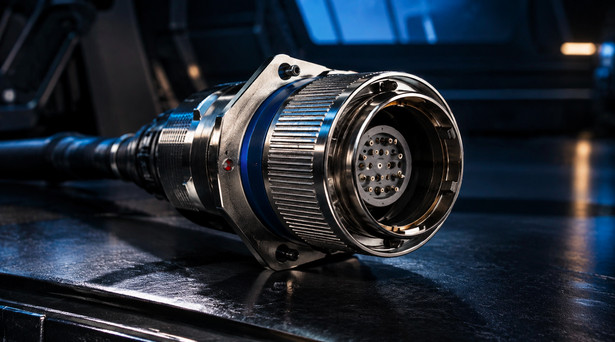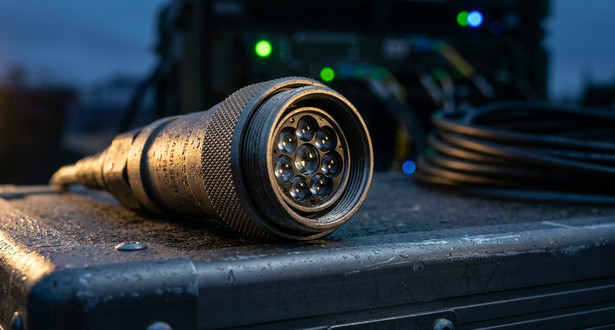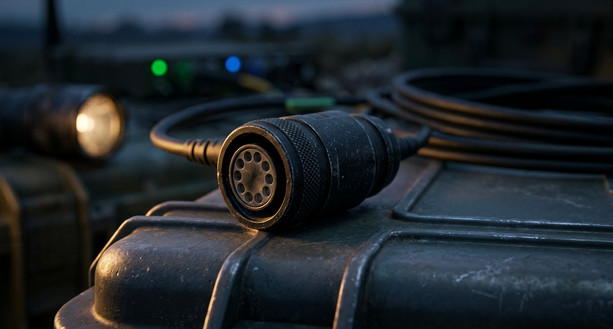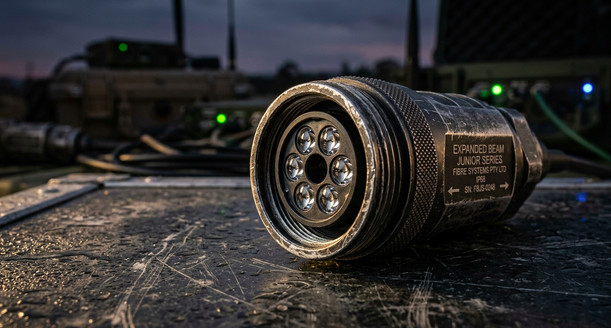
Expanded Beam Junior Series solutions engineered by fibre systems deliver robust, small form factor connectivity engineered to withstand aggressive environmental hazards. Deploying mobile communications or temporary control networks in rugged outdoor environments presents unique technical hurdles that standard optical connectors simply cannot handle. Field teams working in defense, remote mining, and mobile broadcasting need lightweight hardware that remains reliable when exposed to severe airborne dust and physical stress.
Traditional physical contact connectors fail quickly in dusty field conditions, causing sudden attenuation and catastrophic signal loss across rapid deployment tactical links. Understanding how non contact optics eliminate microscopic wear allows system integrators to build resilient physical layer networks designed for continuous operation. Compact field gear must balance physical portability with extreme ruggedness to ensure mission critical data flows without disruption. When emergency response teams or mobile defense units set up temporary command posts, every second counts and equipment must work instantly upon connection. The small form factor of this hardware allows high density panel mounting while providing maximum physical protection against airborne grit, moisture, and heavy mechanical strain.
Understanding How Mobile Tactical Communications Suffer in Dusty Environments with the Expanded Beam Junior Series
Mobile tactical operations expose physical cabling infrastructure to severe particulate contamination that quickly ruins delicate glass surfaces. In arid fields or active mining sites, fine dust settles on exposed connector ferrules during rapid coupling and uncoupling procedures. The Expanded Beam Junior Series eliminates this vulnerability completely by utilizing internal lens assemblies that project collimated light across a protective physical air gap.
This specialized design ensures that abrasive dirt ingress cannot scratch or pit the polished optical end faces during mating cycles. Field operators frequently report that standard connectors require extensive cleaning routines before every connection, creating severe operational delays during rapid deployment scenarios. By deploying the Expanded Beam Junior Series, technical teams eliminate maintenance bottlenecks and protect mobile communication links against unexpected physical layer failure.
Operating compact systems in remote field locations means technicians rarely have access to cleanroom conditions or specialized inspection microscopes. When an optical link degrades in the field, technicians face tedious troubleshooting steps under harsh weather conditions. Proactive network design dictates that tactical hardware should naturally resist airborne debris and physical wear. Removing the physical contact point between glass cores neutralizes the primary failure mechanism inherent in legacy tactical connectors. The resulting signal stability ensures uninterrupted real time data transmission, video feeds, and telemetry streams across temporary control networks.
The Hidden Impact of Abrasive Dust Particles Managed by the Expanded Beam Junior Series
Microscopic silica particles found in soil and sand act as an aggressive abrasive when trapped between traditional mating ferrules. When physical contact connectors are mated in dusty environments, spring tension grinds sand grains directly into ceramic end faces, creating permanent scratches and severe light scattering.
The Expanded Beam Junior Series prevents ceramic end face destruction by keeping glass fibers safely sealed behind protective optical windows. Engineers who specify this hardware ensure that fine sand cannot settle on active light paths or ruin internal alignment mechanisms. Maintaining clear optical pathways without requiring continuous field polishing transforms how mobile teams manage tactical communication networks. Every compact installation benefits from superior dust sealing that far exceeds commercial connector capabilities. Industrial sites and field command posts generate airborne dust through vehicle movement, wind erosion, and heavy machinery activity. As cooling fans pull ambient air across equipment racks, dust particles coat patch panels and exposed interface ports.
Traditional connectors exposed to these conditions suffer rapid insertion loss spikes that corrupt high bandwidth data streams within hours of exposure. Preventing signal degradation requires expanded beam technology that renders ambient dirt particles functionally invisible to the optical beam. Furthermore, fluctuating humidity and morning dew turn airborne dust into sticky mud inside open connector barrels. Sealing optical pathways behind heavy duty elastomeric gaskets protects critical data links from moisture and sludge ingress during field operations.
Overcoming Mechanical Vibration and Strain in Compact Systems Using the Expanded Beam Junior Series
Tactical vehicles and mobile trailers generate continuous vibration that threatens physical connector stability and signal integrity. Physical contact connectors suffer from micro motion that causes ferrule wear, alignment shifts, and sudden return loss degradation. The Expanded Beam Junior Series absorbs intense shock and continuous vibration through heavy duty compact shells and integrated strain relief boots that isolate internal lenses from external forces.
Field operations involving mobile radar units, broadcast trucks, or portable sensing arrays require connectors that endure thousands of mating cycles without structural loosening. Mechanical durability guarantees uninterrupted data flows even when tactical cables experience sharp pulling forces or vehicle runovers. Investing in compact ruggedized optical hardware eliminates emergency field repairs and protects mission critical communications. Portable tactical equipment undergoes frequent packing, transport, and deployment cycles across rough terrain. Standard patch cables feature light jackets that tear easily when dragged over jagged rocks or metallic vehicle edges. When tactical cables undergo severe tension, internal optical fibers experience stress that leads to microbending loss and physical glass fracture.
Advanced tactical cables combine high tensile strength aramid yarns with tough polyurethane outer jackets engineered to absorb extreme tension without transferring stress to the inner optical cores. This mechanical protection ensures that heavy vehicle movement and rough handling never compromise optical lens alignment or physical cable integrity.
Core Technical Architecture and Engineering Principles of the Expanded Beam Junior Series
Advanced optical engineering enables non contact light transmission inside a remarkably compact connector footprint. The Expanded Beam Junior Series utilizes precision ball lenses to expand the light beam footprint significantly larger than standard fiber cores. When expanded light travels across the internal air gap, microscopic dust particles cover only a small fraction of the beam surface area, resulting in negligible insertion loss. This innovative optical methodology allows tactical networks to maintain stable signal paths where standard connectors fail instantly.
Technical specialists value the predictable optical loss budgets and excellent return loss characteristics achieved through this compact lens design. Understanding the optical physics behind expanded beam technology explains why it remains the benchmark for harsh environment tactical communications. In standard single mode fiber, the light carrying core measures roughly nine microns across.
Because this core is tiny, a single dust particle measuring five microns blocks over half the light signal, causing immediate link failure. By placing precision lenses in front of the fiber end face, the light beam expands to hundreds of times its original diameter. When light crosses the air gap as a broad collimated beam, a dust particle resting on the outer lens window covers only a fraction of a percent of the total beam area. The receiving lens collects the light beam and focuses it cleanly back into the output fiber core with minimal loss. This optical design guarantees that tactical connectors maintain low attenuation even when coupled in dusty field conditions.
Non Contact Expanded Beam Design Advantages Offered by the Expanded Beam Junior Series
Traditional tactical connectors rely on physical ferrule contact held together under high internal spring pressure. Any microscopic grit caught between ferrule ends creates air gaps or causes permanent glass cracking upon connection. The Expanded Beam Junior Series removes physical touch completely by projecting collimated light through protective optical windows. This non contact architecture guarantees that optical glass surfaces never touch, preventing physical wear over thousands of operational cycles.
Field crews can couple and decouple connectors in muddy or windy conditions without risking permanent optical damage. Eliminating physical end face contact solves one of the biggest headaches encountered by field support crews. In legacy tactical systems, every mating cycle wears down polished ferrule surfaces. Over repeated deployments, ceramic ferrules suffer microscopic chipping and alignment degradation that gradually degrades link performance.
Furthermore, mating dirty legacy connectors forces grit into polished glass surfaces, permanently ruining patch cables and panel receptacles. Non contact optics eliminate this destructive cycle entirely. Because internal lenses and fiber ends remain isolated from physical touch, the connector experiences zero mechanical end face wear regardless of mating frequency. This design translates into extended hardware lifespan, lower replacement cable costs, and reliable field operation.
Compact Shell Materials and Durability Standards Built into the Expanded Beam Junior Series
Choosing durable housing materials dictates whether compact optical connectors survive aggressive chemical exposure and extreme weather. The Expanded Beam Senior Series and compact Expanded Beam Junior Series utilize rugged aerospace grade alloy housings treated with anti glare, corrosion resistant finishes that repel salt spray, fuels, and industrial solvents. Internal optical assemblies are securely potted to prevent thermal expansion shifts from compromising lens alignment.
Rigorous environmental testing verifies that housing seals maintain IP68 ratings across freezing mountain conditions and hot desert environments. Infrastructure planners rely on this material durability to secure reliable data links across challenging operational sites. Military and field operations expose tactical hardware to harsh fluids, including diesel fuel, hydraulic oil, deicing fluids, and saltwater spray. Low grade plastics and untreated aluminum corrode rapidly when exposed to these chemicals, causing housing cracking and seal failure.
Rugged tactical hardware utilizes specialized metal alloys and chemical resistant seals that maintain integrity even after prolonged fluid contact. Furthermore, broad operating temperature ranges cause materials to expand and contract at varying rates, potentially disrupting optical alignment. Careful thermal engineering ensures that internal lenses remain perfectly aligned across extreme thermal shifts, maintaining low insertion loss whether operating in subzero arctic winds or scorching desert heat.
Technical Performance Matrix comparing Compact Tactical Connector Form Factors Featuring the Expanded Beam Junior Series
Selecting tactical optical hardware requires comparing small form factor non contact solutions against legacy physical contact designs. The following matrix illustrates key performance metrics across tactical field environments.
| Performance Characteristic | Legacy Physical Contact Tactical Connectors | Expanded Beam Junior Series |
| Dust Ingress Resistance | Low, requires immediate cleaning upon exposure | High, non contact lenses tolerate airborne dust |
| Compact Receptacle Density | Standard footprint, limited panel density | High density design for space constrained enclosures |
| Mating Cycle Lifespan | Five hundred cycles before performance drop | Exceeds three thousand mating cycles without loss |
| Field Maintenance Requirement | Complex cleaning tools and inspection scopes | Simple field cleaning using clean water or optical wipes |
| Mechanical Shock Tolerance | Vulnerable to micro scratching and ferrule shift | Superior shock absorption via isolated lens housing |
Regulatory Compliance and Industry Safety Standards for the Expanded Beam Junior Series
Adhering to recognized national and international technical standards ensures that tactical installations meet strict safety and performance mandates. Technical deployments must comply with rules set by governing bodies like the Australian Communications and Media Authority covering structured cabling and telecommunications practices. Using certified hardware guarantees that tactical networks satisfy all relevant safety, performance, and legal cabling requirements.
The Expanded Beam Junior Series satisfies stringent mechanical endurance, environmental sealing, and optical safety requirements for mobile networks. Engineering teams gain complete peace of mind knowing deployed hardware meets official electrical and telecommunications standards. Navigating strict regulatory environments requires diligence from system designers and project managers. Regulatory bodies establish performance baselines to prevent system failures that could endanger personnel or interrupt vital emergency services.
By specifying certified optical components, organizations eliminate compliance risks during technical audits and field inspections. Furthermore, meeting recognized cabling standards ensures seamless compatibility with existing communication systems and commercial carrier interfaces. Investing in certified tactical hardware protects capital investments and demonstrates high engineering standards across every project phase.
Step by Step Tactical Field Coupling Guide for the Expanded Beam Junior Series
Following correct field connection routines ensures that tactical optical hardware delivers optimal performance under demanding conditions. Follow these steps during tactical deployment.
- Inspect cable routes to ensure freedom from sharp metal edges, heavy vehicle paths, or excessive pinching points.
- Remove protective dust caps from the Expanded Beam Junior Series connectors and inspect outer optical windows visually.
- Wipe protective lens windows gently using a clean lint free optical cloth or rinse with clean water if heavy mud is present.
- Align connector alignment keys carefully before pushing the plug into the receptacle to prevent keyway damage.
- Rotate the coupling ring clockwise until the tactile bayonet lock clicks firmly into place.
- Check signal transmission using a portable optical power meter to confirm attenuation stays well within system loss budgets.
Executing installation steps carefully prevents accidental housing wear and guarantees maximum optical performance in the field. Field technicians must verify that cable bend radii stay within manufacturer specifications, especially when running cables through vehicle bulkheads or compact enclosures. Securing cables at regular intervals using heavy duty strain relief straps prevents physical stress caused by wind or cable movement. Following standardized connection procedures ensures every link delivers stable data transmission under tough operational conditions while creating clear records for future field maintenance.
Field Use Cases and Success Stories Featuring the Expanded Beam Junior Series
Mobile defense forces and remote mining survey teams frequently face environmental challenges that destroy standard fiber hardware. A mobile communications unit operating in dry, dusty Outback conditions upgraded its portable satellite uplink vehicles to the Expanded Beam Junior Series after experiencing chronic signal dropouts. Dust ingress and constant vehicle vibration caused frequent ferrule damage on legacy connectors, resulting in high maintenance costs and network downtime. Following the equipment upgrade, the mobile unit achieved total signal reliability across a two year testing window without a single optical link failure despite severe dust storms and continuous dirt road transport.
This upgrade validated the hardware choice and improved field readiness. Success stories across field industries highlight how upgrading to rugged non contact hardware solves recurring maintenance challenges. In another instance, a rapid response broadcast team covering off road racing events suffered frequent cable failures due to dirt contamination and heavy foot traffic over patch cables. By transitioning to compact expanded beam connectors, the team eliminated signal dropouts during live broadcasts and reduced cable replacement costs significantly. These real world applications prove that investing in high quality tactical hardware protects critical data links against environmental failure.
Frequently Asked Questions About the Expanded Beam Junior Series
How does non contact technology prevent dirt damage in compact connectors?
By expanding light across an internal air gap, dust particles block only a fraction of the expanded beam, preserving signal continuity without physical ferrule wear.
What is the primary difference between the Senior and Junior series connectors?
The Junior series offers a smaller physical footprint optimized for space constrained enclosures, while maintaining the same rugged non contact optical performance.
Can these tactical connectors be cleaned without specialized tools in the field?
Yes, field crews can easily wipe the flat optical windows clean using standard lint free wipes or rinse off heavy dirt using clean water.
Are these compact connectors resistant to heavy vehicle vibration?
Yes, rugged metal alloy housings and shock absorbing internal mounts protect lens alignment from intense vibration and mechanical impacts.
Do these connectors support both single mode and multimode fiber installations?
They are available in various optical configurations supporting both single mode and multimode fiber cables for broad system compatibility.
Key Benefits & Bulleted Summary
- The Expanded Beam Junior Series neutralizes abrasive dust ingress across mobile tactical links.
- Compact form factor allows high density panel mounting inside space constrained field enclosures.
- Non contact optical lenses eliminate ceramic ferrule wear and end face scratching.
- Sealed metal alloy housings resist heavy vibration, moisture, and harsh field chemicals.
- Full compliance with Australian cabling standards guarantees operational reliability and safety.
Ready to eliminate field downtime and protect your portable communications against harsh dirt ingress? Deploying our advanced optical connectivity strategy ensures your mobile networks remain completely reliable in tough conditions. Contact us today to speak directly with our technical infrastructure specialists. Explore the Expanded Beam Junior Series in our product section to find the exact compact hardware your field architecture requires. For more technical insights and product guides, visit fibre systems or browse our resources section.