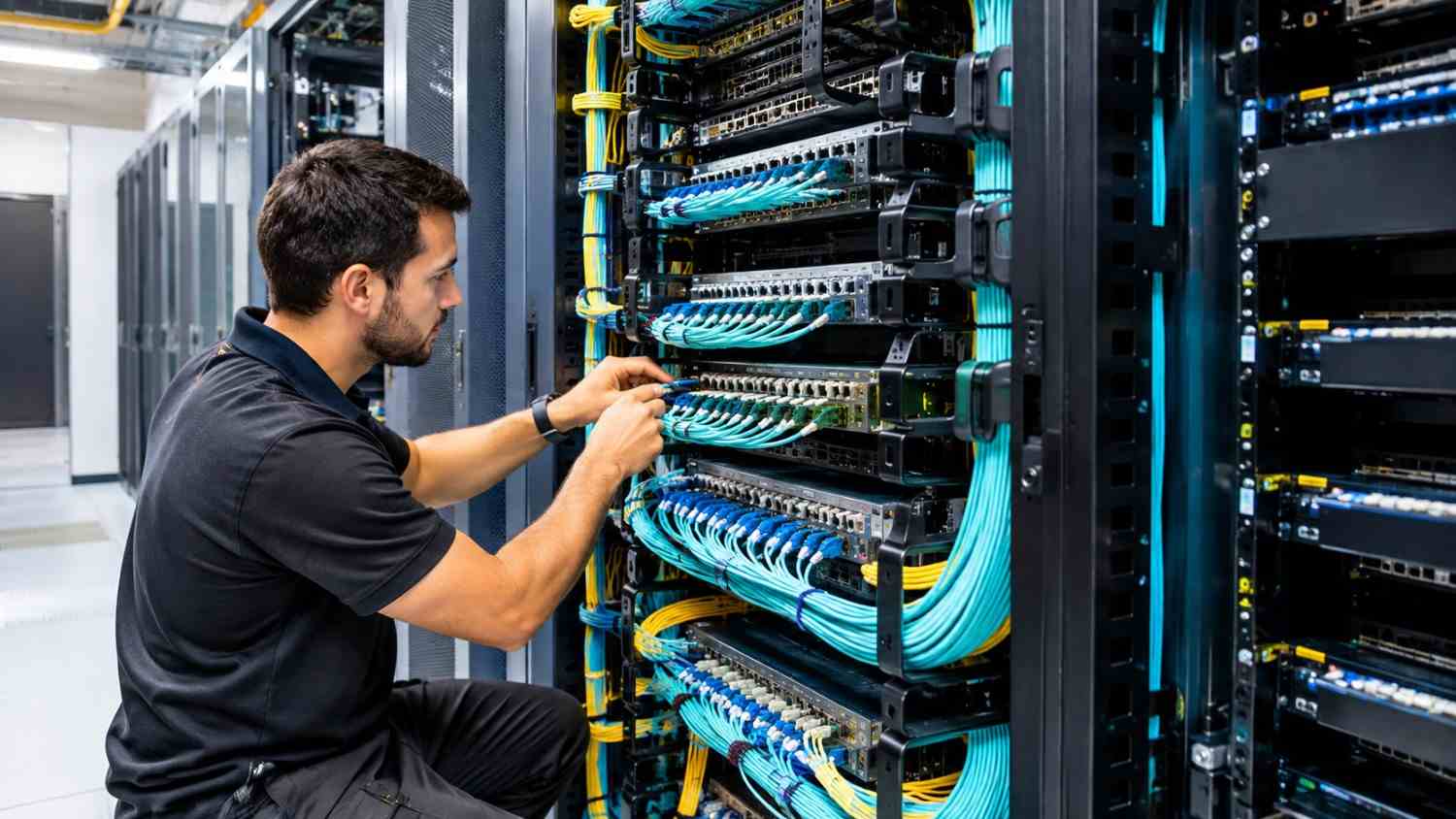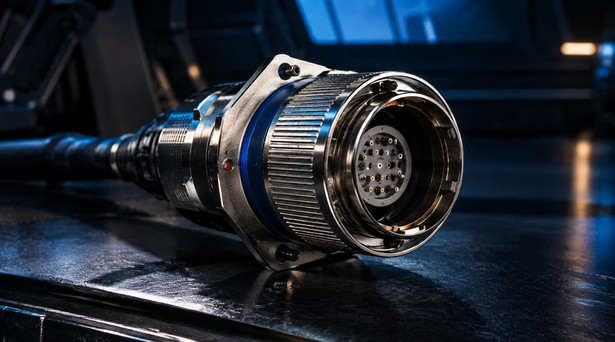
Fiber Connector Polishing Standards define the precise physical geometry and surface quality required on the end-face of a fiber optic connector to ensure maximum light transmission and minimal back reflection. In simpler terms, it is the process of making the fiber tip so perfectly smooth that light passes through it without scattering or bouncing back. At Fibre Systems, we understand that in high stakes environments like a remote mine site or a critical defense deployment, a microscopically imperfect polish is not just a technical flaw; it is a guaranteed network bottleneck.
The Invisible Battle on Your Fiber Tip
Imagine trying to drive a luxury vehicle at full speed on a road filled with potholes and debris. No matter how powerful the engine is, you cannot reach top speed, and the ride is chaotic. A fiber optic signal experiences the same chaos when it encounters a poorly polished connector. If you ignore established Fiber Connector Polishing Standards, you are essentially introducing microscopic potholes that cause light to bounce back toward the transmitter (Return Loss) or simply disappear (Insertion Loss).
For a signal officer or a site engineer under pressure, this translates to intermittent data errors, slow network speeds, and baffling connectivity drops that are a total nightmare to troubleshoot in the middle of nowhere. In the harsh Australian landscape, where dust, vibration, and extreme temperature fluctuations are constant, an uncertified polish is a ticking time bomb for your operations. Fibre Systems eliminates this stress by adhering to the strictest factory Fiber Connector Polishing Standards, ensuring every ruggedized connector we ship is field-ready.
Understanding UPC vs APC: The Geometry of Performance
To conquer signal loss, the industry has developed different polishing geometries, each with its own purpose. Knowing which one to use is critical for your network architecture in 2026.
UPC: The Flat Physical Contact
The Ultra Physical Contact (UPC) polish is the evolution of the original flat connector. It features a slightly rounded finish that helps the fiber cores make direct contact. While a massive improvement over older methods, UPC connectors still allow some light to reflect straight back down the core. These are excellent for digital services and patch panels in controlled environments. However, in sensitive analog systems or high-power laser applications, even this small reflection can cause total system failure. Fibre Systems colour codes these blue for quick identification.
APC: The Angled Game Changer
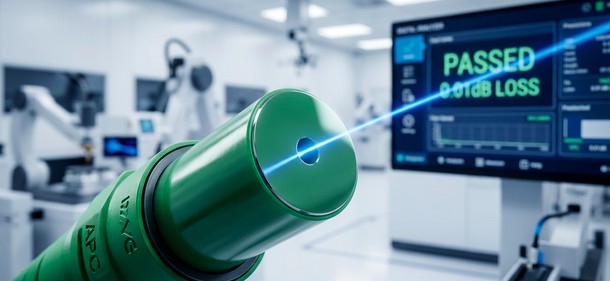
The Angled Physical Contact (APC) polish is the superior choice for minimizing reflections. By polishing the connector at a precise eight-degree angle, any light that does reflect is scattered into the cladding of the fiber rather than bouncing directly back to the transmitter. This results in significantly better Return Loss performance. At Fibre Systems, we champion the use of APC (green) connectors in modern industrial and defense networks because they provide the highest level of signal integrity, especially when scaling up to the ultra-high speeds demanded in 2026.
How Fibre Systems Combat Field Realities with Precision Polishing
A common pain point for our clients is equipment downtime caused by environmental contamination. A technician in the field cannot achieve a factory quality polish while standing in a dusty pit. This is why Fibre Systems pre-terminated solutions are so critical. By utilizing our Fibre optic assemblies, which are polished in a clean-room environment using advanced robotic machines, you ensure that every link meets the Fiber Connector Polishing Standards without relying on a field termination kit.
Furthermore, we design our ruggedized connector housings to maintain the necessary physical pressure to keep those perfectly polished end-faces in contact, even under heavy vibration. When ground-engaging tools or heavy machinery are operating nearby, a standard connector might decouple just enough to cause an air gap, destroying your link. Our anti-vibration solutions prevent this physical separation, protecting the integrity of the polish and the stability of your critical data streams.
Polishing Standard Comparison for Rugged Networks
| Feature | UPC (Ultra Physical Contact) | APC (Angled Physical Contact) |
| End-Face Geometry | Slightly Domed, Flat | 8-Degree Angle |
| Typical Colour Code | Blue | Green |
| Return Loss (dB) | ≥ 50 dB (Good) | ≥ 60 dB (Excellent) |
| Best Application | Digital Networks, Controlled Sites | Analog Video, FTTx, High-Power Lasers |
| Rugged Environment Suitability | Average | Highest |
| Fibre Systems Verdict | Reliable for Standard Links | Mandatory for Precision Signal Integrity |
The Fibre Systems 5-Point Plan for Connector Integrity
To ensure your network survives the demands of 2026, you must prioritize the health of your connectors. Follow this plan to maintain Fiber Connector Polishing Standards in the field:
- Go APC by Default: For all new rugged deployments, standardize on APC (green) connectors to minimize the risk of back reflections.
- Clean Before You Connect: No matter how good the polish is, a single dust particle will destroy it. Use Fibre Systems approved cleaning kits for every single connection.
- Utilize Pre-Terminated Trunks: Avoid the inconsistency of field polishing by using Fibre Systems pre-terminated trunks that guarantee factory certified standards.
- Protect with Caps: Never leave a connector uncovered. The dust in the Australian Outback is abrasive and will scratch the polished surface instantly.
- Trust the Report: Every Fibre Systems cable comes with an individual test report detailing the Insertion Loss and Return Loss, confirming it meets all Fiber Connector Polishing Standards. When in doubt, our team is ready to assist with a review of your test data.
Frequently Asked Questions About Fiber Polishing
- Can I connect a UPC cable into an APC bulkhead?
No, you must never do this. Because of the different physical geometries (flat vs angled), the fiber cores will not make contact, creating a massive air gap that will result in total signal failure. You can also permanently damage both polished surfaces in the process. Fibre Systems uses clear colour coding (blue for UPC, green for APC) to help field teams avoid this costly error.
- Does a bad polish only affect signal speed?
It’s worse than that. While a slow connection is one symptom, a bad polish primarily causes data packet errors. In critical operations, this means control signals for autonomous vehicles can be corrupted, leading to safety shutdowns or erratic machine behavior. Maintaining Fiber Connector Polishing Standards is not just about speed; it is about operational safety.
- How does vibration affect polished connectors?
Constant vibration can cause “fretting” or microscopic physical degradation on the point of contact. If the connectors are not held tightly together in a ruggedized housing, this fretting will destroy the delicate polished finish over time. Fibre Systems anti-vibration coupling mechanisms ensure that once mated, the connectors remain stable, protecting the polish from physical wear.
Protecting Your Data Capital with Fibre Systems
Choosing the right connector type and ensuring it adheres to the highest Fiber Connector Polishing Standards is an investment in the longevity of your network. In an era where data is as valuable as any physical commodity, protecting the integrity of your signal is a priority. Fibre Systems combines advanced manufacturing precision with real-world understanding of harsh environments to deliver solutions that last.
When you choose a Fibre Systems product, you are choosing a guarantee that the “invisible battlefield” on your fiber tip has already been won. Let us take the complexity of optical physics off your hands, providing you with simple, ruggedized, and high performance connectivity that you can depend on, today and in 2026.
Summary of Core Benefits:
- Guaranteed Signal Integrity: Compliance with all Fiber Connector Polishing Standards for maximum throughput.
- Reduced Return Loss: Utilize APC technology to virtually eliminate harmful back reflections.
- Clean Room Precision: Avoid the failures of field polishing with our factory terminated solutions.
- Ruggedized Stability: Anti-vibration connector housings protect the delicate polish in industrial zones.
- 2026 Future Proofing: Build a network capable of handling the high data rates of AI and autonomous operations.
Ready to secure your network’s physical layer? Request a custom quote tailored to your specific operational needs by contacting the Fibre Systems team today. View our full range of ruggedized solutions designed to survive the toughest conditions on earth.