MPO Polarity Methods are the logical roadmaps used to ensure that the light signals leaving a transmitter actually arrive at the correct receiver across a multi-fibre connection. Think of it as the “traffic rules” for your data; without a clear understanding of these methods, your high speed network is essentially a series of dead ends. AtFibre Systems, we don’t just focus on the specs; we focus on the person at the end of the cable who needs the link to work the first time, every time, regardless of the environment.
The Frustration of the “Dark Link”
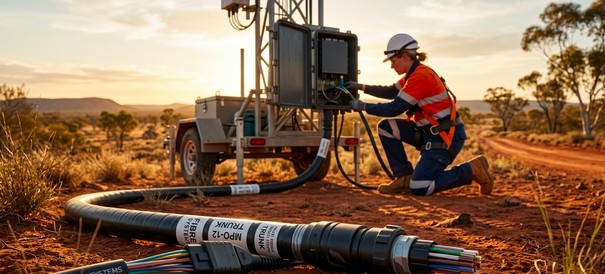
There is nothing more demoralizing for a signal officer or a site manager than spending hours laying a high-density trunk line, only to find that there is zero connectivity once the final switch is flipped. This “dark link” scenario is almost always caused by a misunderstanding of MPO Polarity Methods. In the heat of an Australian mine site or during a rapid defence mobilization, you don’t need a textbook definition; you need a system that prevents human error before it happens.
Commercial grade cables often fail to account for the physical stress of the field, leading to internal shifts that can throw your polarity out of alignment. Fibre Systems builds ruggedized assemblies that are pre-configured to your specific site standards, whether you are running Method A, B, or C. We take the technical headache off your plate so you can focus on the mission, not the mapping.
Why Standard MPO Polarity Methods Often Fail in Harsh Zones
The primary reason standard cables lead to polarity confusion is a lack of clear labelling and physical durability. When you are working in a dusty enclosure in the Pilbara or a cramped server rack, identifying “Key Up” or “Key Down” orientations can be nearly impossible. A simple mistake in choosing the wrong patch lead can invert your entire signal, leading to hours of troubleshooting and millions in lost production.
Fibre Systems solves this pain point by utilizing high-visibility, military-grade labelling and robust connector housings that make MPO Polarity Methods easy to follow even in low-light conditions. We understand that in 2026, the demand for data is higher than ever, and there is no room for “trial and error” in your infrastructure. By protecting the physical connector with IP67 rated seals, we ensure that the logical polarity remains perfect even when the environment is working against you.
Understanding the Three Polarity Approaches Without the Jargon
To keep your network flowing, the industry uses three main ways to organize the fibres inside the cable. Fibre Systems provides the hardware to support all three, but we make it simple for your team to implement them without needing a PhD in photonics.
Method A: The Consistent Straight Run
In MPO Polarity Methods Type A, the cable is a straight mirror of itself. Fibre 1 goes to Position 1. While this sounds simple, it requires you to remember to flip the signal using a specific patch cord at one end. For many field teams, this “extra step” is where things go wrong. Fibre Systems simplifies this by providing kitted solutions where the correct patch leads are already bundled with your trunk, so you never have to guess.
Method B: The Smart Flip for High Speed
Method B is the “hero” of the 40G and 100G world. It flips the fibres entirely so Position 1 goes to Position 12. This approach allows you to use the same type of patch leads on both ends, which is a massive relief for logistics managers who don’t want to carry two different types of inventory. Fibre Systems specializes in high-tensile Type B assemblies that can withstand being dragged over rough terrain without losing their internal logical alignment.
Method C: The Legacy Pairwise Map
Type C flips each pair of fibres. While it was popular for older 10G systems, it can be a nightmare to scale in a modern AI-driven network. If your site is still stuck on Method C and you are experiencing intermittent drops, it might be time for a hardware refresh. Fibre Systems can help you transition from legacy MPO Polarity Methods to more scalable Type B architectures without tearing out your entire infrastructure.
Comparison of MPO Polarity Methods for High-Stakes Operations
| The Field Challenge | Method A (Straight) | Method B (Flipped) | Method C (Pairwise) |
| Risk of Human Error | High (Needs special patch) | Low (Uses same patch) | Medium (Complex mapping) |
| Ease of Retrieval | Average | Best for Rapid Deployment | Difficult to Scale |
| Standard Application | Basic Networking | Defence & Data Centres | Older Industrial Sites |
| Vibration Resistance | Standard | Fibre Systems Ruggedized | Legacy Hardware |
| Fibre Systems Verdict | Reliable with kitting | Recommended for 2026 | Time to Upgrade |
Hardening Your Network: 5 Steps to End Polarity Nightmares
As operations become more complex, the margin for error disappears. Follow these steps to ensure your MPO Polarity Methods are field-ready:
- Stop the Mixing: Never mix Method A trunks with Method B patch leads. It is the fastest way to kill your signal.
- Demand Better Labelling: Use Fibre Systems Fibre optic assemblies which feature high-contrast, permanent labels for field identification.
- Protect the Ends: Use IP67 rated dust caps. A single speck of dirt can make you think you have a polarity issue when you actually just have a dirty connector.
- Standardize Your Fleet: Move your mobile command centres or exploration rigs to a single polarity standard to simplify your spares kit.
- Get Expert Eyes: If you are staring at a dark link and can’t find the fault, our team is ready to assist with an immediate technical audit.
Frequently Asked Questions About MPO Polarity in the Field
- Why is my link still down even though I checked the MPO Polarity Methods?
Often, the issue isn’t the polarity itself but “pistoning” or “connector decoupling” caused by vibration. In high-vibration zones like primary crushers, standard MPO connectors can shift slightly. Fibre Systems uses military-grade locking mechanisms to ensure that even when the ground shakes, your polarity remains locked in.
- How do I know which method my current site is using?
If you look at the connectors and both keys are facing “Up,” you are likely using Method B. If one is “Up” and one is “Down,” it is either Method A or C. To be 100% sure and avoid a network outage, contact Fibre Systems for a technical verification of your hardware.
- Does polarity affect the speed of my data?
Polarity itself doesn’t change the speed, but the wrong MPO Polarity Methods will result in zero data transmission. However, using Method B is generally recommended for 2026 because it supports the parallel optics required for the ultra-high speeds of modern autonomous systems.
Secure Your Signal with Fibre Systems
At the end of the day, your network is only as strong as its weakest connection. You can have the fastest transceivers in the world, but if your MPO Polarity Methods are wrong, you are effectively standing still. Fibre Systems is dedicated to providing the Australian mining, defence, and industrial sectors with the ruggedized hardware and technical clarity needed to keep the data flowing in the most brutal conditions on earth.
Don’t let a simple logical flip sabotage your multi-million dollar operation. Invest in hardware that was designed by people who understand what it is like to be in the field, under pressure, with the clock ticking. Trust in Fibre Systems to deliver the precision you need and the durability you deserve.
Summary of Field Benefits:
- Elimination of “Dark Links”: Pre-tested MPO Polarity Methods for guaranteed first-time connectivity.
- Field-Ready Labelling: High-visibility markings to prevent installation errors in harsh zones.
- 2026 Ready Infrastructure: Designed to support the massive data loads of AI and autonomous fleets.
- Maximum Durability: Ruggedized housings that protect logical alignment from physical abuse.
- Direct Engineering Access: Expert help is just a call away for custom quotes or troubleshooting.
Ready to end the frustration of unreliable field links? Request a custom quote tailored to your specific operational needs by contacting the Fibre Systems team today. Explore our full range of industrial solutions built to survive the Australian Outback.