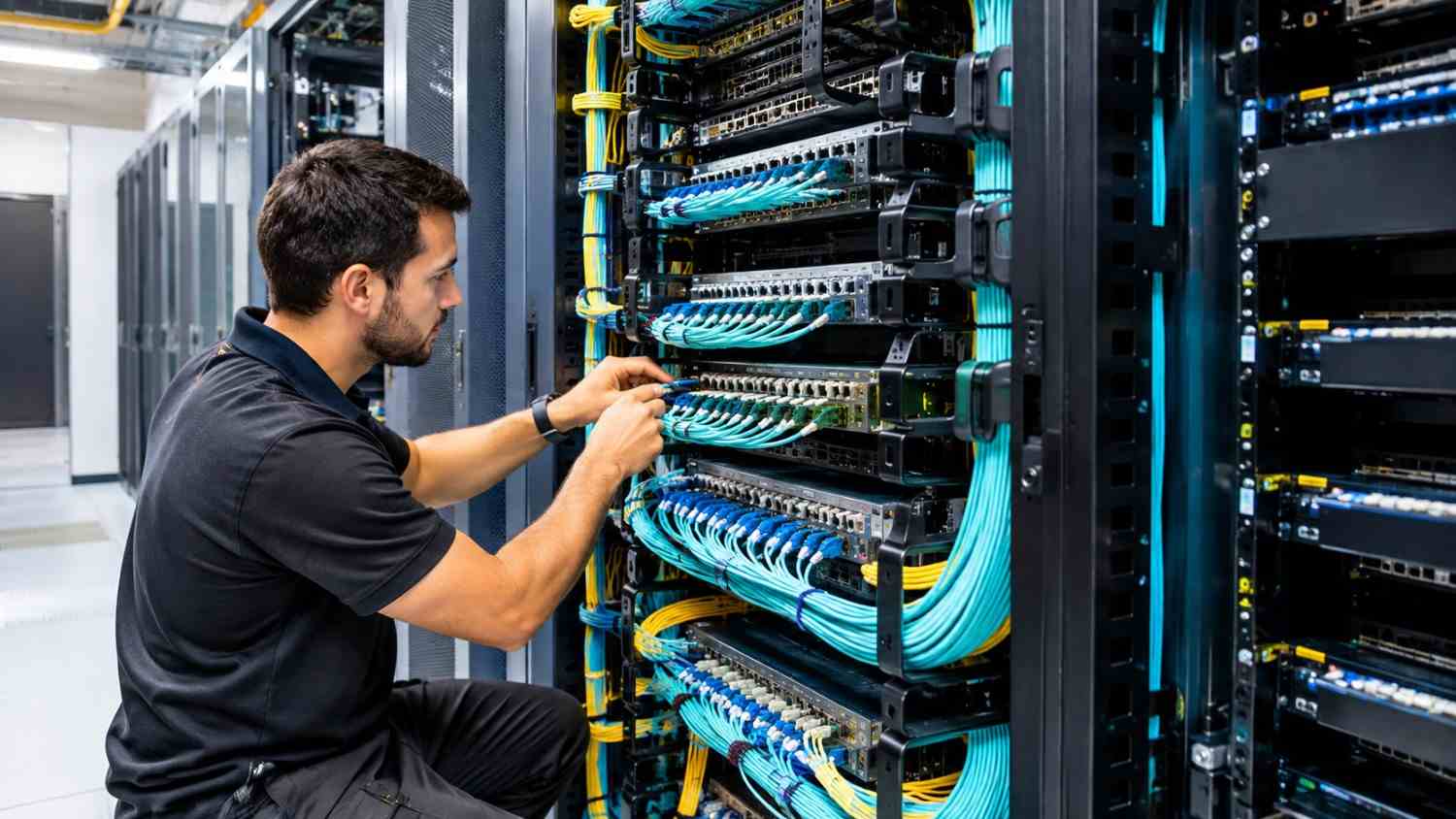
As enterprise networks continue to change, the physical infrastructure that supports them is now as vital as the software and applications they run. Today’s data centers manage huge amounts of traffic from cloud computing, virtualization, AI workloads, IoT platforms, and high-performance business applications. In this context, network fibre solutions are no longer optional; they are essential.
Many organizations still rely on old cabling systems that aren’t capable of supporting today’s bandwidth needs or long-term growth. Knowing when to switch to high-density fibre cabling is crucial for data center architects and enterprise IT managers. They must balance performance, costs, and future needs. This guide highlights key signs that indicate it’s time for an upgrade and explains how fibre-based infrastructure can help future-proof enterprise networks.
The Changing Role of Fibre in Enterprise Cabling
Today’s enterprise networks do much more than provide basic connectivity. They support mission-critical systems, real-time collaboration, analytics platforms, and cloud-based services that require high data transfer rates and low delays. Because of this, the cabling infrastructure plays a much more strategic role than it used to.
Enterprise Cabling in a High-Bandwidth Environment
Enterprise cabling has changed from simple connections to complex systems that support thousands of connected devices. As bandwidth demands keep rising, copper cabling becomes harder to scale efficiently. In contrast, fibre optics provides much higher capacity, longer transmission distances, and strong resistance to electromagnetic interference. In both data center and enterprise settings, fibre offers the flexibility needed to adapt to changing network designs without losing performance or reliability.
High-Bandwidth Fibre Versus Copper Networks
The limitations of copper cabling become clearer as organizations aim for faster network speeds. Copper struggles to maintain data rates over longer distances and is more prone to signal loss. Fibre provides consistent performance at higher speeds with much lower signal degradation. For organizations planning for the future, fibre-based enterprise cabling has clear advantages in scalability, stability, and overall network resilience.
Recognizing the Signs That an Upgrade Is Needed
Delaying cabling upgrades can cause performance issues, operational inefficiencies, and unexpected downtime. Spotting the early warning signs helps organizations plan strategically instead of reacting to problems.
Network Performance Bottlenecks
If network links often operate near capacity during normal use, it usually signals that the underlying cabling can’t keep up. As businesses move to 10G, 40G, and 100G systems, older cabling often limits performance. High-density fibre cabling allows for increased bandwidth without needing extra rack space, which is valuable in data centers where space is tight.
Scalability Challenges in Growing Enterprises
Scalability is about how easily new connections can be added without interrupting existing services. Older cabling systems often lack modularity, meaning any expansion needs significant reconfiguration, increasing both downtime risks and complexity. High-density fibre infrastructure supports scalable growth by allowing for organized and predictable additions, closely aligning with business needs.
Cable Congestion and Operational Complexity
Over time, unmanaged growth creates congested racks, blocked airflow, and poorly documented connections. These challenges complicate maintenance and raise the risk of accidental disconnections. When cable congestion becomes common, it clearly shows that the existing enterprise fiber management system has become unsustainable. High-density fiber cabling, combined with organized cable management, restores order and maintainability.
Understanding High-Density Fiber Cabling
High-density fiber cabling is not just about fitting more cables into less space. It reflects a strategic design approach that prioritizes performance, scalability, and ease of management.
Design Principles of High-Density Fiber Infrastructure
High-density systems use compact connectors, modular panels, and thinner fiber cables to increase port density per rack unit. This change allows data centers to support more connections without enlarging their physical footprint. Fiber optic adapters are essential for flexible connections between different connector types and fiber formats, ensuring they work together smoothly for easier future upgrades.
Fiber Optic Cable Assemblies in Dense Environments
In high-density setups, fiber optic cable assemblies are usually pre-terminated and factory-tested. This method reduces installation time, ensures consistency, and minimizes mistakes that can arise during field termination. Pre-terminated assemblies also support quicker network changes, which are vital for businesses that need agility in their IT operations.
Balancing Density and Reliability
Managing higher density is crucial for maintaining reliability. Proper control of bend radius, clear labeling, and organized pathways are key to ensuring that dense fiber setups remain easy to maintain and troubleshoot over time.
Supporting High-Speed and Future Network Requirements
The decisions made today regarding infrastructure will impact network performance and costs for years. High-density fiber cabling allows organizations to scale bandwidth without continually replacing physical infrastructure. By using high-density fiber architectures, businesses are better equipped to handle new technologies like higher-speed optical transceivers, distributed computing, and cloud-based platforms, reducing the risk of rapid obsolescence.
Enabling 10G to 100G Fiber Cabling
Moving from 10G to 100G demands high standards for cabling quality and consistency. High-speed optical connections require low insertion loss, precise alignment, and dependable connectors. High-density fiber infrastructure is built to meet these standards, supporting modern transceivers and parallel optics without a complete redesign of the cabling backbone.
Building Future-Proof Fiber Networks
Future-proof fiber networks can adapt to new speeds and technologies with minimal disruption. Fiber’s inherent bandwidth capacity makes it perfect for evolving enterprise demands well into the future.
Integrating Fiber with Enterprise Network Equipment
Most enterprise networks work in hybrid environments that combine fiber and Ethernet technologies. Effective integration of these systems is vital, especially during phased upgrades.
Fiber Optic to Ethernet Converter Applications
A fiber optic to Ethernet converter allows fiber backbones to connect smoothly with Ethernet-based edge devices. This lets organizations take advantage of fiber benefits without replacing all existing equipment at once. These converters are particularly useful during migration projects, supporting gradual upgrades while maintaining performance and stability.
Optimizing Hybrid Network Architectures
Hybrid networks need careful planning to ensure compatibility across speeds, wavelengths, and connector types. Fiber optic adapters and converters must meet current requirements while allowing for future growth. High-density fiber cabling provides the needed flexibility to support these mixed environments without unnecessary complications.
Enterprise Fiber Management and Structured Cabling
As fiber density increases, informal cabling methods quickly become ineffective. Structured cabling provides a necessary framework to manage complex enterprise environments well. Without a clear structure, even routine changes can introduce risks, increase downtime, and make fault isolation challenging. A well-planned cabling strategy ensures consistency across the network while supporting long-term efficiency and growth.
Structured Cabling Fiber Backbone Design
A structured fiber backbone makes documentation, troubleshooting, and expansion simpler. High-density fiber cabling enhances this approach by accommodating more connections within a standardized layout. This design reduces reliance on ad hoc connections and makes future upgrades more predictable. It also allows IT teams to increase network capacity without disrupting existing services or redesigning the core infrastructure.
Long-Term Benefits of Effective Fiber Management
Clear labeling, standard components, and accurate documentation lower operational risks and boost reliability. When combined with high-density fiber infrastructure, these practices ensure that increased connectivity doesn’t compromise control or stability. Over time, effective fiber management reduces maintenance effort and speeds up resolution times during incidents. It also creates a cleaner, more organized environment that fosters faster deployments and confident decision-making.
Making the Case for High-Density Fiber Upgrades
While high-density fiber cabling may need a higher initial investment, it provides long-term benefits. Better space use, quicker service deployment, and reduced interruptions during upgrades all help lower total ownership costs. More importantly, it allows organizations to respond rapidly to changing business needs without repeated infrastructure overhauls.
Conclusion: Planning the Right Time to Upgrade
Knowing when to move to high-density fiber cabling involves recognizing performance limits, scalability issues, and long-term objectives. Ongoing congestion, complicated cable management, and limited expansion capacity are strong signs that current enterprise cabling is no longer adequate.
By investing in high-density fiber infrastructure along with fiber optic adapters, fiber optic cable assemblies, and fiber optic to Ethernet converters, organizations can create robust, adaptable networks designed for the future.
If you are considering an upgrade to your enterprise network or evaluating whether your current cabling can support future growth, our team is ready to assist. Contact us to discuss high-density fiber solutions that fit your performance, scalability, and long-term infrastructure needs.
FAQs
1. When should a data center upgrade to high-density fiber cabling?
A data center should think about upgrading when its current cabling can’t meet rising bandwidth needs, or when it starts to run out of rack space. Regular changes to support new services, ongoing network congestion, and complicated cable layouts all show that a high-density fiber solution is necessary.
2. How do high-density fiber solutions improve enterprise networks?
High-density fiber solutions let businesses connect more devices in the same physical space without losing performance. They make it easier to expand networks, speed up the setup of new services, and handle high-bandwidth applications without needing constant changes to the existing infrastructure.
3. What role do fiber optic cable assemblies play in high-density environments?
Fiber optic cable assemblies are usually pre-terminated and tested, which helps ensure steady performance and lowers the chance of installation mistakes. In high-density settings, they simplify deployment, ease ongoing maintenance, and provide more reliable network performance compared to field-terminated cabling.
4. Can high-density fiber cabling support both fiber and Ethernet devices?
Yes, it can. High-density fiber cabling fits well in hybrid enterprise networks when used with fiber optic adapters and fiber-to-Ethernet converters. These parts let fiber backbones connect effortlessly with Ethernet equipment, making upgrades and mixed technology setups easier to manage.
5. How does high-density fiber help future-proof network infrastructure?
High-density fiber cabling supports higher speeds like 40G and 100G while allowing for future technologies. By boosting scalability and minimizing physical limits, it helps organizations avoid frequent infrastructure overhauls and keep long-term operational costs manageable.