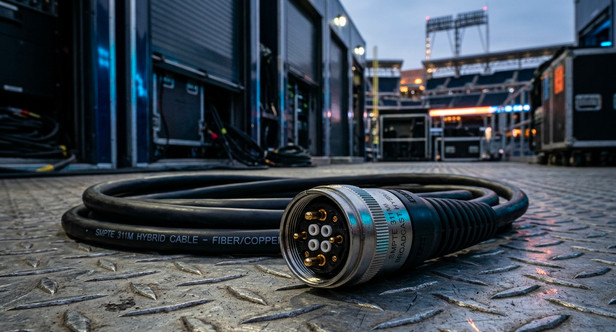
SMPTE Cable solutions engineered by Fibre Systems deliver robust optical and electrical performance designed to withstand extreme mechanical stress, harsh environmental exposure, and demanding operational environments. In live outside broadcast truck operations, mobile production hubs, and high-intensity temporary venue deployments, hybrid fiber optic cables serve as the core backbone for uncompressed high-definition video transmission and camera power delivery.
When broadcast engineers deploy heavy-duty hybrid lines across mobile production sites, every physical connection point must maintain total structural and electrical integrity. The reliance on high-precision optical hardware and steady power delivery means that even microscopic end-face contaminants or subtle voltage drops can take down a live camera feed instantly. Understanding how to deploy, clean, and protect every SMPTE Cable ensures long-term transmission stability and guards against catastrophic hardware failures when broadcast deadlines are on the line.
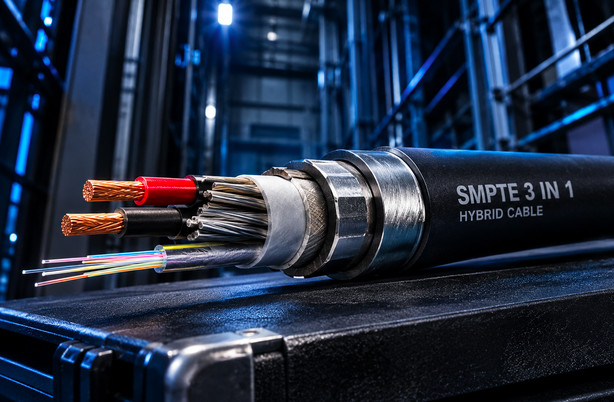
The SMPTE Cable standard represents a standardized hybrid broadcast cabling architecture engineered specifically for rugged mobile production and studio applications. Featuring precision single-mode optical fibers, isolated copper power conductors, steel strength members, and heavy-duty outer jackets, these assemblies ensure tight optical coupling and reliable voltage delivery under severe physical vibration. However, when operators bypass routine cleaning protocols or fail to manage electrical loads, signal degradation and voltage failure quickly follow. Preventing optical attenuation and power dropouts begins with recognizing that hybrid broadcast lines face constant operational threats from dust, moisture, mechanical shock, and improper handling during rapid OB truck setup.
SMPTE Cable Mechanical Construction and Transmission Basics
An SMPTE Cable is built to maintain sub-micron alignment between opposing optical fibers while maintaining low electrical resistance across its integrated copper conductors, even when subjected to intense physical shock, continuous heavy vibration, and frequent mobile transit. The hybrid design relies on high-grade single-mode optical glass surrounded by steel strength members and insulated copper conductors, all encased within a flexible, durable outer sheath. This advanced multi-layer construction isolates the fragile internal glass core from extreme external forces, ensuring that severe lateral pressure or bending force on the outer jacket does not transfer directly to the polished optical contact faces.
Despite this rugged construction, an SMPTE Cable connection remains exceptionally vulnerable to microscopic environmental contaminants and connector pin wear. The light-guiding core of a standard single-mode optical fiber measures approximately 9 microns in diameter, making it highly sensitive to trapped dust and oils. When a microscopic airborne dust particle lodges between two mating ferrule faces, it physically prevents true surface-to-surface glass contact, creating a microscopic air gap that triggers severe insertion loss spikes and hazardous back-reflection levels. Simultaneously, dirty or oxidized electrical socket pins increase contact resistance, leading to dangerous voltage drop at the camera head during live production.
Proper mechanical assembly and field deployment of every SMPTE Cable requires disciplined handling, approved cleaning tools, and structured cable routing practices. Technicians must avoid applying excessive pulling tension or coiling cables past their minimum bend radius, which strips internal structural layers and permanently deforms internal components. Establishing clean handling habits during OB truck setup shields fragile internal interfaces from environmental debris, keeping signal insertion loss and electrical resistance well within strict operational tolerance windows across demanding broadcast deployments.
SMPTE Cable Key Benefits in Live OB Truck Operations
Adopting specialized hybrid broadcast cabling standards provides crucial operational advantages for mission-critical mobile production infrastructure:
- Uncompromised Optical Alignment Under Strain: Precision internal ferrule designs hold core centering to sub-micron tolerances, eliminating light leakage during truck transport.
- Corrosion-Resistant Electrical Pins: High-conductivity copper contact pins shield internal power pathways against salt spray, high humidity, and aggressive field chemicals.
- High-Vibration Lock Retention: Ruggedized mechanical coupling mechanisms prevent accidental connector backing-off during mobile transit or live event vibration.
- Extended Service Lifecycle: Engineered to endure hundreds of mating cycles without mechanical fatigue, safeguarding capital equipment investments over years of service.
- Rapid Field Serviceability: Accessible connector designs allow broadcast engineering crews to inspect, clean, and test links quickly outside production trucks.
SMPTE Cable Critical Causes of Degradation in Field Applications
Field environments present a relentless barrage of physical hazards that constantly compromise sensitive hybrid cable performance. Operating in temporary outdoor sports venues, heavy industrial zones, or high-salinity coastal areas exposes optical interfaces and electrical pins to aggressive salt spray, high ambient humidity, airborne dust, and extreme diurnal temperature swings. If technicians handle an SMPTE Cable without deploying protective dust caps or wearing clean lint-free gloves, microscopic skin oils immediately transfer onto the polished ceramic ferrule end face, creating a sticky residue that attracts fine airborne dirt particles like a magnet.
Severe thermal fluctuation represents another silent threat to continuous optical and electrical link stability. When mobile OB truck equipment hatches or external cable runs heat up under direct solar exposure, adjacent metallic connectors and internal copper conductors expand at thermal rates that can alter electrical resistance. This differential thermal expansion places continuous stress on every SMPTE Cable interface, gradually forcing precision ferrules out of true axial alignment. As ambient temperatures drop rapidly at night, structural thermal contraction causes microscopic air gaps to form between mated connectors, triggering unexpected signal dropouts right in the middle of live broadcasts.
Mechanical vibration further accelerates component wear whenever patch cables lack adequate structural strain relief. In mobile broadcast OB trucks or temporary staging areas, continuous mechanical generator vibrations constantly shake patch panels and bulkhead adapters. Without proper cable strain relief isolating the connection points, these persistent micro-vibrations generate destructive friction between joined SMPTE Cable ferrules and electrical pins, gradually wearing down contact surfaces and introducing persistent signal instability.
SMPTE Cable vs. Standard Separated Copper and Fiber Lines
| Feature / Metric | SMPTE Cable (Hybrid) | Standard Separated Copper and Fiber | Direct Operational Field Impact |
| Deployment Speed | Single hybrid run handles power, tally, and video | Requires separate power and optical cable pulls | Cuts OB truck setup and strike time in half |
| Connector Ruggedization | Heavy-duty shell with sealed protective housing | Standard commercial connectors | Prevents moisture and dust ingress in outdoor venues |
| Power Delivery | Integrated copper conductors for camera power | Requires local AC power at remote camera position | Eliminates need for local AC distribution boxes |
| Mechanical Durability | Built for frequent coiling and heavy transit | Designed for permanent indoor installations | Withstands harsh daily use in mobile broadcast fleets |
| Maintenance Complexity | Single interface inspection for optical and power | Multiple separate connection points to maintain | Reduces troubleshooting time during live event pressure |
SMPTE Cable Step-by-Step Cleaning and Inspection Workflow
Maintaining peak signal performance requires a disciplined, repeatable cleaning process before every single mating cycle. Following a strict inspection and cleaning routine prevents cross-contamination, preserves pristine end face polish, and extends the service life of your mobile broadcast infrastructure.
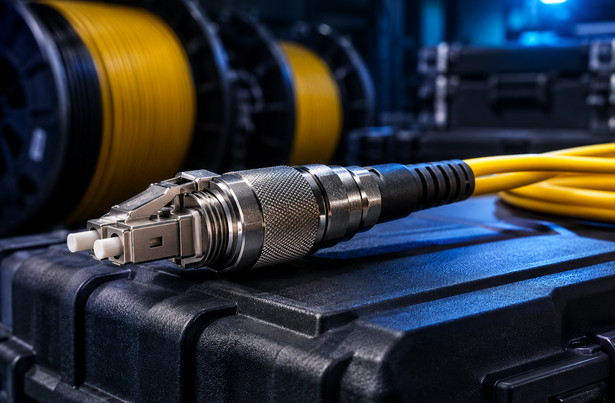
- Perform Initial Visual Inspection under Fiber Scope: Remove the protective dust cap and insert the SMPTE Cable connector into a clean digital fiber inspection scope. Examine the ferrule end face at 200x or 400x magnification to inspect for oil residue, dust particles, scratches, or glass pitting across the core and cladding zones.
- Apply Dry Cleaning via Precision Reel Cleaner: If light dust or minor debris is present, insert the SMPTE Cable ferrule into a specialized optical reel cleaner. Advance the micro-fiber tape smoothly across the end face using single-direction strokes to sweep away dry particulates without scratching the glass.
- Execute Wet-to-Dry Cleaning for Stubborn Oils: For heavy oil contamination or dried residue, apply a single drop of optical-grade solvent to a lint-free dry wipe. Touch the SMPTE Cable ferrule to the solvent-wetted area, then immediately drag it across a dry section of the wipe to remove all remaining solvent film.
- Inspect Electrical Contact Pins for Corrosion: Examine the integrated copper power contact pins surrounding the optical insert for signs of tarnish, pitting, or moisture accumulation. Clean electrical pins using an approved contact cleaner and lint-free swab if necessary.
- Install Clean Protective Caps Immediately: If the SMPTE Cable is not being plugged directly into an active OB truck bulkhead, immediately attach a clean, dry dust cap to seal the polished interface against ambient airborne dust and moisture.
SMPTE Cable Strain Prevention and Mechanical Protection
Proper physical cable management serves as the primary line of defense against premature mechanical failure and unexpected link drops across mobile OB truck deployments. When broadcast technicians route hybrid jumpers across busy production areas, tensioning cables tightly around sharp metal staging corners introduces severe bend radius violations. Bending a heavy-duty SMPTE Cable past its specified minimum bend radius places intense physical shear stress on the internal copper conductors and glass fibers, forcing micro-curvature within the glass structure that triggers physical core offset and immediate signal attenuation.
Installing dedicated cable ramps, horizontal strain relief trays, and padded breakout pantographic boots ensures that the heavy physical mass of multi-core hybrid lines does not hang directly from fragile connector bodies. Structurally securing heavy cable runs to mobile truck chassis members or staging barriers isolates each SMPTE Cable interface from external pulling forces, allowing internal strength members to maintain balanced tension.
Technicians must always grip the outer coupling ring directly when plugging in an SMPTE Cable assembly, pushing the unit straight into the bulkhead adapter bay until the locking mechanism fully engages. Never pull on the bare outer jacket or flex the strain relief boot to disconnect an active line, as applying lateral lever action can easily damage internal alignment pins or chip glass ferrule tips.
SMPTE Cable Environmental Controls and Thermal Auditing
Operating mobile broadcast infrastructure in extreme environmental temperatures requires proactive monitoring protocols alongside active thermal control strategies. In outdoor stadium venues, high ambient heat combined with direct solar radiation on OB truck equipment bays can drive internal connector temperatures well beyond safe operational thresholds. Staging an SMPTE Cable patch panel inside an unventilated truck compartment invites thermal expansion issues that alter electrical resistance across copper power pins.
Broadcast engineers must deploy active auxiliary cooling fans and well-ventilated rack panels to guarantee continuous, uniform airflow across every patch bay. Ensuring steady dissipation of trapped ambient heat prevents localized hot spots around high-density SMPTE Cable connections, safeguarding optical alignment and power delivery over long outdoor events.
Conducting structured thermal audits with high-precision infrared thermometer guns or automated inline temperature monitoring sensors empowers maintenance engineers to detect localized heat spikes long before physical link failure occurs. If a specific patch bay exhibits dangerous temperature elevation, immediately re-routing power supplies or adjusting truck ventilation re-establishes optimal operational parameters for every installed SMPTE Cable run.
SMPTE Cable Dust Cover Management and Environmental Sealing
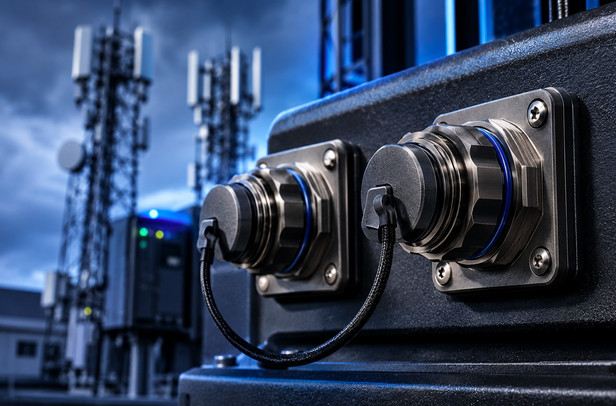
Protective dust caps serve as the primary defensive barrier preserving pristine optical end faces whenever an SMPTE Cable is demated from an active OB truck bulkhead. Uncovered pin or socket assemblies exposed to ambient outdoor air accumulate dust, moisture vapor, and micro-contaminants within minutes. Deploying heavy-duty, gasket-sealed dust covers maintains structural environmental sealing and prevents debris from settling onto precision ceramic ferrule tips during transit.
Maintenance leads must enforce strict operational discipline regarding dust cover storage and handling. Technicians should never place removed protective caps onto bare stadium concrete, dirt, or inside unsealed pockets where interior grit accumulates. Storing removed caps inside clean, sealable protective bags ensures that re-attaching the cover does not inadvertently introduce heavy abrasive particles directly back onto the polished SMPTE Cable ferrule surface.
SMPTE Cable Storage Protocols and Transit Protection
Long-term hardware reliability and consistent signal integrity depend heavily on how hybrid broadcast cables are stored, handled, and transported between active field deployments. Heavy-duty hybrid assemblies terminated with an SMPTE Cable system should always be coiled onto heavy-duty, large-diameter cable storage reels specifically engineered to preserve minimum dynamic bend-radius specifications. Tightly wrapping flexible hybrid lines around small commercial storage spools introduces severe, permanent mechanical stress within the protective outer jacketing, gradually distorting internal copper shielding and placing intense physical strain on internal optical fibers.
During high-vibration mobile vehicle transit between event sites, cable reels and breakout assemblies must be firmly secured inside transport trucks using heavy-duty straps to prevent shifting and impact damage. Protecting outer connector shells from direct drops prevents costly thread deformation and pin breakage. Establishing comprehensive storage and transit guidelines shields capital equipment investments from preventable transport wear, ensuring that every deployable SMPTE Cable asset operates at peak performance upon arrival.
SMPTE Cable Advanced Insertion Loss and OTDR Diagnostics
Field validation of mobile broadcast links requires comprehensive, multi-tiered diagnostic testing protocols that go far beyond standard visual scope inspections. Deploying an optical time-domain reflectometer alongside an optical power meter and an electrical multimeter allows field engineers to accurately measure optical insertion loss and copper conductor resistance down to the individual SMPTE Cable run. Establishing detailed baseline attenuation and voltage drop profiles during initial system commissioning ensures subsequent signal degradation or power delivery issues can be identified instantly.
During routine preventive link verification, qualified technicians must systematically measure signal insertion loss, return loss, and copper loop resistance across all active transmission channels:
- Insertion Loss (IL) Verification: Insertion loss for a precision-polished SMPTE Cable connection should remain within tight operational limits, averaging under 0.5 dB per mated pair under standard field test conditions.
- Return Loss (RL) Diagnostics: Return loss values for single-mode hybrid links should exceed 55 dB for UPC polishes, ensuring minimal back-reflections that can destabilize broadcast laser transmitters.
- Copper Conductor Resistance Testing: Verifying low electrical resistance across power conductors ensures cameras receive full operating voltage without dangerous voltage drop over long mobile runs.
SMPTE Cable Regulatory Standards and Compliance Requirements
Every commercial, industrial, and broadcast optical deployment must comply with established national wiring regulations, physical installation safety standards, and strict signal transmission benchmarks. In Australia, field cabling practices must strictly align with wiring rules managed by the ACMA, ensuring that optical and electrical infrastructure installations meet rigorous safety, mechanical grounding, and long-term network performance criteria.
Applying recognized industry standards guarantees that every SMPTE Cable installation maintains structural reliability, electrical safety, and physical alignment under demanding operational conditions. Regulatory compliance frameworks govern critical installation variables, including strict minimum cable bend radii, connector housing tensile retention forces, optical core alignment limits, and maximum allowable insertion loss thresholds across broadcast enterprise networks.
Documenting full regulatory compliance through detailed optical time-domain reflectometer trace records and electrical test logs provides verifiable, audit-ready proof of physical link quality and structural integrity. Systematically cataloging baseline data for every installed SMPTE Cable link gives site engineering teams a precise historical reference point for long-term performance tracking, rapid troubleshooting, and routine preventive maintenance audits.
Frequently Asked Questions About SMPTE Cables
What is the maximum allowable insertion loss for an SMPTE Cable?
The standard allowable insertion loss for an installed SMPTE Cable link typically ranges between 0.5 dB and 1.0 dB total, depending on the physical length of the run and the number of intermediate patch connections. Maintaining loss levels within this window requires strict adherence to cleaning procedures before every mating cycle.
How often should an SMPTE Cable be inspected in the field?
An SMPTE Cable connector should be inspected under a digital fiber scope every single time it is unplugged, moved, or prepared for mating in the OB truck. Assuming a connector is clean simply because it had a dust cap on is a primary cause of cross-contamination in active mobile networks.
Can alcohol wipes be used to clean an SMPTE Cable ferrule?
Standard isopropyl alcohol wipes should be avoided if possible, as standard rubbing alcohol contains water content that leaves streaks and film residue on the glass core. Always use optical-grade cleaning solvents or high-purity dry micro-fiber cleaning tapes designed specifically for hybrid connectors.
Why does an SMPTE Cable experience voltage drop over long runs?
Excessive voltage drop occurs when copper conductor resistance accumulates over long transmission distances or when electrical contact pins become oxidized and dirty. Regular cleaning of power contact pins and verifying proper gauge selection prevents camera power failures.
How do environmental dust caps protect an SMPTE Cable?
Environmental dust caps prevent airborne dust, salt spray, moisture, and skin oils from settling on the polished SMPTE Cable end face when the cable is not connected to a sealed bulkhead port. Dust caps also protect electrical contact pins from physical impacts during transit.
SMPTE Cable Summary Checklist for Care
- Inspect every SMPTE Cable end face with a digital fiber scope prior to connector mating.
- Perform dry reel cleaning or wet-to-dry cleaning using optical-grade solvents for oil removal.
- Clean electrical power contact pins using approved contact cleaner and swabs.
- Maintain clean protective dust caps on every un-mated SMPTE Cable connector.
- Secure patch cables to prevent cable strain on the SMPTE Cable body during OB truck setup.
- Ensure adequate ventilation around mobile patch bays to prevent thermal distortion.
- Verify that all field wiring practices comply with local ACMA cabling standards.
- Conduct regular OTDR and electrical resistance testing to log baseline performance for every active SMPTE Cable link.
Protecting Your Long-Term Network Reliability
Maintaining uncompromised signal and power stability across complex mobile broadcast networks requires relentless attention to hardware hygiene, proper strain relief, and structured maintenance workflows. Treating every SMPTE Cable connection as a high-precision hybrid component ensures that live feeds and camera power remain uninterrupted, even under severe environmental stress. Skipping routine cleaning steps or ignoring electrical pin maintenance inevitably leads to intermittent signal drops, high repair costs, and unexpected downtime during critical production windows.
Establishing disciplined inspection routines protects operating budgets by reducing emergency hardware replacements and eliminating unnecessary dispatch fees for field troubleshooting teams. Investing in high-quality cleaning supplies, protective storage hardware, and comprehensive training for technical staff builds an operational environment where network failures are caught and prevented long before equipment goes live on air.
To explore our full range of heavy-duty optical hardware and hybrid patch solutions, visit our Products catalog today. If your engineering team needs customized technical advice or assistance with specialized mobile deployment requirements, get in touch directly through our Contact Us page to speak with an optical connectivity specialist.