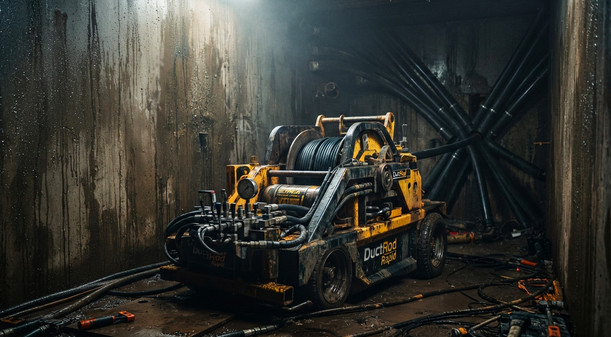
DuctRod Rapid hydraulic rodding unit simplifies underground network deployments for industrial facilities. Every field technician knows the agonizing frustration of pushing standard manual rods through hundreds of meters of underground conduit only to hit an immovable blockage of silt, collapsed PVC, or hardened mud. When legacy infrastructure clogs deep beneath industrial yards or remote utility corridors, entire communication rollouts grind to a costly halt while project deadlines slip away.
That is why Fibre Systems engineered advanced mechanical leverage to subterranean pathways through the powerhouse DuctRod Rapid hydraulic rodding unit. Operating heavy civil infrastructure demands tools that treat subterranean resistance as a manageable baseline rather than an absolute project killer. Utilizing a proper DuctRod Rapid hydraulic rodding unit shields your installation teams from chronic physical fatigue and endless conduit clearing delays.
Without a ruggedized DuctRod Rapid hydraulic rodding unit clearing long-run ducts, your facility remains vulnerable to unexpected optical attenuation and abandoned cable pulls. This comprehensive guide breaks down how specialized hydraulic engineering safeguards your underground physical layer against premature bottleneck breakdown.
Decoding the Subterranean Pressures Crushing Underground Conduits
Underground routing environments expose optical and electrical pathways to a constant barrage of compressive soil shifts, water infiltration, and intrusive root growth that indoor systems never encounter. Ground settling between seasonal heavy rains and dry summer cycles causes buried PVC and corrugated conduits to deform, pinching traditional push rods instantly. When silt penetrates these fractured underground sleeves, wet earth packs tightly around the cable path, creating solid plugs that break manual fiberglass rods.
Implementing a robust DuctRod Rapid hydraulic rodding unit configuration stops this clearance failure cycle by incorporating immense pushing force and high-torque drum rotation. Every meter of conduit tackled with a certified DuctRod Rapid hydraulic rodding unit is specifically formulated to break through compacted silt blockages without cracking fragile inner sub-ducts.
To fully understand subterranean resilience, facility planners must examine how shifting ground mechanics interact with rigid outer sleeves during extreme seasonal weather variations. Heavy clay soils expand significantly when saturated with monsoon rains, exerting intense lateral pressure that squeezes underground conduits into narrow, oval shapes. Traditional manual rods inevitably jam inside these deformed sections, trapping the fiberglass tip and forcing expensive emergency excavation work. Advanced hydraulic assistance changes this dynamic completely by applying controlled, steady rotational force that forces the rodding head past pinched subterranean bottlenecks.
Engineering Defensive Power Against Soil Compression and Friction
Soil friction and underground debris act as silent predators, slowly wearing down standard manual rodding tools until pushing fiberglass becomes physically impossible for a two-man crew. A high-performance DuctRod Rapid hydraulic rodding unit build utilizes specially balanced hydraulic motors that translate engine power into steady, unstoppable forward momentum.
Furthermore, the internal drive wheels within a certified DuctRod Rapid hydraulic rodding unit layout are individually ribbed and protected by heavy-duty grip teeth. This multi-layered mechanical defense ensures that even if the underground conduit experiences extreme ovality or internal collapse, the rodding head pushes through with calibrated precision. Maintaining continuous forward momentum requires robust mechanical engineering that protects drive components against abrasive quartz sand and fine silt intrusion.
When crews operate in heavily mineralized soils, fine grit particles routinely infiltrate standard mechanical bearings, causing premature seizing and costly field repairs. Specially sealed gear housings and self-cleaning drive tracks prevent abrasive slurry from entering the internal transmission mechanisms during high-pressure clearance operations. This heavy-duty design philosophy ensures that remote utility teams can rely on continuous equipment performance across multi-kilometer underground runs without suffering unexpected mechanical breakdowns.
Surviving Extreme Torsional Load and Subterranean Obstructions
Deep underground runs beneath active industrial roadways subject rodding equipment to continuous torsional twisting forces and abrasive gravel friction. If an extraction tool lacks proper internal damping, these constant underground snags translate into severe rod snapping and hazardous whip-back injuries. Modern industrial deployments rely on a DuctRod Rapid hydraulic rodding unit because its independent hydraulic control valves absorb kinetic shock and dissipate rotational stress evenly across the entire assembly. Technicians operating a DuctRod Rapid hydraulic rodding unit across long underground spans appreciate how this structural independence prevents subterranean obstacles from distorting the internal guide path.
Torsional stress management remains one of the most critical engineering challenges when clearing deep utility conduits beneath heavy industrial zones. Constant vibration from passing freight trucks and heavy mining machinery compacts surrounding earth, creating high-friction friction zones that grip fiberglass rods tightly. Without integrated pressure-relief valves and responsive hydraulic dampening systems, rotational energy builds up dangerously inside the enclosed duct run. Controlled hydraulic regulation safely dissipates this stored torsional energy, preventing catastrophic rod fracture and protecting field personnel from violent recoil hazards.
Overcoming Space Constraints in Crowded Underground Manholes
Subterranean termination vaults and utility junction boxes are notoriously cramped, forcing installation teams to maneuver bulky machinery through tightly packed entry points without damaging existing cables. Forcing traditional tow-behind rodders into these confined underground spaces often results in sharp bend angles that permanently snap rigid fiberglass cages. Deploying a flexible DuctRod Rapid hydraulic rodding unit architecture allows maintenance crews to position compact, high-powered units cleanly around tight manhole openings while maintaining strict safety compliance.
Each operational cycle inside a DuctRod Rapid hydraulic rodding unit setup operates with precise directional control, eliminating the clutter of makeshift pulling winches and saving precious vault workspace. Working inside subterranean utility chambers requires equipment footprints that minimize physical crowding while maximizing pulling and pushing leverage.
Traditional tow-behind systems often demand street-level road closures and complex rigging setups just to align the feed mechanism with the manhole opening. Compact, skid-mounted hydraulic rodding configurations eliminate these logistical bottlenecks by fitting directly onto narrow vault ledges or portable service carts. This spatial efficiency allows maintenance crews to complete intricate underground cable routing tasks faster and with significantly lower labor overhead.
Analyzing Structural Strengths Through a DuctRod Rapid hydraulic rodding unit Comparison
Selecting the correct rodding architecture for underground projects requires evaluating how different mechanical designs handle harsh subterranean operating conditions. The table below compares key performance metrics to guide your infrastructure planning.
| Performance Metric | Standard Manual Rodder | Traditional Tow-Behind Rodder | DuctRod Rapid hydraulic rodding unit Solution |
| Pushing Force Rating | Low to Moderate Human Push | Moderate Mechanical Assist | Extremely High Hydraulic Power Output |
| Operator Fatigue | High Risk of Muscle Strain | Moderate Setup Complexity | Minimized via Powered Hydraulic Controls |
| Obstruction Clearance | Breaks Frequently on Hard Silt | Bulky in Confined Vaults | Superior Penetration via Controlled Torque |
| Space Efficiency | Compact but Labor Intensive | Large Footprint on Urban Streets | Optimized for Tight Manhole Deployments |
Reviewing these operational comparisons highlights why field engineers consistently choose a structured DuctRod Rapid hydraulic rodding unit system for high-resistance underground projects. While traditional manual rods provide initial low-cost entry, they lack the raw hydraulic force and operator safety required for fast conduit clearing. Upgrading to a specialized DuctRod Rapid hydraulic rodding unit layout streamlines underground workflows while delivering superior mechanical protection against binding and rod breakage.
This balanced approach protects your long-term capital investment from repeated replacement cycles and unexpected field delays. Furthermore, structured comparison metrics help project managers justify procurement budgets by demonstrating clear reductions in labor hours and equipment replacement costs over multi-year asset lifecycles.
Step-by-Step Installation Methodology for Underground Conduit Clearing
Executing a flawless underground line clearing operation requires disciplined adherence to established industry protocols and mechanical safety limits. Follow this structured installation process to ensure your DuctRod Rapid hydraulic rodding unit network performs reliably from day one.
Pre-Operation Route Survey and Subterranean Mapping
Inspect the entire underground pathway to identify areas of high soil compaction, potential root intrusion, and sharp conduit offsets before pushing any rods. Plan your DuctRod Rapid hydraulic rodding unit staging points carefully to maintain proper alignment and reduce entry friction. Documenting existing conduit conditions prior to deployment allows engineering teams to select appropriate guide heads and preventive lubrication formulas.
Managing Pushing Tension and Subterranean Mechanical Limits
Attach pulling grips securely to the front end of the DuctRod Rapid hydraulic rodding unit assembly rather than relying on improvised wire attachments. Use calibrated hydraulic pressure gauges during the push to ensure you never exceed the manufacturer’s specified maximum load limits. Monitoring line tension continuously prevents accidental rod buckling inside fractured or misaligned duct joints.
Securing and Managing Runs Within Underground Vaults
Anchor each guide tube using heavy-duty clamping hardware and flexible management loops inside manhole chambers to absorb hydraulic thrust movement. Ensure that every DuctRod Rapid hydraulic rodding unit deployment has enough clearance to prevent operator injury during high-pressure clearance phases. Proper anchoring protects existing optical cables from accidental abrasion during active rodding cycles.
Precision Guidance and Subterranean Sealing
Strip mud and debris carefully using water jetting attachments when necessary to expose the true conduit path without nicking existing cables. Clean all workspace entry points thoroughly and seal all vault access ports against dust, groundwater, and mud ingress. Effective sealing protects newly pulled communication lines from long-term environmental degradation and moisture absorption.
Adhering to strict regulatory frameworks is vital for any professional telecommunications installation. Technicians must align their deployment procedures with official guidelines set by regulatory authorities such as the ACMA to guarantee safety, compliance, and legal operational standards. Following these standardized wiring codes ensures your DuctRod Rapid hydraulic rodding unit installation integrates safely with existing utility networks. Regulatory compliance also safeguards project stakeholders against legal liabilities and costly rework mandates during formal post-installation audits.
Mitigating Hidden Operational Costs of Substandard Subterranean Equipment
Choosing cheap manual rods for underground projects to save initial capital almost always triggers a devastating cascade of long-term expenses. When fiberglass rods snap deep inside a blocked conduit, emergency excavation teams must dig up asphalt and concrete, destroying project budgets across entire communication loops.
Emergency contractor dispatches, replacement materials, and prolonged operational downtime quickly eclipse any upfront savings achieved through inferior procurement. Specifying industrial-grade infrastructure from the start ensures your underground network remains resilient against punishing subterranean conditions year after year. Investing in professional-grade deployment machinery eliminates the chronic risk of mid-project failures and protects operational cash flows from unpredictable repair expenditures.
Ensuring Long-Term Conduit Integrity Through Advanced Hydraulic Design
Maintaining stable optical and wiring pathways across vast underground expanses demands meticulous engineering around core protection and internal power distribution. As subterranean temperature gradients fluctuate slightly between wet and dry seasons, surrounding soils expand and contract at different physical rates. Without specialized hydraulic push systems designed to absorb these differential movements, internal conduit walls experience micro-strains that trap subsequent cable pulls.
Advanced manufacturing protocols ensure that each DuctRod Rapid hydraulic rodding unit operates with smooth, continuous force delivery, completely isolated from sudden mechanical binding. This engineering precision guarantees that your transmission pathways deliver consistent, high-speed cable placement regardless of how volatile the underground obstruction becomes. Reliable mechanical isolation also extends the operational lifespan of deployed fiber optic bundles by minimizing jacket scuffing and micro-bend attenuation.
Preventing Common Field Maintenance Pitfalls in Exposed Industrial Conduits
Neglecting routine mechanical checks often leads to catastrophic project downtime and costly emergency contractor dispatches. Technicians must monitor hydraulic fluid levels and drive gear wear regularly to identify early signs of physical stress or slippage. Adopting a proactive maintenance schedule for your DuctRod Rapid hydraulic rodding unit infrastructure ensures minor issues are resolved before escalating.
Well-maintained DuctRod Rapid hydraulic rodding unit equipment sustains peak operational efficiency throughout decades of continuous service. Training personnel to handle DuctRod Rapid hydraulic rodding unit controls correctly safeguards your long-term project availability. Establishing rigorous preventative maintenance routines significantly reduces unexpected field failures during critical utility cutovers.
Frequently Asked Questions About DuctRod Rapid hydraulic rodding unit Systems
What makes a DuctRod Rapid hydraulic rodding unit different from manual push rods?
A standard DuctRod Rapid hydraulic rodding unit assembly features engine-driven hydraulic power with independent torque control, allowing it to push through severe subterranean blockages that break manual rods. This design provides industrial-grade muscle that typical hand-pushed cages simply cannot match in heavy silt settings.
Can a DuctRod Rapid hydraulic rodding unit be operated in flooded underground vaults?
Yes, every DuctRod Rapid hydraulic rodding unit structure is specifically engineered to withstand harsh subterranean environments, including high moisture and damp manhole conditions, without electrical failure. Their robust construction ensures steady mechanical operation even when installed in water-filled utility chambers.
How does a DuctRod Rapid hydraulic rodding unit simplification reduce labour costs?
Because each deployment of a DuctRod Rapid hydraulic rodding unit utilizes hydraulic mechanical advantage, a single technician can handle high-resistance pushes that normally require three workers. This eliminates the time-consuming physical fatigue and frequent rod breakages during underground duct clearing.
What precautions are necessary when operating a DuctRod Rapid hydraulic rodding unit through long conduits?
Always ensure that hydraulic pressure limits are monitored exclusively through calibrated gauges and avoid exceeding the recommended bend radius limitations in tight vaults. Using approved guidance tips and swivel connectors will also protect your DuctRod Rapid hydraulic rodding unit assembly from sidewall abrasion.
Summary of Key Takeaways for DuctRod Rapid hydraulic rodding unit Networks
- Robust Protection: Every DuctRod Rapid hydraulic rodding unit build features reinforced hydraulic power that shields operational timelines from severe subterranean physical stress and environmental blockages.
- Streamlined Deployment: Powered mechanical advancement eliminates the need for exhausting manual pushing, reducing installation time and potential points of project failure.
- Compliance and Safety: Aligning your DuctRod Rapid hydraulic rodding unit deployment with established industry benchmarks ensures long-term operational stability and regulatory adherence.
Ready to upgrade your infrastructure with resilient optical solutions? Request a custom quote for your next industrial project by contacting the Fibre Systems team at our Contact Us Page. You can also view the full range of Products Page designed for demanding operational environments.