Fibre Optic Attenuators are precision passive devices used to reduce the power level of an optical signal without significantly distorting the wave form itself. While most network discussions focus on increasing signal strength, in high stakes industrial connectivity, too much light can be just as destructive as too little. By integrating these signal balancers into your infrastructure at Fibre Systems, you provide a critical layer of protection that prevents your expensive transceivers from being overpowered and permanently damaged
The Paradox of the Overpowered Signal
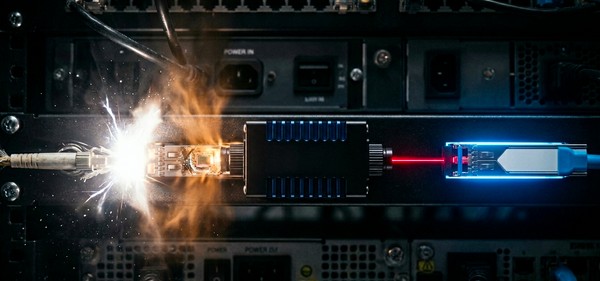
In the world of networking, we are conditioned to believe that a stronger signal is always better. However, fibre optic transceivers are designed to operate within a very specific optical power window. If the light hitting the receiver is too intense, it causes a phenomenon known as receiver saturation. At best, this leads to high bit error rates and erratic network performance. At worst, the concentrated laser energy can physically “blind” or burn out the delicate photodiode inside the transceiver.
Imagine connecting a high power long haul laser directly to a short distance receiver without any regulation. The result is immediate hardware failure. For engineers working in mining, defence, or large scale industrial automation, this is a costly mistake that leads to avoidable downtime. Fibre Systems provides the precision tools necessary to ensure that your light levels are always within the “Goldilocks zone”; not too weak, but certainly not too strong.
Why Hardware Protection is a Non Negotiable Strategy
A high performance transceiver is a significant investment. When these components fail due to signal overload, it is rarely a gradual process. The damage is often instantaneous and irreversible. This is why Fibre Optic Attenuators are regarded as the ultimate insurance policy for your optical hardware. They act as a controlled barrier, absorbing excess light energy and converting it into a negligible amount of heat.
Many technicians make the error of assuming that a long cable run will naturally dissipate enough power to protect the equipment. In modern high efficiency networks, this is a dangerous assumption. With the rise of high power optical amplifiers and low loss fibre, the risk of overpowering a receiver is higher than ever. Using fixed or variable attenuators from Fibre Systems ensures that your hardware longevity is never left to chance.
The Consequences of Signal Imbalance
| Signal State | Operational Impact | Long Term Result |
| Too Weak | High attenuation and frequent packet loss | Intermittent connectivity and slow speeds |
| Balanced | Optimal data throughput and zero bit errors | Maximum hardware lifespan and reliability |
| Too Strong | Receiver saturation and signal clipping | Permanent photodiode burn out and failure |
Fixed versus Variable Attenuators: Choosing Your Guard
Depending on the stability of your network, you may require different levels of signal regulation. Fixed attenuators are ideal for stable environments where the power levels are consistent. They provide a specific decibel reduction, such as 5dB or 10dB, to bring the signal into the required range. These are the most common choice for protecting transceivers in standard industrial racks.
For more complex scenarios where signal levels might fluctuate or during the testing phase of a new deployment, variable optical attenuators offer the flexibility to adjust the reduction manually. At Fibre Systems, we supply both options to ensure that your industrial connectivity remains stable regardless of the environment. Whether you are dealing with tactical fibre in the field or core switches in a data centre, the goal remains the same: perfect balance.
How to Schema: The Power Budget Audit
To prevent transceiver damage, follow this professional power budget protocol during every installation.
- Measure the Source. Use an optical power meter to determine the exact output of the transmitting laser.
- Consult the Datasheet. Check the maximum input power (saturation point) of the receiving transceiver.
- Calculate the Gap. If the source power minus the cable loss is higher than the receiver’s maximum rating, you have a problem.
- Select the Attenuator. Choose a Fibre Systems attenuator with a dB rating that brings the power level comfortably into the middle of the receiver’s operating range.
- Verify the Result. Measure the power at the receiver end again after the attenuator is installed to confirm the levels are safe.
The Fibre Systems Philosophy on Network Health
At Fibre Systems, we believe that reliability is built on precision. We do not just provide the cables that carry the light. We provide the intelligence to control it. Our range of attenuators is engineered to provide consistent, flat attenuation across all common wavelengths, ensuring that your high speed data remains intact while your hardware stays safe.
Protecting your investment in ruggedized hardware requires more than just high quality cables. It requires an understanding of the delicate balance of light. By choosing Fibre Systems as your partner, you are choosing a team that prioritizes the long term health of your network infrastructure. We ensure that your signals are balanced, your transceivers are protected, and your connectivity is absolute.
Technical FAQ: Understanding Signal Attenuation
Can I just use a dirty connector to reduce signal power instead of an attenuator?
Absolutely not. Using contamination or a loose connection to reduce power causes massive back reflection and unpredictable signal scattering. This can damage the transmitting laser and cause extreme network instability. Only use a professional Fibre Optic Attenuator for controlled power reduction.
Where is the best place to install an attenuator?
Attenuators should always be installed at the receiver end of the link. This ensures that the power is reduced just before it enters the sensitive transceiver and prevents the attenuator from being affected by any amplified noise along the cable run.
Do attenuators work for both Single Mode and Multi Mode fibre?
Yes, but they are specific to the fibre type. You must use a Single Mode attenuator for Single Mode links and a Multi Mode version for Multi Mode links to avoid significant signal distortion or loss.
Summary of the Value of Signal Balancers
- Hardware Protection. Prevents the permanent physical destruction of expensive photodiodes.
- Error Reduction. Eliminates bit errors and “clipping” caused by receiver saturation.
- Operational Stability. Ensures consistent performance across both short and long distance links.
- Cost Savings. Avoids the high cost of emergency hardware replacements and unscheduled downtime.
- Precision Control. Allows engineers to tune the network power levels to the exact specifications of the hardware.
Balance is the Foundation of Performance
In the high stakes world of industrial networking, precision is your greatest asset. Don’t let a “too strong” signal become the reason for your next hardware failure. By integrating Fibre Optic Attenuators into your workflow, you are demonstrating a commitment to engineering excellence and long term reliability.
Keep your signals clean, keep your power levels balanced, and protect the hardware that keeps your business moving. With Fibre Systems, you have the tools and the expertise to master the light.
Request a technical consultation on signal balancing by contacting the Fibre Systems team.View our full range of precision optical attenuators today.