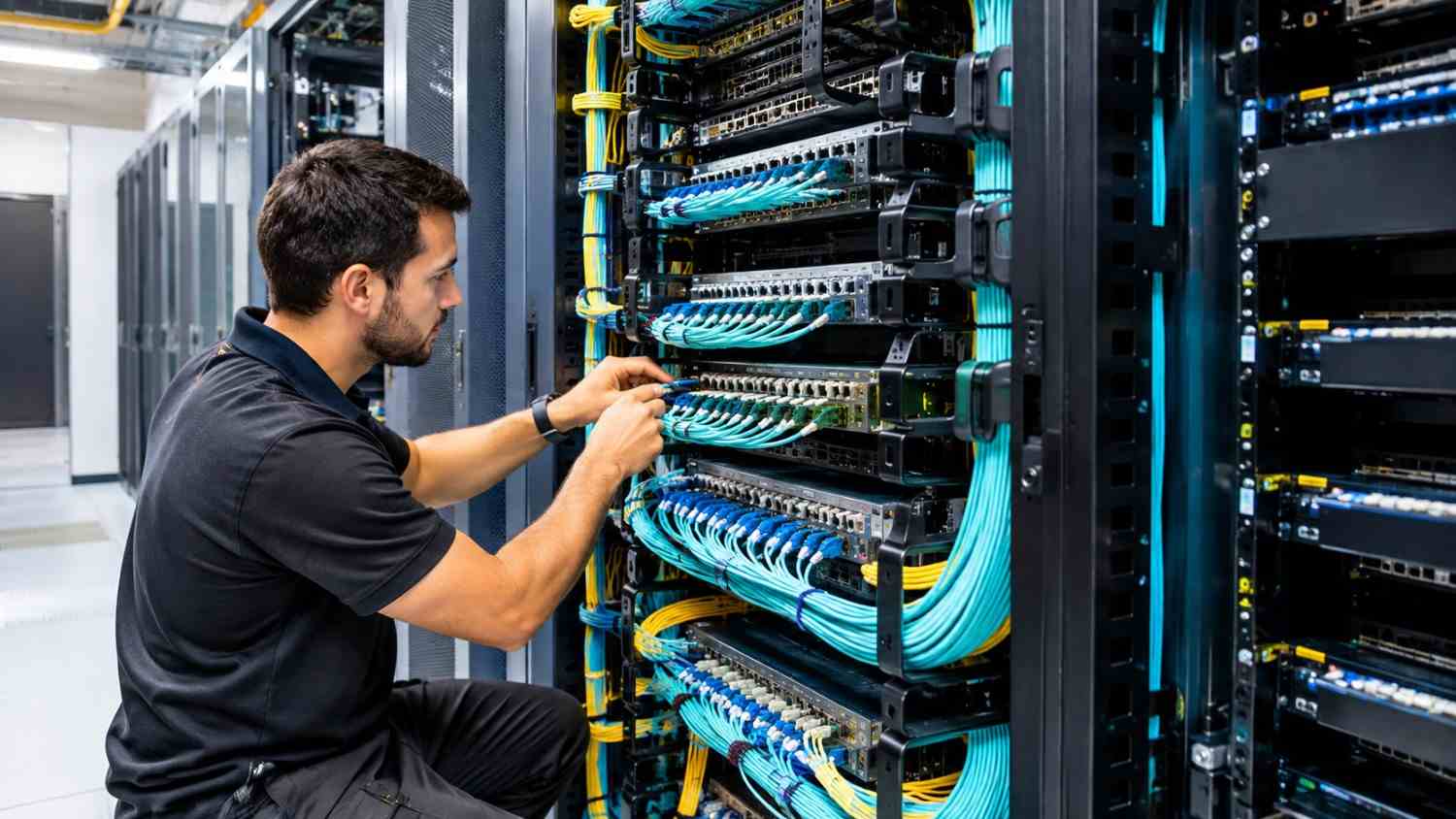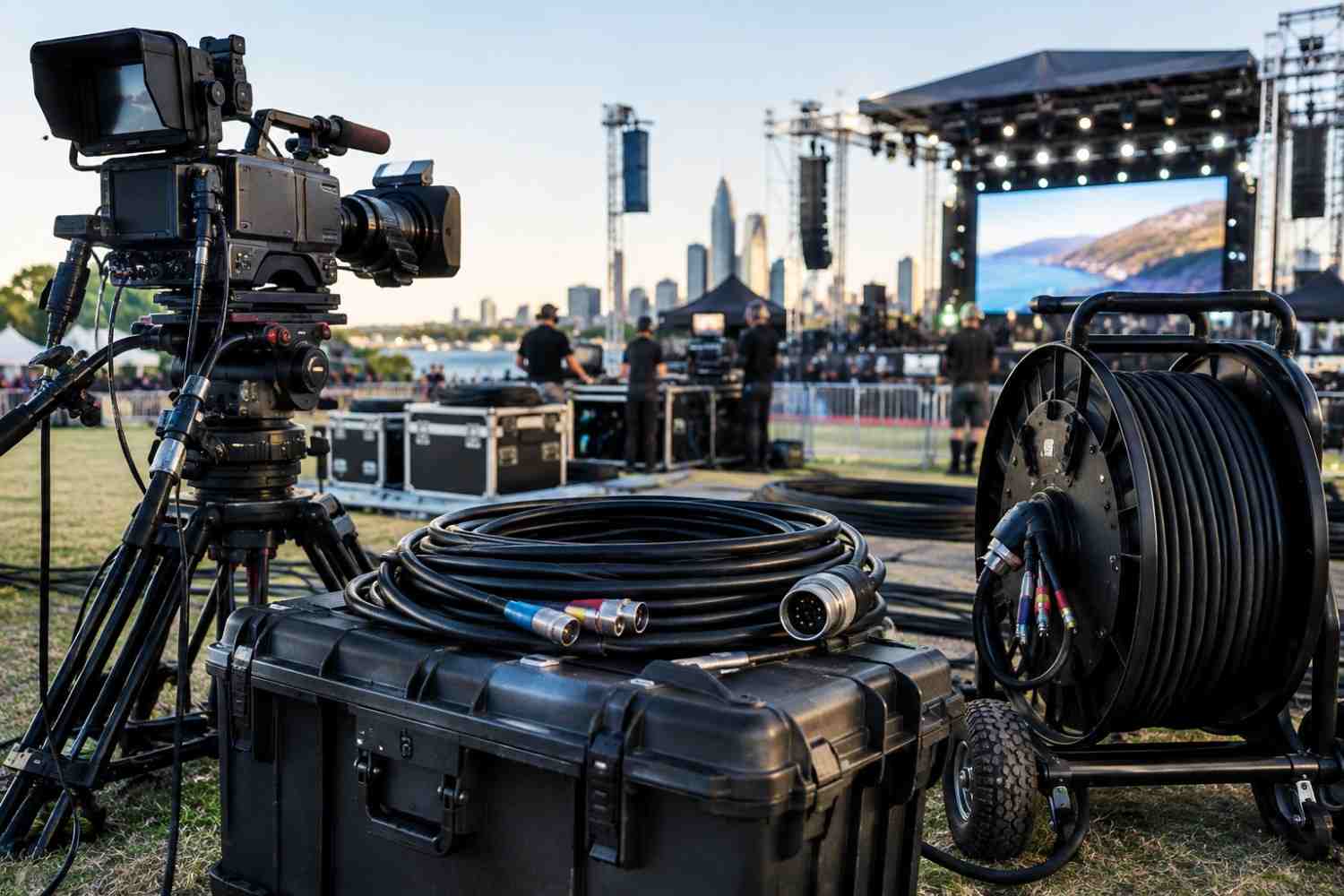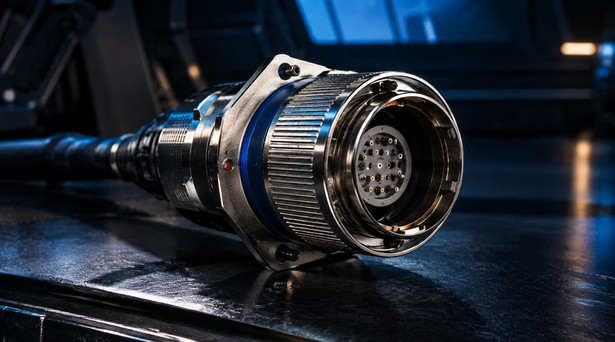
Expanded Beam Technology is a sophisticated optical connection method that uses precision spherical lenses to expand a light signal to many times its original size before it jumps across an air gap to the receiving connector. Unlike traditional physical contact connectors that require two microscopic glass cores to touch perfectly, this non contact approach allows the signal to flow around contaminants like dust and mud. At Fibre Systems, we view this as the only logical choice for industrial environments where the air is thick with red dust and the machinery is heavy enough to crush standard glass.
The Invisible Killer Lurking in the Pilbara Dust
Imagine you are the communications lead for a massive open cut mine in the heart of Western Australia. Your entire operation from the autonomous haulage trucks to the remote drill rigs relies on a continuous and uninterrupted stream of data. One afternoon, a technician is forced to swap a cable in the middle of a typical afternoon dust storm. He pulls the dust cap off a standard physical contact connector for just three short seconds. In that tiny window, a microscopic speck of iron ore dust settles on the glass face.
When he plugs that connector in, he is not just connecting a cable; he is signing a death sentence for that network link. The mating force of a standard connector is high enough to grind that tiny speck of dust into the glass, creating a permanent pit that deflects the light. Your signal drops, the autonomous fleet grinds to a halt, and your company begins losing thousands of dollars every single minute those trucks are idle. In the harsh reality of an Australian mine, physical contact is not a feature; it is a massive operational liability. This is why Expanded Beam Technology is no longer just a luxury option; it is the final line of defense for your multi million dollar uptime.
Why the Old Way of Connecting Fibre Fails the Field Test
For decades, the global telecommunications industry has relied on physical contact (PC) connectors because they are inexpensive and offer low signal loss in a sterile office environment. But an Australian mine site is the literal opposite of a sterile office. It is a world of extreme high frequency vibration, invasive red dust, salt heavy air, and rough handling by crews who have more important things to worry about than a 9 micron piece of glass. When you force two pieces of glass to touch in these conditions, you are essentially inviting catastrophe into your network architecture.
Fibre Systems completely eliminates the touch factor that causes so many headaches. By using a specialized ball lens to expand the beam, a piece of grit that would typically block 100 percent of a standard fibre signal now only blocks a negligible fraction of an expanded beam. The light simply flows around the dust and is condensed back into the receiving fibre on the other side. It is a brilliant piece of optical physics that turns a fragile link into a ruggedized, tank-proof connection.
The Mechanical Superiority of a Lens Based System
The shift toward lens based connectivity is driven by the need for operational resilience. When you are kilometres away from the nearest technical support, you need gear that is forgiving. Expanded Beam Technology offers several mechanical advantages that standard LC or SC connectors simply cannot match.
- Extreme Contamination Immunity: Because the light is expanded over a much larger surface area, microscopic grit becomes an insignificant obstruction rather than a total signal killer.
- Vibration Dampening: The air gap between the lenses ensures that the constant vibration of heavy drill rigs or passing haul trucks won’t cause the glass faces to rub together and fret or scratch the core.
- Field Rinse Capability: These connectors are so tough you can literally rinse them with water and wipe them with a clean rag if they get dropped in the mud. This level of durability is unheard of in traditional fibre optics.
- Hermaphroditic Versatility: Most expanded beam connectors are genderless. This means you can daisy chain cables together indefinitely without looking for male to female adapters in the dark or in the middle of an emergency deployment.
Technical Comparison: Ending the Cycle of Network Failure
| Site Challenge | Traditional Physical Contact Fibre | Fibre Systems Solutions |
| Microscopic Red Dust | Causes permanent glass pitting and instant failure | Light beam flows around dust with zero damage |
| Blast Site Vibration | Leads to glass on glass abrasion and signal jitter | Non contact air gap prevents physical wear |
| Field Maintenance | Requires 400x scopes and alcohol cleaning kits | Can be rinsed with water and wiped with a cloth |
| Mating Longevity | Starts to degrade after 100 to 200 matings | Rated for over 3,000 cycles without signal loss |
| Operational Risk | High chance of intermittent ghost errors | Rock solid, predictable signal integrity |
The Forensic Science of the Light Bridge
To understand why this is the gold standard, you have to look at the geometry of the light itself. In a standard connector, the core is only 9 micrometers wide which is much thinner than a human hair. Any dust particle larger than a few microns is a total blockage. Expanded Beam Technology uses a precision ground spherical lens to take that tiny 9 micron beam and expand it by up to 150 times its original diameter. We house these precision lenses in ruggedized metal shells that are built to take an absolute beating.
The brilliance of Expanded Beam Technology lies in its ability to handle the filthiest environments without failing. Even if a technician accidentally gets a greasy fingerprint or a layer of fine dust on the lens, the signal still gets through because Expanded Beam Technology ensures the light is widely distributed across the lens surface. This means that an obstruction becomes a minor dip in power rather than a total outage that kills your uptime.
Adopting Expanded Beam Technology is not just a clever design choice; it is a vital safeguard for the real time data that keeps your site safe and your machinery productive. When you rely on Expanded Beam Technology, you are choosing a system that ignores the microscopic grit of the outback. Every unit of Expanded Beam Technology is engineered to survive where standard glass would be crushed.
By integrating Expanded Beam Technology into your infrastructure, you eliminate the constant need for 400x scopes and alcohol cleaning kits in the mud. The long term ROI of Expanded Beam Technology is unmatched because it stops the cycle of permanent glass pitting. Ultimately, Expanded Beam Technology is the only logical choice for high pressure industrial sectors that cannot afford a single second of black screens. Expanded Beam Technology is the heartbeat of a truly resilient network.
Tactical Resilience: From the Battlefield to the Mine Face
It is no coincidence that Expanded Beam Technology is the primary choice for military tactical communications across the globe. In a war zone, you do not have the luxury of a clean room or a lab bench, and the same logic applies to an Australian mine site. Whether you are deploying a temporary mesh network or connecting a remote drill rig in the middle of the night, you need Expanded Beam Technology for a connection that works the first time, every time, regardless of the mud, the wind, or the rain.
Fibre Systems provides tactical solutions powered by Expanded Beam Technology that are built to survive being run over by heavy vehicles and tanks. When you use our ruggedized gear, you are deploying Expanded Beam Technology designed to stay connected when the environment is actively trying to destroy it. This is the level of engineering required to survive the Australian outback and maintain a competitive edge in 2026.
The resilience of Expanded Beam Technology means your crew can focus on production rather than troubleshooting fragile links. Because Expanded Beam Technology eliminates physical contact, it removes the risk of permanent glass damage during field deployments. Every second of uptime is secured by Expanded Beam Technology, ensuring that even in the harshest red dust of the Pilbara, your data remains uninterrupted.
Investing in Expanded Beam Technology is a mechanical necessity for any operation that refuses to let environmental factors dictate their success. We trust Expanded Beam Technology because it has been proven in the most high-pressure combat zones on Earth. Ultimately, Expanded Beam Technology is the ultimate insurance policy for your network’s physical layer.
Step by Step Maintenance for Expanded Beam Connectors
While these connectors are nearly indestructible compared to their office grade counterparts, following this simple field protocol will ensure your investment lasts for many years.
- Visual Inspection: Simply look at the lens face. If you see a thick layer of mud or oil, it is time for a quick wipe.
- The Water Rinse: If the connector is heavily soiled, you can literally rinse the lens face with clean water or a standard optical spray.
- Soft Wipe: Use a lint free cloth to gently wipe away the moisture. Unlike standard fibre, you do not need to worry about scratching the core because it is safely protected behind the lens.
- Cap it Off: Always put the protective caps back on when the cable is not in use to keep the metal threads clean and ready for the next mating.
- Inspect the Shell: Ensure the hermaphroditic locking mechanism is free of large rocks or debris so it can click into place securely.
Frequently Asked Questions for Operations Managers
Does the air gap in expanded beam connectors cause too much signal loss for high speed data?
While there is a slightly higher insertion loss compared to a laboratory perfect physical contact connector, the trade off is total reliability. In a mine site, a connection that never fails is worth infinitely more than a low loss connection that breaks the moment the wind blows.
Are these connectors compatible with my existing server room hardware?
Yes. Fibre Systems builds custom breakout or transition cables. You use the rugged expanded beam trunks for the long, dirty runs across the site, and then use a transition cable to plug into your standard LC or SC switches in the comms hut.
How many times can I reconnect these in the field before they wear out?
Our expanded beam assemblies are rated for over 3,000 mating cycles. In comparison, a standard physical contact connector often starts to fail after just 50 to 100 cycles in a dusty environment due to the glass surface being destroyed by grit and repeated cleanings.
The Massive ROI of Ruggedized Hardware
Many procurement departments only look at the unit cost of a cable. A standard patch lead is cheap, while Expanded Beam Technology is a serious investment. However, this is a dangerous way to look at a mining budget. If a cheap cable causes even four hours of downtime on an autonomous haulage circuit, the savings from that cheap cable are wiped out ten thousand times over by the lost production and the cost of sending a technician out to a remote location.
At Fibre Systems, we are the Right Door for managers who are tired of explaining why the network is down again. We provide the individual test reports and the local Australian engineering support that generic offshore suppliers simply cannot match. We don’t just sell cables; we sell the assurance that your site stays live and your production targets are met.
Stop Gambling with Your Uptime
The future of the Australian mining industry is autonomous, connected, and data hungry. You cannot run a 2026 operation on 1990s connectivity standards. By moving away from physical contact connectors and standardizing on Expanded Beam Technology, you are removing the single most common cause of network failure from your site.
Fibre Systems is proud to be the trusted partner for the engineers who build and maintain the backbone of our economy. We provide the hardware that survives the dust, the heat, and the vibration of the Australian outback.
Summary of Major Benefits:
- Anti Dust Physics: Light flows around contaminants through an expanded beam path.
- Non Contact Safety: Prevents the permanent glass scratching that kills standard fibre.
- Field Survival: Can be rinsed and wiped in seconds without specialized laboratory tools.
- Vibration Resistant: Built to stay stable even on heavy drilling and hauling equipment.
- Australian Tough: Designed specifically for our unique site conditions.
Request a custom quote for your next high density mining project by contacting the Fibre Systems team today.
View the full range of Fibre Systems Products designed for mining, defence, and high stakes industrial connectivity.